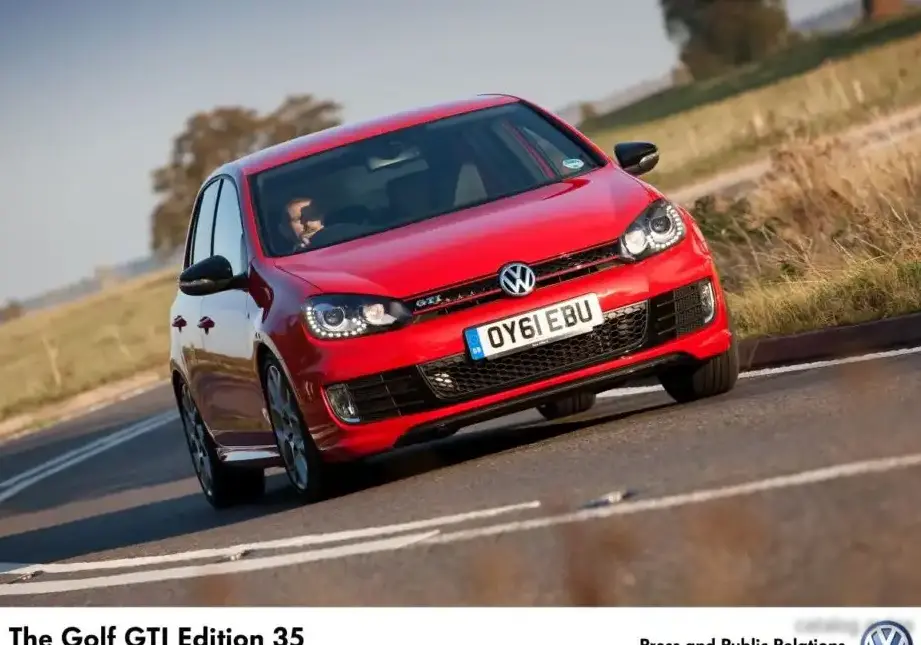
The Volkswagen Golf VI 1.8 TSI (160 hp) represents a significant iteration in the Golf lineage, produced between June and September 2009. This five-door hatchback variant occupied a key position within the Golf VI range, offering a balance between performance, fuel efficiency, and affordability. It was built on the A5 (or 1K) platform, a widely successful architecture underpinning numerous Volkswagen Group vehicles. The 1.8 TSI served as a popular choice for buyers seeking a more spirited driving experience than the base models, without the higher price tag of the range-topping trims.
Technical Specifications
| Brand | Volkswagen |
| Model | Golf |
| Generation | Golf VI (5-door) |
| Type (Engine) | 1.8 TSI (160 Hp) |
| Start of production | June, 2009 |
| End of production | September, 2009 |
| Powertrain Architecture | Internal Combustion engine |
| Body type | Hatchback |
| Seats | 5 |
| Doors | 5 |
| Fuel consumption (urban) | 9 l/100 km (26.1 US mpg, 31.4 UK mpg, 11.1 km/l) |
| Fuel consumption (extra urban) | 5.6 l/100 km (42 US mpg, 50.4 UK mpg, 17.9 km/l) |
| Fuel consumption (combined) | 6.9 l/100 km (34.1 US mpg, 40.9 UK mpg, 14.5 km/l) |
| CO2 emissions | 159 g/km |
| Fuel Type | Petrol (Gasoline) |
| Acceleration 0 – 100 km/h | 8 sec |
| Acceleration 0 – 62 mph | 8 sec |
| Acceleration 0 – 60 mph | 7.6 sec |
| Maximum speed | 220 km/h (136.7 mph) |
| Emission standard | Euro 5 |
| Weight-to-power ratio | 8.1 kg/Hp, 123 Hp/tonne |
| Weight-to-torque ratio | 5.2 kg/Nm, 192.2 Nm/tonne |
| Power | 160 Hp @ 5000 rpm |
| Power per litre | 89 Hp/l |
| Torque | 250 Nm @ 1500-4500 rpm (184.39 lb.-ft. @ 1500-4500 rpm) |
| Engine layout | Front, Transverse |
| Engine Model/Code | EA888 / CDAA |
| Engine displacement | 1798 cm3 (109.72 cu. in.) |
| Number of cylinders | 4 |
| Engine configuration | Inline |
| Cylinder Bore | 82.5 mm (3.25 in.) |
| Piston Stroke | 84.1 mm (3.31 in.) |
| Compression ratio | 9.6:1 |
| Number of valves per cylinder | 4 |
| Fuel injection system | Direct injection |
| Engine aspiration | Turbocharger, Intercooler |
| Valvetrain | DOHC |
| Engine oil capacity | 4.7 l (4.97 US qt | 4.14 UK qt) |
| Coolant | 8 l (8.45 US qt | 7.04 UK qt) |
| Kerb Weight | 1301 kg (2868.21 lbs.) |
| Max. weight | 1870 kg (4122.64 lbs.) |
| Max load | 569 kg (1254.43 lbs.) |
| Trunk (boot) space – minimum | 350 l (12.36 cu. ft.) |
| Trunk (boot) space – maximum | 1305 l (46.09 cu. ft.) |
| Fuel tank capacity | 55 l (14.53 US gal | 12.1 UK gal) |
| Max. roof load | 75 kg (165.35 lbs.) |
| Permitted trailer load with brakes (12%) | 1400 kg (3086.47 lbs.) |
| Permitted trailer load without brakes | 660 kg (1455.05 lbs.) |
| Permitted towbar download | 75 kg (165.35 lbs.) |
| Length | 4199 mm (165.31 in.) |
| Width | 1786 mm (70.31 in.) |
| Width including mirrors | 2048 mm (80.63 in.) |
| Height | 1480 mm (58.27 in.) |
| Wheelbase | 2578 mm (101.5 in.) |
| Front track | 1541 mm (60.67 in.) |
| Rear (Back) track | 1514 mm (59.61 in.) |
| Ride height (ground clearance) | 150 mm (5.91 in.) |
| Minimum turning circle | 10.9 m (35.76 ft.) |
| Approach angle | 13.1° |
| Departure angle | 17.9° |
| Ramp-over angle | 8.8° |
| Drivetrain Architecture | The Internal combustion engine (ICE) drives the front wheels of the vehicle. |
| Drive wheel | Front wheel drive |
| Number of gears and type of gearbox | 6 gears, manual transmission |
| Front suspension | Independent, type McPherson with coil spring and anti-roll bar |
| Rear suspension | Independent multi-link spring suspension with stabilizer |
| Front brakes | Ventilated discs |
| Rear brakes | Disc |
| Assisting systems | ABS (Anti-lock braking system) |
| Steering type | Steering rack and pinion |
| Power steering | Electric Steering |
| Tires size | 205/55 R16 |
| Wheel rims size | 6.5J x 16 |
Powertrain & Engine Architecture
At the heart of the Golf VI 1.8 TSI lies the EA888 engine, specifically the CDAA variant. This 1.8-liter, inline-four cylinder engine is a turbocharged and direct-injection powerplant. Direct injection, coupled with a turbocharger and intercooler, allows for a high compression ratio (9.6:1) and efficient combustion, resulting in a good balance of power and fuel economy. The engine utilizes a double overhead camshaft (DOHC) valvetrain with four valves per cylinder, optimizing airflow for increased performance. The CDAA engine produces 160 horsepower at 5000 rpm and 250 Nm (184 lb-ft) of torque between 1500 and 4500 rpm. This broad torque curve contributes to responsive acceleration in everyday driving situations. The engine’s control unit manages fuel delivery and ignition timing for optimal performance and emissions control.
Driving Characteristics
The 160 hp 1.8 TSI engine, paired with a six-speed manual transmission, provided a noticeably more engaging driving experience than the lower-powered engine options available in the Golf VI range. Acceleration from 0 to 60 mph took approximately 7.6 seconds, and the car could reach a top speed of 136.7 mph. While not a sports car, the 1.8 TSI offered sufficient power for confident overtaking and highway cruising. The turbocharger provides a noticeable boost in power, but the engine remained relatively linear in its power delivery. Compared to the higher-output 2.0 TSI models, the 1.8 TSI felt less aggressive but more accessible, making it a good choice for drivers who prioritized usability over outright performance. The six-speed manual transmission offered precise shifts and helped to keep the engine in its optimal power band.
Equipment & Trim Levels
The Golf VI 1.8 TSI typically came equipped with a reasonable level of standard features. These included air conditioning, power windows, power mirrors, a CD stereo system, and alloy wheels. Higher trim levels, such as the ‘Trendline’ or ‘Comfortline’, added features like automatic climate control, a multi-function steering wheel, and upgraded upholstery. Optional extras included a sunroof, navigation system, and parking sensors. Interior upholstery was typically cloth, but leather options were available. The dashboard layout was functional and well-designed, with clear instrumentation and intuitive controls.
Chassis & Braking
The Golf VI 1.8 TSI utilized an independent suspension system, with McPherson struts at the front and a multi-link setup at the rear. This configuration provided a comfortable ride quality while maintaining good handling characteristics. The front brakes were ventilated discs, while the rear brakes were solid discs. Anti-lock Braking System (ABS) was standard, enhancing safety during emergency braking situations. The chassis was well-balanced, contributing to the car’s predictable handling. Stabilizer bars were fitted to both the front and rear axles to reduce body roll during cornering.
Market Reception & Comparison
The Golf VI 1.8 TSI was generally well-received by automotive critics. It was praised for its blend of performance, fuel efficiency, and practicality. Compared to the base 1.6-liter models, the 1.8 TSI offered a significant improvement in performance. However, it was often seen as a compromise compared to the more powerful 2.0 TSI variants. Fuel economy was respectable, averaging around 34.1 US mpg in combined driving. Reliability was generally good, although some owners reported minor issues with the turbocharger and fuel injectors. The 1.8 TSI offered a compelling alternative for buyers who wanted a more engaging driving experience without the higher cost of the top-of-the-line models.
Legacy
The EA888 1.8 TSI engine proved to be a durable and reliable powerplant when properly maintained. Today, used Golf VI 1.8 TSI models remain relatively common and offer good value for money. Regular maintenance, including oil changes and timing belt replacements, is crucial for ensuring long-term reliability. The engine’s direct injection system can be susceptible to carbon buildup over time, so periodic fuel system cleaning is recommended. Overall, the Golf VI 1.8 TSI remains a popular choice for buyers seeking a practical, efficient, and enjoyable hatchback.