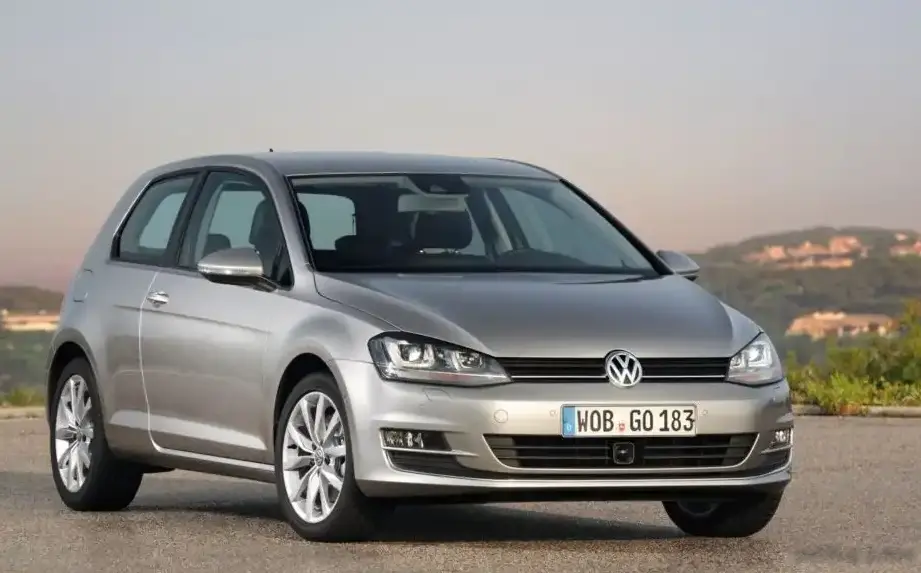
The Volkswagen Golf VII 1.2 TSI (85 hp) 3-door, produced from 2012 to 2016, represented an entry point into the seventh generation of Volkswagen’s iconic hatchback. Positioned as a fuel-efficient and affordable option, this variant played a significant role in the Golf VII’s success, particularly in European markets where smaller displacement engines were favored due to taxation and fuel costs. It was built on the Volkswagen Group’s MQB (Modular Transverse Matrix) platform – designated 1HX0 for the 3-door – which underpinned a wide range of vehicles across the VW, Audi, SEAT, and Škoda brands. This specific configuration, combining the 1.2-liter turbocharged petrol engine with a five-speed manual transmission, aimed to balance practicality with reasonable running costs.
Technical Specifications
| Brand | Volkswagen |
| Model | Golf |
| Generation | Golf VII (3-door) |
| Type (Engine) | 1.2 TSI (85 Hp) |
| Start of production | 2012 |
| End of production | 2016 |
| Powertrain Architecture | Internal Combustion engine |
| Body type | Hatchback |
| Seats | 5 |
| Doors | 3 |
| Fuel consumption (urban) | 5.9 l/100 km (39.9 US mpg, 47.9 UK mpg, 16.9 km/l) |
| Fuel consumption (extra urban) | 4.2 l/100 km (56 US mpg, 67.3 UK mpg, 23.8 km/l) |
| Fuel consumption (combined) | 4.9 l/100 km (48 US mpg, 57.6 UK mpg, 20.4 km/l) |
| CO2 emissions | 113 g/km |
| Fuel Type | Petrol (Gasoline) |
| Acceleration 0 – 100 km/h | 11.9 sec |
| Acceleration 0 – 62 mph | 11.9 sec |
| Acceleration 0 – 60 mph | 11.3 sec |
| Maximum speed | 179 km/h (111.23 mph) |
| Emission standard | Euro 5 |
| Weight-to-power ratio | 13.3 kg/Hp, 75.2 Hp/tonne |
| Weight-to-torque ratio | 7.1 kg/Nm, 141.6 Nm/tonne |
| Power | 85 Hp @ 4300-5300 rpm |
| Power per litre | 71 Hp/l |
| Torque | 160 Nm @ 1400-3500 rpm (118.01 lb.-ft. @ 1400-3500 rpm) |
| Engine layout | Front, Transverse |
| Engine Model/Code | CJZB, CYVA |
| Engine displacement | 1197 cm3 (73.05 cu. in.) |
| Number of cylinders | 4 |
| Engine configuration | Inline |
| Cylinder Bore | 71 mm (2.8 in.) |
| Piston Stroke | 75.6 mm (2.98 in.) |
| Compression ratio | 10.5:1 |
| Number of valves per cylinder | 2 |
| Fuel injection system | Direct injection |
| Engine aspiration | Turbocharger, Intercooler |
| Valvetrain | SOHC |
| Engine oil capacity | 4 l (4.23 US qt | 3.52 UK qt) |
| Kerb Weight | 1130 kg (2491.22 lbs.) |
| Max. weight | 1720 kg (3791.95 lbs.) |
| Max load | 590 kg (1300.73 lbs.) |
| Trunk (boot) space – minimum | 380 l (13.42 cu. ft.) |
| Trunk (boot) space – maximum | 1270 l (44.85 cu. ft.) |
| Fuel tank capacity | 50 l (13.21 US gal | 11 UK gal) |
| Max. roof load | 75 kg (165.35 lbs.) |
| Permitted trailer load with brakes (12%) | 1100 kg (2425.08 lbs.) |
| Permitted trailer load without brakes | 600 kg (1322.77 lbs.) |
| Permitted towbar download | 80 kg (176.37 lbs.) |
| Length | 4255 mm (167.52 in.) |
| Width | 1799 mm (70.83 in.) |
| Width including mirrors | 2027 mm (79.8 in.) |
| Height | 1452 mm (57.17 in.) |
| Wheelbase | 2637 mm (103.82 in.) |
| Front track | 1549 mm (60.98 in.) |
| Rear track | 1520 mm (59.84 in.) |
| Ride height (ground clearance) | 142 mm (5.59 in.) |
| Minimum turning circle | 10.9 m (35.76 ft.) |
| Front suspension | Independent, type McPherson with coil spring and anti-roll bar |
| Rear suspension | Coil spring, Torsion |
| Front brakes | Ventilated discs |
| Rear brakes | Disc |
| Assisting systems | ABS (Anti-lock braking system) |
| Steering type | Steering rack and pinion |
| Power steering | Electric Steering |
| Tires size | 195/65 R15 |
| Wheel rims size | 6J x 15 |
Powertrain & Engine Architecture
The heart of this Golf variant was the CJZB or CYVA engine code, a 1.2-liter inline-four cylinder petrol engine. This engine was part of Volkswagen’s EA111 family, known for its compact size and efficiency. It featured direct fuel injection (FSI) and a single turbocharger with an intercooler, allowing for a reasonable power output from a small displacement. The engine utilized a Single Overhead Camshaft (SOHC) valvetrain with two valves per cylinder. The five-speed manual transmission was a standard offering, providing a relatively conventional driving experience. The engine’s turbocharger provided a boost in torque at lower RPMs, aiding in everyday drivability, but the overall power delivery was not particularly strong.
Driving Characteristics
The 1.2 TSI 85 hp Golf VII was not designed for outright performance. Acceleration from 0-60 mph took around 11.3 seconds, and top speed was limited to 111.23 mph. The focus was on fuel economy and ease of driving. The gear ratios in the five-speed manual transmission were geared towards maximizing fuel efficiency rather than providing sporty acceleration. Compared to higher-output Golf VII variants, such as the 1.4 TSI or the diesel models, this version felt noticeably slower, especially when fully loaded or tackling inclines. However, the turbocharger did provide a usable amount of torque for merging onto highways and overtaking, although it required downshifting for more decisive maneuvers. The lighter engine weight contributed to a balanced feel, but the overall driving experience was more about practicality than excitement.
Equipment & Trim Levels
The 1.2 TSI 85 hp model typically represented the entry-level trim in the Golf VII range. Standard equipment generally included air conditioning, electric front windows, a basic audio system with USB connectivity, and ABS brakes. Safety features like multiple airbags were also standard. Interior upholstery was typically cloth, and the dashboard featured a functional but relatively basic design. Optional extras included alloy wheels, a more advanced infotainment system with touchscreen display, parking sensors, and cruise control. Higher trim levels, such as Trendline or Comfortline, added more features as standard, but the base 1.2 TSI model prioritized affordability.
Chassis & Braking
The Golf VII 1.2 TSI utilized a McPherson strut front suspension and a torsion beam rear suspension. This setup provided a good balance between ride comfort and handling. The front brakes were ventilated discs, while the rear brakes were solid discs. The suspension was tuned for comfort, resulting in a relatively soft ride quality. The steering was electrically assisted, providing light and easy steering feel. The relatively low weight of the vehicle, compared to higher-spec Golfs, helped to mitigate the limitations of the suspension and braking system.
Market Reception & Comparison
The 1.2 TSI 85 hp Golf VII was generally well-received as a sensible and economical choice. Critics praised its fuel efficiency and low running costs, but noted its lack of outright performance. Compared to the 1.4 TSI variants, the 1.2 TSI offered lower purchase price and better fuel economy, but at the expense of power and refinement. The diesel models, such as the 1.6 TDI, provided even better fuel economy and more torque, but were typically more expensive to purchase. The 1.2 TSI appealed to buyers who prioritized practicality and affordability over driving excitement.
Legacy
The 1.2 TSI engine, while not known for being particularly robust, proved generally reliable when properly maintained. Common issues included carbon buildup on the intake valves, which could lead to rough running and reduced performance. Regular oil changes and the use of quality fuel were essential for maintaining the engine’s health. In the used car market, the Golf VII 1.2 TSI 85 hp remains an affordable option for those seeking a practical and economical hatchback. However, potential buyers should be aware of the potential for carbon buildup and ensure that the vehicle has been well-maintained. The engine’s relatively simple design makes it relatively inexpensive to repair, but preventative maintenance is key to avoiding major issues.