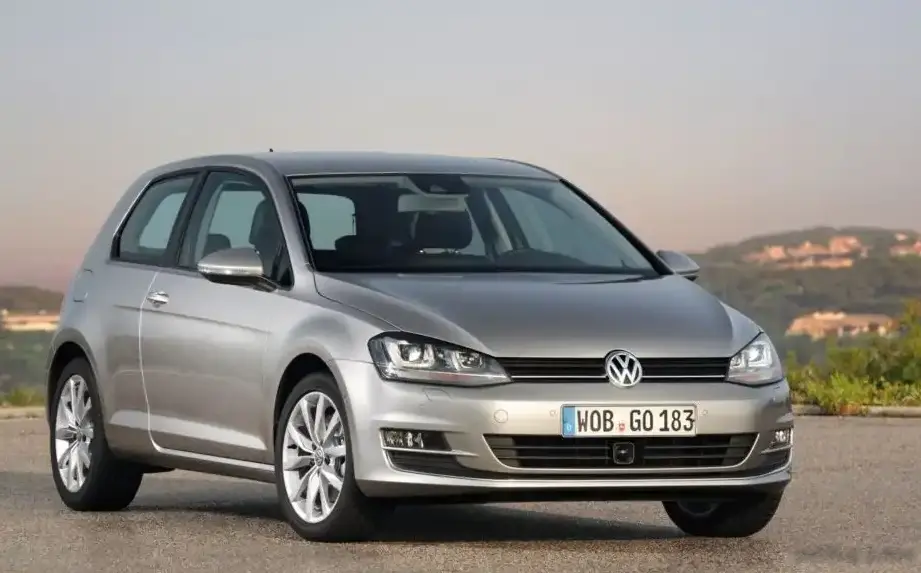
The Volkswagen Golf VII 1.4 TSI (122 hp) 3-door, produced from 2012 to 2014, represents a key iteration of the seventh-generation Golf, a model that significantly advanced Volkswagen’s presence in the global compact hatchback market. Positioned as a mid-range offering within the Golf VII lineup, this variant aimed to balance fuel efficiency with respectable performance, appealing to buyers seeking a practical and modern vehicle. It was built on the Volkswagen Group’s MQB (Modular Transverse Matrix) platform, also known as the A7 platform, which underpinned a wide range of vehicles across several brands. This particular engine and transmission combination was popular in Europe, offering a compelling alternative to diesel options while providing a more engaging driving experience than the base-level engines.
Technical Specifications
| Brand | Volkswagen |
| Model | Golf |
| Generation | Golf VII (3-door) |
| Type (Engine) | 1.4 TSI (122 Hp) |
| Start of production | 2012 |
| End of production | 2014 |
| Powertrain Architecture | Internal Combustion engine |
| Body type | Hatchback |
| Seats | 5 |
| Doors | 3 |
| Fuel consumption (urban) | 6.6 l/100 km (35.6 US mpg, 42.8 UK mpg, 15.2 km/l) |
| Fuel consumption (extra urban) | 4.3 l/100 km (54.7 US mpg, 65.7 UK mpg, 23.3 km/l) |
| Fuel consumption (combined) | 5.2 l/100 km (45.2 US mpg, 54.3 UK mpg, 19.2 km/l) |
| CO2 emissions | 120 g/km |
| Fuel Type | Petrol (Gasoline) |
| Acceleration 0 – 100 km/h | 9.3 sec |
| Acceleration 0 – 62 mph | 9.3 sec |
| Acceleration 0 – 60 mph | 8.8 sec |
| Maximum speed | 203 km/h (126.14 mph) |
| Emission standard | Euro 5 |
| Weight-to-power ratio | 9.4 kg/Hp, 106.1 Hp/tonne |
| Weight-to-torque ratio | 5.8 kg/Nm, 173.9 Nm/tonne |
| Power | 122 Hp @ 5000 rpm |
| Power per litre | 87.8 Hp/l |
| Torque | 200 Nm @ 1800-4000 rpm (147.51 lb.-ft. @ 1800-4000 rpm) |
| Engine layout | Front, Transverse |
| Engine Model/Code | CMBA |
| Engine displacement | 1390 cm3 (84.82 cu. in.) |
| Number of cylinders | 4 |
| Engine configuration | Inline |
| Cylinder Bore | 74.5 mm (2.93 in.) |
| Piston Stroke | 80 mm (3.15 in.) |
| Compression ratio | 10:1 |
| Number of valves per cylinder | 4 |
| Fuel injection system | Direct injection |
| Engine aspiration | Turbocharger, Intercooler |
| Valvetrain | DOHC |
| Engine oil capacity | 4 l (4.23 US qt | 3.52 UK qt) |
| Kerb Weight | 1150 kg (2535.32 lbs.) |
| Max. weight | 1720 kg (3791.95 lbs.) |
| Max load | 570 kg (1256.63 lbs.) |
| Trunk (boot) space – minimum | 380 l (13.42 cu. ft.) |
| Trunk (boot) space – maximum | 1270 l (44.85 cu. ft.) |
| Fuel tank capacity | 50 l (13.21 US gal | 11 UK gal) |
| Max. roof load | 75 kg (165.35 lbs.) |
| Permitted trailer load with brakes (12%) | 1400 kg (3086.47 lbs.) |
| Permitted trailer load without brakes | 610 kg (1344.82 lbs.) |
| Permitted towbar download | 80 kg (176.37 lbs.) |
| Length | 4255 mm (167.52 in.) |
| Width | 1799 mm (70.83 in.) |
| Width including mirrors | 2027 mm (79.8 in.) |
| Height | 1452 mm (57.17 in.) |
| Wheelbase | 2637 mm (103.82 in.) |
| Front track | 1549 mm (60.98 in.) |
| Rear track | 1520 mm (59.84 in.) |
| Ride height (ground clearance) | 142 mm (5.59 in.) |
| Minimum turning circle | 10.9 m (35.76 ft.) |
| Front suspension | Independent, type McPherson with coil spring and anti-roll bar |
| Rear suspension | Independent multi-link spring suspension with stabilizer |
| Front brakes | Ventilated discs |
| Rear brakes | Disc |
| Assisting systems | ABS (Anti-lock braking system) |
| Steering type | Steering rack and pinion |
| Power steering | Electric Steering |
| Tires size | 205/55 R16 |
| Wheel rims size | 6.5J x 16 |
Powertrain & Engine Architecture
The heart of this Golf variant is the 1.4-liter TSI (Turbocharged Stratified Injection) engine, specifically the CMBA engine code. This engine is a four-cylinder, inline configuration, featuring direct fuel injection and a turbocharger with an intercooler. Direct injection allows for precise fuel delivery, improving efficiency and reducing emissions. The turbocharger boosts power output by forcing more air into the cylinders. The CMBA engine utilizes a timing chain, contributing to its longevity and reduced maintenance compared to timing belt systems. The engine produces 122 horsepower at 5000 rpm and 200 Nm (147.51 lb-ft) of torque between 1800 and 4000 rpm. This engine was paired with a six-speed automatic transmission, offering smooth gear changes and convenience for everyday driving. The transmission was a conventional torque converter automatic, prioritizing comfort over outright performance.
Driving Characteristics
The 1.4 TSI with the automatic transmission delivers a comfortable and refined driving experience. Acceleration from 0-60 mph takes approximately 8.8 seconds, which is adequate for most daily driving situations but noticeably slower than the manual transmission or higher-powered TSI variants. The automatic transmission is tuned for fuel efficiency, meaning it upshifts quickly to maintain lower engine speeds. This can sometimes result in the engine feeling slightly strained during overtaking maneuvers or when climbing hills. The gear ratios are optimized for cruising, providing a relaxed experience on the highway. Compared to the 1.6-liter base engine, the 1.4 TSI offers a significant performance boost. However, it lacks the punch and responsiveness of the 2.0-liter TSI models.
Equipment & Trim Levels
The 1.4 TSI 3-door Golf typically came equipped with a reasonable level of standard features. These included air conditioning, power windows, power mirrors, a CD/MP3 stereo system, and alloy wheels. Higher trim levels, such as Trendline or Comfortline, added features like cruise control, a multi-function steering wheel, and upgraded upholstery. Optional extras included a sunroof, parking sensors, and a navigation system. Interior upholstery was typically cloth, with the option of leather upgrades. The dashboard layout was clean and functional, with a focus on ergonomics.
Chassis & Braking
The Golf VII’s chassis features independent suspension all around – McPherson struts at the front and a multi-link setup at the rear. This provides a good balance between ride comfort and handling. The 1.4 TSI variant typically used ventilated disc brakes at the front and solid disc brakes at the rear. ABS (Anti-lock Braking System) was standard. The suspension was tuned to prioritize comfort, resulting in a slightly softer ride compared to the sportier GTI models. Stabilizer bars were fitted to both the front and rear axles to reduce body roll during cornering.
Market Reception & Comparison
The Golf VII 1.4 TSI automatic was generally well-received by automotive critics. It was praised for its fuel efficiency, comfortable ride, and refined engine. However, some reviewers noted that the automatic transmission could feel sluggish at times, and the engine lacked the excitement of the more powerful TSI options. Compared to the 1.6-liter base engine, the 1.4 TSI offered a noticeable improvement in performance and refinement. Compared to the diesel variants, the 1.4 TSI offered a quieter and smoother driving experience, but typically at the expense of fuel economy. The 1.4 TSI automatic was a popular choice for buyers who prioritized comfort and convenience over outright performance.
Legacy
The 1.4 TSI engine, in various iterations, proved to be a reliable and durable powertrain. The CMBA engine code, while not without its occasional issues (such as potential carbon buildup on the intake valves), generally holds up well with regular maintenance. In the used car market, the Golf VII 1.4 TSI automatic remains a popular choice due to its affordability, practicality, and relatively low running costs. However, potential buyers should be aware of the importance of regular oil changes and servicing to prevent potential issues. The Golf VII, as a whole, cemented Volkswagen’s reputation for building high-quality, well-engineered compact hatchbacks.