Technical Specifications
| Brand | Volkswagen |
| Model | Golf |
| Generation | Golf VII (3-door) |
| Type (Engine) | GTD 2.0 TDI (184 Hp) |
| Start of production | 2013 |
| End of production | 2017 |
| Powertrain Architecture | Internal Combustion engine |
| Body type | Hatchback |
| Seats | 5 |
| Doors | 3 |
| Fuel consumption (economy) – urban (NEDC) | 5.1 l/100 km (46.1 US mpg, 55.4 UK mpg, 19.6 km/l) |
| Fuel consumption (economy) – extra urban (NEDC) | 3.7 l/100 km (63.6 US mpg, 76.3 UK mpg, 27 km/l) |
| Fuel consumption (economy) – combined (NEDC) | 4.2 l/100 km (56 US mpg, 67.3 UK mpg, 23.8 km/l) |
| CO2 emissions (NEDC) | 109 g/km |
| Fuel Type | Diesel |
| Acceleration 0 – 100 km/h | 7.5 sec |
| Acceleration 0 – 62 mph | 7.5 sec |
| Acceleration 0 – 60 mph | 7.1 sec |
| Maximum speed | 230 km/h (142.92 mph) |
| Emission standard | Euro 6 |
| Weight-to-power ratio | 7.1 kg/Hp, 141.3 Hp/tonne |
| Weight-to-torque ratio | 3.4 kg/Nm, 291.9 Nm/tonne |
| Power | 184 Hp @ 3500-4000 rpm |
| Torque | 380 Nm @ 1750-3250 rpm (280.27 lb.-ft. @ 1750-3250 rpm) |
| Engine layout | Front, Transverse |
| Engine Model/Code | EA288 / CUNA, DGCA |
| Engine displacement | 1968 cm3 (120.09 cu. in.) |
| Number of cylinders | 4 |
| Engine configuration | Inline |
| Cylinder Bore | 81 mm (3.19 in.) |
| Piston Stroke | 95.5 mm (3.76 in.) |
| Compression ratio | 15.8:1 |
| Number of valves per cylinder | 4 |
| Fuel injection system | Diesel Commonrail |
| Engine aspiration | Turbocharger, Intercooler |
| Valvetrain | DOHC |
| Engine oil capacity | 4.7 l (4.97 US qt | 4.14 UK qt) |
| Coolant | 7.5 l (7.93 US qt | 6.6 UK qt) |
| Kerb Weight | 1302 kg (2870.42 lbs.) |
| Max. weight | 1850 kg (4078.55 lbs.) |
| Max load | 548 kg (1208.13 lbs.) |
| Trunk (boot) space – minimum | 380 l (13.42 cu. ft.) |
| Trunk (boot) space – maximum | 1270 l (44.85 cu. ft.) |
| Fuel tank capacity | 50 l (13.21 US gal | 11 UK gal) |
| Max. roof load | 75 kg (165.35 lbs.) |
| Permitted trailer load with brakes (8%) | 1800 kg (3968.32 lbs.) |
| Permitted trailer load with brakes (12%) | 1600 kg (3527.4 lbs.) |
| Permitted trailer load without brakes | 680 kg (1499.14 lbs.) |
| Permitted towbar download | 80 kg (176.37 lbs.) |
| Length | 4268 mm (168.03 in.) |
| Width | 1799 mm (70.83 in.) |
| Width including mirrors | 2027 mm (79.8 in.) |
| Height | 1442 mm (56.77 in.) |
| Wheelbase | 2631 mm (103.58 in.) |
| Front track | 1538 mm (60.55 in.) |
| Rear (Back) track | 1517 mm (59.72 in.) |
| Ride height (ground clearance) | 133 mm (5.24 in.) |
| Minimum turning circle (turning diameter) | 10.9 m (35.76 ft.) |
| Front suspension | Independent, type McPherson with coil spring and anti-roll bar |
| Rear suspension | Independent multi-link spring suspension with stabilizer |
| Front brakes | Ventilated discs |
| Rear brakes | Disc |
| Drive wheel | Front wheel drive |
| Number of gears and type of gearbox | 6 gears, manual transmission |
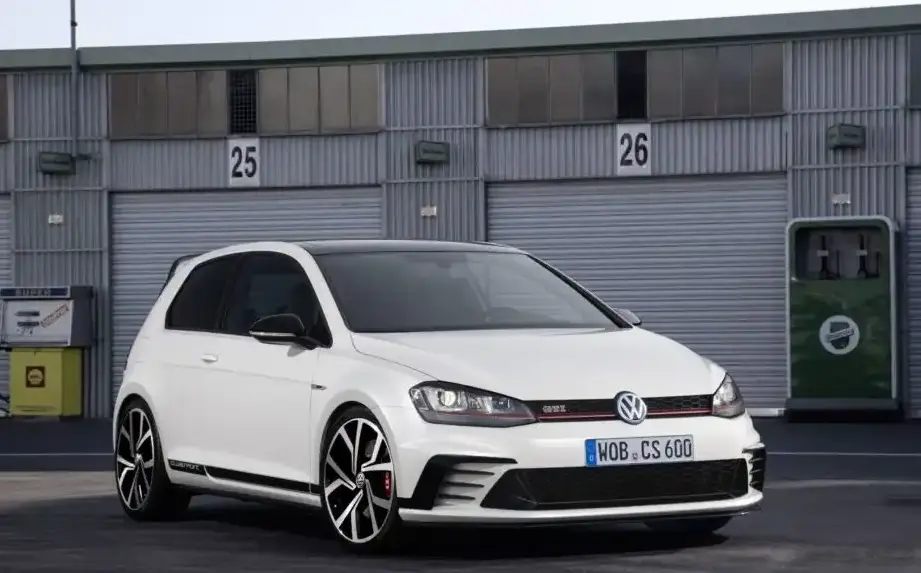
The Volkswagen Golf VII GTD 2.0 TDI (184 hp) debuted in 2013 as part of the Mk7 Golf range, building upon the success of previous GTD models. It occupied a middle ground within the Golf VII lineup, offering more performance than the standard TDI models but remaining more economical and practical than the full-blown Golf GTI. The three-door body style, while less common in the US market, was popular in Europe due to its sportier appearance and slightly reduced weight. The GTD aimed to appeal to drivers seeking a refined and efficient diesel car with a touch of sporting flair.
Powertrain & Engine Architecture
At the heart of the Golf VII GTD is the EA288 series 2.0-liter four-cylinder diesel engine. The specific engine codes used for this output level were typically CUNA or DGCA, depending on the exact production year and market. This engine utilizes a common rail direct injection system, delivering fuel at extremely high pressures for optimized combustion. The GTD benefits from a single turbocharger with an intercooler, boosting power output to 184 horsepower at 3500-4000 rpm and 380 Nm (280 lb-ft) of torque between 1750-3250 rpm. The engine features a dual overhead camshaft (DOHC) valvetrain with four valves per cylinder. The six-speed manual transmission was standard, providing precise gear changes and contributing to the car’s engaging driving experience. The engine also incorporated a particulate filter and a Start & Stop system to reduce emissions and improve fuel economy.
Driving Characteristics
The 184 hp GTD offered a noticeable step up in performance compared to lower-powered Golf TDI models. While not as overtly sporty as the GTI, the GTD provided ample torque for effortless cruising and brisk acceleration. The 0-60 mph sprint took around 7.1 seconds, and the car could reach a top speed of 143 mph. The manual transmission allowed for greater driver control, and the well-chosen gear ratios ensured that the engine remained within its optimal power band during everyday driving. The GTD’s suspension was tuned for a balance between comfort and handling, offering a more controlled and responsive feel than the standard Golf. The steering was precise and well-weighted, contributing to a confident driving experience.
Equipment & Trim Levels
The GTD trim level came well-equipped as standard. Interior features typically included sport seats upholstered in a unique fabric pattern, a leather-wrapped multi-function steering wheel, and aluminum pedals. The dashboard featured GTD-specific trim elements, and the infotainment system included a touchscreen display with Bluetooth connectivity. Optional extras included features such as a panoramic sunroof, navigation system, adaptive cruise control, and parking sensors. Exterior styling cues included a distinctive front bumper with a honeycomb grille, side skirts, a rear diffuser, and a roof spoiler. The GTD also featured darkened taillights and 17-inch alloy wheels as standard, with larger 18- or 19-inch wheels available as options.
Chassis & Braking
The Golf VII GTD utilized an independent suspension setup on both the front and rear axles. The front suspension employed a McPherson strut design with coil springs and an anti-roll bar, while the rear suspension featured a multi-link setup with a stabilizer bar. This configuration provided a good balance of ride comfort and handling precision. The braking system consisted of ventilated discs on the front wheels and solid discs on the rear. Anti-lock braking system (ABS) was standard, along with electronic stability control (ESC) and traction control. The GTD’s chassis was designed to handle the increased power output and provide a secure and stable driving experience.
Market Reception & Comparison
The Golf VII GTD was generally well-received by automotive critics. It was praised for its blend of performance, fuel efficiency, and practicality. Compared to the standard Golf TDI, the GTD offered a more engaging driving experience and a sportier appearance. Against the Golf GTI, the GTD provided a more economical alternative, albeit with slightly less outright performance. Fuel economy was a key strength, with combined figures averaging around 56 mpg. Reliability was generally good, although some owners reported issues with the diesel particulate filter (DPF) system, a common concern with modern diesel engines.
Legacy
The Golf VII GTD remains a popular choice in the used car market, particularly in Europe. The EA288 engine, while known for potential DPF issues if not properly maintained, is generally considered robust and reliable. The GTD’s combination of performance, fuel efficiency, and practicality continues to appeal to buyers seeking a versatile and enjoyable hatchback. Its status as a refined and sporty diesel car has cemented its place as a desirable variant within the Golf VII lineup. Well-maintained examples command reasonable prices, reflecting the car’s enduring appeal and reputation for quality.