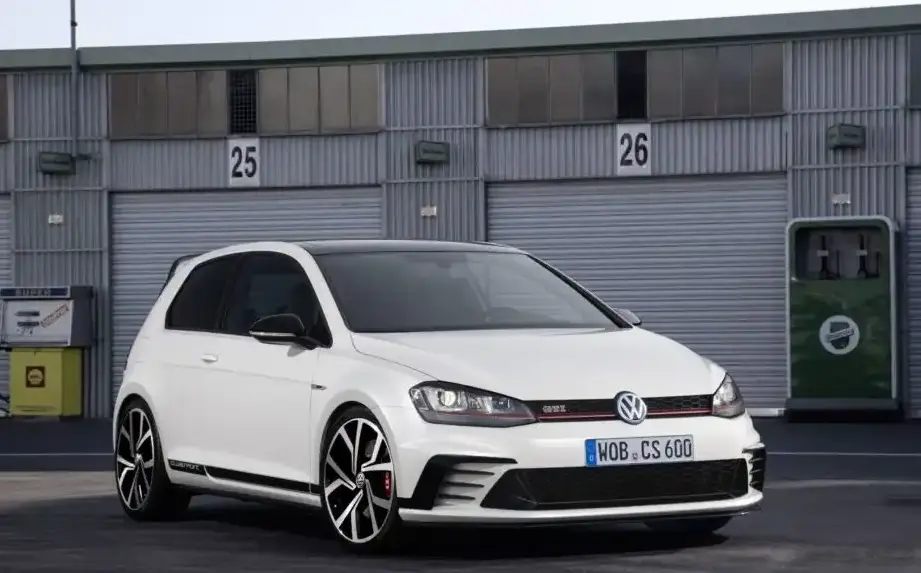
The Volkswagen Golf VII GTD 2.0 TDI (184 hp) DSG, produced from 2013 to 2017, represents a compelling blend of performance and efficiency within the seventh generation Golf lineup. Positioned as a sporty diesel variant, it offered a more economical and refined alternative to the GTI while still delivering a spirited driving experience. This three-door hatchback was primarily marketed in Europe, where diesel engines held significant market share, and offered a practical and engaging option for drivers seeking a balance between fuel economy and performance. It was built on the Volkswagen Group’s MQB (Modular Transverse Matrix) platform, specifically the A3 variant, shared with models like the Audi A3 and SEAT Leon.
Technical Specifications
| Brand | Volkswagen |
| Model | Golf |
| Generation | Golf VII (3-door) |
| Type (Engine) | GTD 2.0 TDI (184 Hp) DSG |
| Start of production | 2013 |
| End of production | 2017 |
| Powertrain Architecture | Internal Combustion engine |
| Body type | Hatchback |
| Seats | 5 |
| Doors | 3 |
| Fuel consumption (economy) – urban (NEDC) | 5.5 l/100 km (42.8 US mpg, 51.4 UK mpg, 18.2 km/l) |
| Fuel consumption (economy) – extra urban (NEDC) | 4 l/100 km (58.8 US mpg, 70.6 UK mpg, 25 km/l) |
| Fuel consumption (economy) – combined (NEDC) | 4.5 l/100 km (52.3 US mpg, 62.8 UK mpg, 22.2 km/l) |
| CO2 emissions (NEDC) | 119 g/km |
| Fuel Type | Diesel |
| Acceleration 0 – 100 km/h | 7.5 sec |
| Acceleration 0 – 62 mph | 7.5 sec |
| Acceleration 0 – 60 mph | 7.1 sec |
| Maximum speed | 228 km/h (141.67 mph) |
| Emission standard | Euro 6 |
| Weight-to-power ratio | 7.2 kg/Hp, 139.4 Hp/tonne |
| Weight-to-torque ratio | 3.5 kg/Nm, 287.9 Nm/tonne |
| Power | 184 Hp @ 3500-4000 rpm |
| Power per litre | 93.5 Hp/l |
| Torque | 380 Nm @ 1750-3250 rpm (280.27 lb.-ft. @ 1750-3250 rpm) |
| Engine layout | Front, Transverse |
| Engine Model/Code | EA288 / CUNA, DGCA |
| Engine displacement | 1968 cm3 (120.09 cu. in.) |
| Number of cylinders | 4 |
| Engine configuration | Inline |
| Cylinder Bore | 81 mm (3.19 in.) |
| Piston Stroke | 95.5 mm (3.76 in.) |
| Compression ratio | 15.8:1 |
| Number of valves per cylinder | 4 |
| Fuel injection system | Diesel Commonrail |
| Engine aspiration | Turbocharger, Intercooler |
| Valvetrain | DOHC |
| Engine oil capacity | 4.7 l (4.97 US qt | 4.14 UK qt) |
| Coolant | 7.5 l (7.93 US qt | 6.6 UK qt) |
| Kerb Weight | 1320 kg (2910.1 lbs.) |
| Max. weight | 1880 kg (4144.69 lbs.) |
| Max load | 560 kg (1234.59 lbs.) |
| Trunk (boot) space – minimum | 380 l (13.42 cu. ft.) |
| Trunk (boot) space – maximum | 1270 l (44.85 cu. ft.) |
| Fuel tank capacity | 50 l (13.21 US gal | 11 UK gal) |
| Max. roof load | 75 kg (165.35 lbs.) |
| Permitted trailer load with brakes (8%) | 1800 kg (3968.32 lbs.) |
| Permitted trailer load with brakes (12%) | 1600 kg (3527.4 lbs.) |
| Permitted trailer load without brakes | 690 kg (1521.19 lbs.) |
| Permitted towbar download | 80 kg (176.37 lbs.) |
| Length | 4268 mm (168.03 in.) |
| Width | 1799 mm (70.83 in.) |
| Width including mirrors | 2027 mm (79.8 in.) |
| Height | 1442 mm (56.77 in.) |
| Wheelbase | 2631 mm (103.58 in.) |
| Front track | 1538 mm (60.55 in.) |
| Rear (Back) track | 1517 mm (59.72 in.) |
| Ride height (ground clearance) | 133 mm (5.24 in.) |
| Minimum turning circle (turning diameter) | 10.9 m (35.76 ft.) |
| Approach angle | 12° |
| Departure angle | 13.6° |
| Ramp-over (brakeover) angle | 9.9° |
| Drivetrain Architecture | The Internal combustion engine (ICE) drives the front wheels of the vehicle. |
| Drive wheel | Front wheel drive |
| Number of gears and type of gearbox | 6 gears, automatic transmission DSG |
| Front suspension | Independent, type McPherson with coil spring and anti-roll bar |
| Rear suspension | Independent multi-link spring suspension with stabilizer |
| Front brakes | Ventilated discs |
| Rear brakes | Disc |
| Assisting systems | ABS (Anti-lock braking system) |
| Steering type | Steering rack and pinion |
| Power steering | Electric Steering |
| Tires size | 225/45 R17; 225/40 R18; 225/35 R19 |
| Wheel rims size | 7.5J x 17; 7.5J x 18; 7.5J x 19 |
Powertrain & Engine Architecture
The heart of the Golf VII GTD 184 hp is the EA288 series 2.0-liter inline-four diesel engine. Specifically, engines were designated with codes like CUNA or DGCA depending on the exact specification and emissions controls. This engine utilizes a common rail direct injection system, delivering fuel at extremely high pressures for optimized combustion. The engine features a variable geometry turbocharger (VGT) and an intercooler to enhance power and efficiency. The VGT adjusts the turbine vanes to optimize airflow across the engine’s operating range, reducing turbo lag and improving responsiveness. The engine also incorporates a Diesel Particulate Filter (DPF) and a Selective Catalytic Reduction (SCR) system with AdBlue injection to meet stringent Euro 6 emission standards. The dual-clutch gearbox (DSG) is a 6-speed unit, offering quick and smooth gear changes. It allows for both fully automatic operation and manual gear selection via steering wheel-mounted paddles or the gear selector.
Driving Characteristics
The 184 hp GTD with the DSG transmission provides a surprisingly brisk driving experience. Acceleration from 0-60 mph takes around 7.1-7.5 seconds. While not as overtly sporty as the GTI, the GTD offers ample torque – 380 Nm (280 lb-ft) – available from a low 1750 rpm. This makes it particularly well-suited for everyday driving and overtaking maneuvers. The DSG transmission contributes to a seamless power delivery, and the gear ratios are tuned for a balance between acceleration and fuel economy. Compared to the 105 hp or 150 hp diesel variants, the GTD offers a noticeable performance upgrade. However, it doesn’t quite match the raw acceleration of the GTI. The steering is precise and well-weighted, providing good feedback to the driver. The suspension is tuned for comfort, but still offers a reasonably controlled ride, even when pushed through corners.
Equipment & Trim Levels
The GTD trim level typically included a generous amount of standard equipment. This often included features like sports seats upholstered in fabric and Alcantara, a leather-wrapped multi-function steering wheel, automatic climate control, and a touchscreen infotainment system with Bluetooth connectivity. Optional extras included features like navigation, adaptive cruise control, parking sensors, and a panoramic sunroof. The interior generally featured a dark color scheme with subtle GTD badging. Exterior features included unique GTD-specific alloy wheels, a rear spoiler, and chrome exhaust tailpipes.
Chassis & Braking
The Golf VII GTD utilizes an independent suspension setup at both the front and rear. The front suspension employs a McPherson strut design with a coil spring and anti-roll bar, while the rear features a multi-link setup, also with a stabilizer bar. This configuration provides a good balance between ride comfort and handling. The braking system consists of ventilated discs at the front and solid discs at the rear. Anti-lock Braking System (ABS) is standard, along with Electronic Stability Control (ESC). The GTD typically features slightly larger brakes than the lower-powered diesel variants to cope with the increased performance.
Market Reception & Comparison
The Golf VII GTD was generally well-received by automotive critics. It was praised for its blend of performance, fuel economy, and practicality. Compared to the GTI, the GTD offered a more refined and economical driving experience, appealing to drivers who prioritized fuel efficiency and comfort. Against other diesel hatchbacks, the Golf GTD stood out for its sophisticated engine technology, well-balanced chassis, and high-quality interior. Fuel economy figures of around 52.3 US mpg (combined) were highly competitive. Reliability was generally good, although, like all modern diesels, the GTD’s emissions control systems (DPF, SCR) could be prone to issues if not properly maintained.
Legacy
The Golf VII GTD 2.0 TDI (184 hp) DSG remains a popular choice in the used car market. Its combination of performance, efficiency, and practicality continues to appeal to buyers. The EA288 engine, while complex, is generally considered to be robust and reliable when properly maintained. However, potential buyers should be aware of the potential costs associated with maintaining the diesel particulate filter and SCR system. The Golf VII GTD represents a high point in Volkswagen’s diesel technology, offering a compelling alternative to gasoline-powered hot hatches.