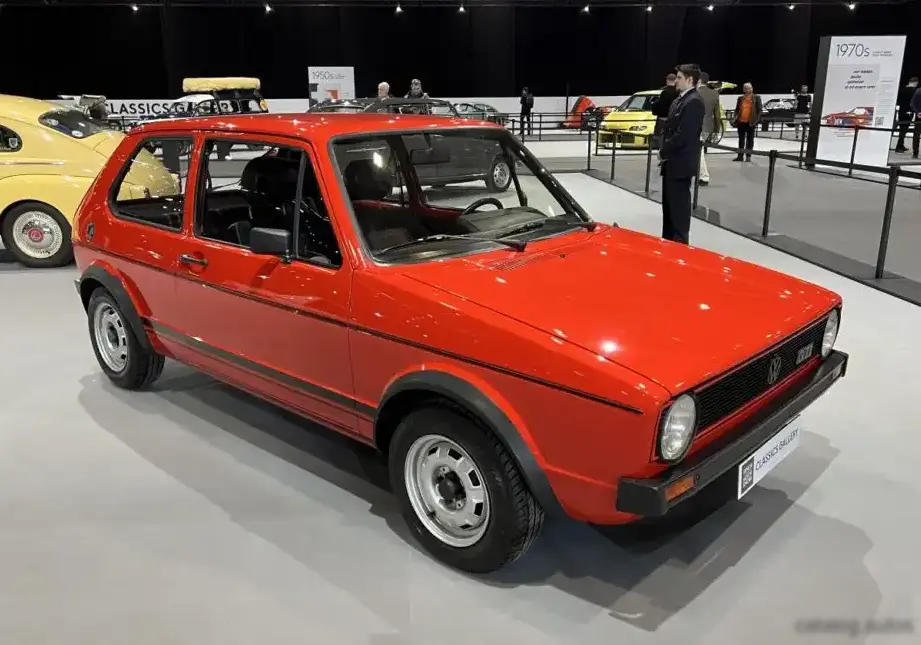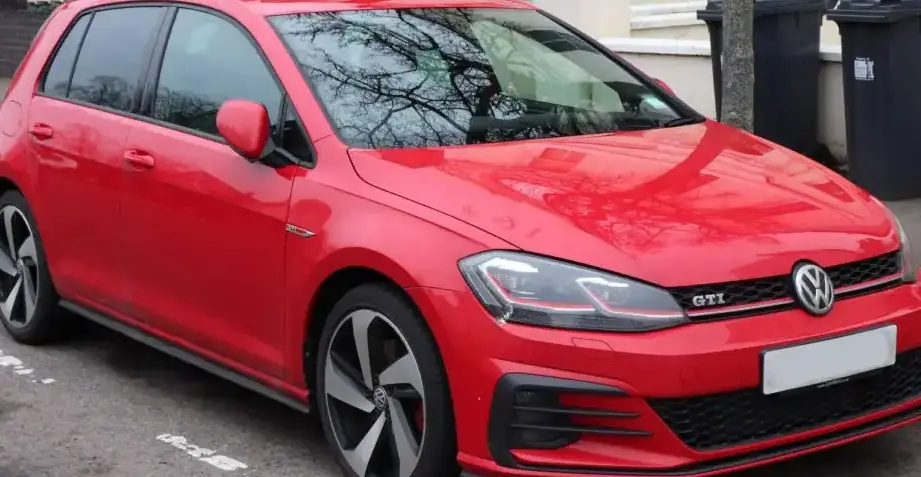
The Volkswagen Golf VII 1.0 TSI (115 hp) BlueMotion DSG, produced from April 2015 to December 2016, represented an entry point into the seventh-generation Golf range, particularly in European markets. Positioned as a fuel-efficient and accessible option, it catered to buyers prioritizing economy and ease of use over outright performance. This variant utilized Volkswagen’s three-cylinder, turbocharged gasoline engine paired with a seven-speed dual-clutch transmission (DSG), embodying the brand’s push towards downsizing and improved fuel efficiency. It was a key component of the Golf VII’s success, offering a modern hatchback experience at a competitive price point.
Technical Specifications
| Brand | Volkswagen |
| Model | Golf |
| Generation | Golf VII (5-door) |
| Type (Engine) | 1.0 TSI (115 Hp) BlueMotion DSG |
| Start of production | April, 2015 |
| End of production | December, 2016 |
| Powertrain Architecture | Internal Combustion engine |
| Body type | Hatchback |
| Seats | 5 |
| Doors | 5 |
| Fuel consumption (urban) | 5.3 l/100 km (44.4 US mpg, 53.3 UK mpg, 18.9 km/l) |
| Fuel consumption (extra urban) | 3.8 l/100 km (61.9 US mpg, 74.3 UK mpg, 26.3 km/l) |
| Fuel consumption (combined) | 4.3 l/100 km (54.7 US mpg, 65.7 UK mpg, 23.3 km/l) |
| CO2 emissions | 99 g/km |
| Fuel Type | Petrol (Gasoline) |
| Acceleration 0 – 100 km/h | 9.7 sec |
| Acceleration 0 – 62 mph | 9.7 sec |
| Acceleration 0 – 60 mph | 9.2 sec |
| Maximum speed | 204 km/h (126.76 mph) |
| Emission standard | Euro 6 |
| Weight-to-power ratio | 10.1 kg/Hp, 99.3 Hp/tonne |
| Weight-to-torque ratio | 5.8 kg/Nm, 172.7 Nm/tonne |
| Power | 115 Hp @ 5000-5500 rpm |
| Power per litre | 115.1 Hp/l |
| Torque | 200 Nm @ 2000-3500 rpm (147.51 lb.-ft. @ 2000-3500 rpm) |
| Engine layout | Front, Transverse |
| Engine Model/Code | CHZD |
| Engine displacement | 999 cm3 (60.96 cu. in.) |
| Number of cylinders | 3 |
| Engine configuration | Inline |
| Number of valves per cylinder | 4 |
| Fuel injection system | Direct injection |
| Engine aspiration | Turbocharger, Intercooler |
| Engine oil capacity | 4 l (4.23 US qt | 3.52 UK qt) |
| Kerb Weight | 1158 kg (2552.95 lbs.) |
| Max. weight | 1730 kg (3814 lbs.) |
| Max load | 572 kg (1261.04 lbs.) |
| Trunk (boot) space – minimum | 380 l (13.42 cu. ft.) |
| Trunk (boot) space – maximum | 1270 l (44.85 cu. ft.) |
| Fuel tank capacity | 50 l (13.21 US gal | 11 UK gal) |
| Max. roof load | 75 kg (165.35 lbs.) |
| Permitted trailer load with brakes (8%) | 1300 kg (2866.01 lbs.) |
| Permitted trailer load with brakes (12%) | 1000 kg (2204.62 lbs.) |
| Permitted trailer load without brakes | 610 kg (1344.82 lbs.) |
| Permitted towbar download | 80 kg (176.37 lbs.) |
| Length | 4255 mm (167.52 in.) |
| Width | 1799 mm (70.83 in.) |
| Width including mirrors | 2027 mm (79.8 in.) |
| Height | 1452 mm (57.17 in.) |
| Wheelbase | 2637 mm (103.82 in.) |
| Front track | 1549 mm (60.98 in.) |
| Rear (Back) track | 1520 mm (59.84 in.) |
| Ride height (ground clearance) | 142 mm (5.59 in.) |
| Minimum turning circle (turning diameter) | 10.9 m (35.76 ft.) |
| Drivetrain Architecture | The Internal combustion engine (ICE) drives the front wheels of the vehicle. |
| Drive wheel | Front wheel drive |
| Number of gears and type of gearbox | 7 gears, automatic transmission DSG |
| Front brakes | Ventilated discs |
| Rear brakes | Disc |
| Assisting systems | ABS (Anti-lock braking system) |
| Steering type | Steering rack and pinion |
| Power steering | Electric Steering |
| Tires size | 195/65 R15; 205/55 R16 |
| Wheel rims size | 6J x 15; 6.5J x 16 |
INTRODUCTION
The Volkswagen Golf VII 1.0 TSI (115 hp) BlueMotion DSG, launched in mid-2015, was a significant addition to the Golf lineup. Built on the MQB (Modular Transverse Matrix) platform – specifically the 1HX0/A3 variant – it aimed to broaden the Golf’s appeal by offering a more affordable and economical option. This variant was primarily marketed in Europe, where smaller displacement engines and fuel efficiency were highly valued. It served as a stepping stone into the Golf range, positioned below the more powerful 1.4 TSI and diesel variants. The “BlueMotion” designation indicated Volkswagen’s efforts to optimize fuel economy through aerodynamic enhancements and engine tuning.
Powertrain & Engine Architecture
At the heart of the Golf VII 1.0 TSI BlueMotion DSG lies the CHZD engine code, a 999cc three-cylinder, turbocharged gasoline engine. This engine is part of Volkswagen’s EA211 family, known for its compact size and efficiency. It features direct fuel injection, delivering fuel directly into the combustion chamber for improved combustion and reduced emissions. The engine utilizes a single turbocharger with an intercooler to boost power and torque. The valvetrain employs four valves per cylinder, contributing to efficient gas exchange. The seven-speed dual-clutch transmission (DSG) is a crucial component, offering quick and smooth gear changes. This particular DSG unit is designed for lower torque applications, making it suitable for the 1.0 TSI engine. The engine’s relatively small displacement and turbocharging contribute to its responsiveness and fuel efficiency.
Driving Characteristics
The 1.0 TSI (115 hp) with the DSG transmission delivers a surprisingly refined driving experience. While not offering the brisk acceleration of higher-powered Golf variants, it provides adequate performance for everyday driving. The 0-60 mph time of around 9.2 seconds is respectable for a car in this class. The DSG transmission is well-tuned, providing seamless gear changes and contributing to a smooth ride. The gear ratios are optimized for fuel efficiency, with taller gearing in higher gears. Compared to the manual transmission version, the DSG offers greater convenience, particularly in urban traffic. However, some drivers may prefer the more engaging feel of a manual gearbox. The engine’s torque delivery is relatively linear, with peak torque available from 2000-3500 rpm, making it easy to drive in various conditions. It doesn’t have the punch of the larger engines, but it’s perfectly adequate for most situations.
Equipment & Trim Levels
The Golf VII 1.0 TSI BlueMotion DSG typically came with a reasonable level of standard equipment. This included air conditioning, power windows, central locking, and an infotainment system with a touchscreen display. Safety features such as ABS, ESP (Electronic Stability Program), and multiple airbags were standard. Interior upholstery was typically cloth, with a functional and durable design. Higher trim levels offered options such as alloy wheels, parking sensors, cruise control, and upgraded infotainment systems. The dashboard layout was typical of the Golf VII, with a clean and ergonomic design. Optional extras included a panoramic sunroof, leather upholstery, and advanced driver assistance systems.
Chassis & Braking
The Golf VII 1.0 TSI BlueMotion DSG utilized a MacPherson strut front suspension and a multi-link rear suspension, providing a comfortable and controlled ride. The suspension was tuned to balance comfort and handling, offering a good compromise for everyday driving. The braking system consisted of ventilated discs on the front wheels and solid discs on the rear wheels. ABS (Anti-lock Braking System) was standard, enhancing braking performance and stability. The steering was electric power-assisted, providing light and precise steering feel. Stabilizer bars were fitted to both the front and rear axles to reduce body roll during cornering. The chassis was designed to be lightweight, contributing to improved fuel efficiency and handling.
Market Reception & Comparison
The Golf VII 1.0 TSI BlueMotion DSG was generally well-received by critics, who praised its fuel efficiency and refined driving experience. It was seen as a sensible and practical choice for buyers prioritizing economy and ease of use. Compared to the 1.4 TSI and diesel variants, the 1.0 TSI offered lower running costs but less outright performance. The 1.4 TSI provided a noticeable power boost, while the diesel variants offered even better fuel economy. However, the 1.0 TSI was often considered a good value proposition, offering a modern and well-equipped hatchback at a competitive price. Fuel economy figures consistently demonstrated the variant’s efficiency, making it an attractive option for those covering high mileages.
Legacy
The 1.0 TSI engine, and specifically the CHZD code, has proven to be a relatively reliable powertrain. While some early examples experienced minor issues with the turbocharger and fuel injectors, these were generally addressed through software updates and revised components. The DSG transmission, when properly maintained, is also known for its durability. Today, used examples of the Golf VII 1.0 TSI BlueMotion DSG are readily available and represent a cost-effective entry point into Golf ownership. They continue to appeal to buyers seeking a fuel-efficient and reliable hatchback for everyday use. The engine’s compact size and efficiency have paved the way for further downsizing in Volkswagen’s engine lineup, and it remains a popular choice in other models within the VW Group.