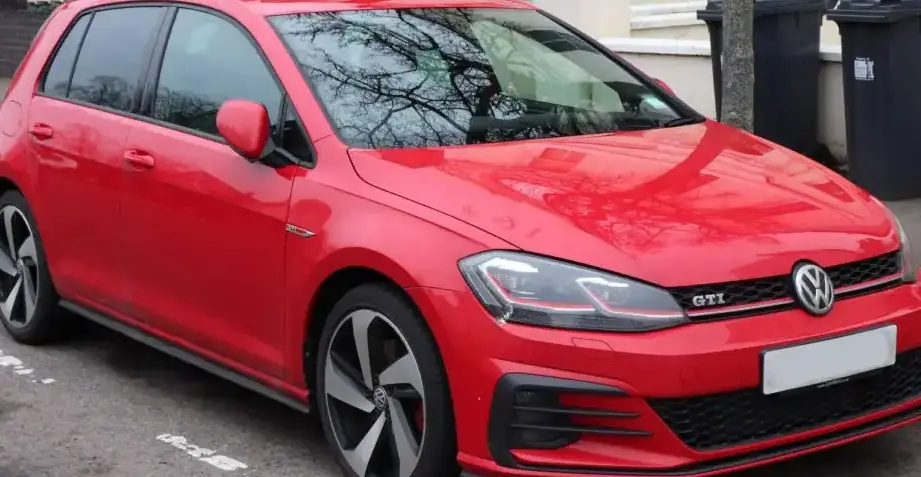
The Volkswagen Golf VII 1.4 TSI (125 hp) represents a significant iteration in the Golf lineage, produced between April 2014 and 2017. Positioned as a mid-range offering within the seventh-generation Golf (Mk7) lineup, this variant aimed to balance fuel efficiency with acceptable performance for everyday driving. Built on the Volkswagen Group’s MQB (Modular Transverse Matrix) platform – also known internally as the 1HX0/A3 platform – it shared its core structure with models like the Audi A3, SEAT Leon, and Skoda Octavia. The 1.4 TSI engine, coupled with a six-speed manual transmission, was a popular choice for buyers seeking a practical and economical hatchback.
Technical Specifications
| Brand | Volkswagen |
| Model | Golf |
| Generation | Golf VII (5-door) |
| Type (Engine) | 1.4 TSI (125 Hp) |
| Start of production | April, 2014 |
| End of production | 2017 |
| Powertrain Architecture | Internal Combustion engine |
| Body type | Hatchback |
| Seats | 5 |
| Doors | 5 |
| Fuel consumption (urban) | 6.7 l/100 km (35.1 US mpg, 42.2 UK mpg, 14.9 km/l) |
| Fuel consumption (extra urban) | 4.3 l/100 km (54.7 US mpg, 65.7 UK mpg, 23.3 km/l) |
| Fuel consumption (combined) | 5.2 l/100 km (45.2 US mpg, 54.3 UK mpg, 19.2 km/l) |
| CO2 emissions | 120 g/km |
| Fuel Type | Petrol (Gasoline) |
| Acceleration 0 – 100 km/h | 9.1 sec |
| Acceleration 0 – 62 mph | 9.1 sec |
| Acceleration 0 – 60 mph | 8.6 sec |
| Maximum speed | 204 km/h (126.76 mph) |
| Emission standard | Euro 6 |
| Weight-to-power ratio | 9.8 kg/Hp, 102 Hp/tonne |
| Weight-to-torque ratio | 6.1 kg/Nm, 163.3 Nm/tonne |
| Power | 125 Hp @ 5000-6000 rpm |
| Power per litre | 89.6 Hp/l |
| Torque | 200 Nm @ 1400-4000 rpm (147.51 lb.-ft. @ 1400-4000 rpm) |
| Engine layout | Front, Transverse |
| Engine Model/Code | CZCA, CZDD |
| Engine displacement | 1395 cm3 (85.13 cu. in.) |
| Number of cylinders | 4 |
| Engine configuration | Inline |
| Number of valves per cylinder | 4 |
| Fuel injection system | Direct injection |
| Engine aspiration | Turbocharger, Intercooler |
| Engine oil capacity | 4 l (4.23 US qt | 3.52 UK qt) |
| Kerb Weight | 1225 kg (2700.66 lbs.) |
| Max. weight | 1730 kg (3814 lbs.) |
| Max load | 505 kg (1113.33 lbs.) |
| Trunk (boot) space – minimum | 380 l (13.42 cu. ft.) |
| Trunk (boot) space – maximum | 1270 l (44.85 cu. ft.) |
| Fuel tank capacity | 50 l (13.21 US gal | 11 UK gal) |
| Length | 4255 mm (167.52 in.) |
| Width | 1799 mm (70.83 in.) |
| Height | 1452 mm (57.17 in.) |
| Wheelbase | 2637 mm (103.82 in.) |
| Front track | 1549 mm (60.98 in.) |
| Rear (Back) track | 1520 mm (59.84 in.) |
| Minimum turning circle | 10.9 m (35.76 ft.) |
| Drivetrain Architecture | The Internal combustion engine (ICE) drives the front wheels of the vehicle. |
| Drive wheel | Front wheel drive |
| Number of gears and type of gearbox | 6 gears, manual transmission |
| Front brakes | Ventilated discs |
| Rear brakes | Disc |
| Assisting systems | ABS (Anti-lock braking system) |
| Steering type | Steering rack and pinion |
| Tires size | 195/65 R15 |
| Wheel rims size | 6J x 15 |
Powertrain & Engine Architecture
The heart of the Golf VII 1.4 TSI (125 hp) is the EA211 engine family. Specifically, the CZCA and CZDD engine codes were commonly used for this output. This 1.4-liter, inline-four cylinder engine utilizes direct fuel injection and a turbocharger with an intercooler to boost power and efficiency. The direct injection system, operating at pressures up to 150 bar, ensures precise fuel delivery and optimized combustion. The engine features four valves per cylinder and a timing chain, contributing to its durability. The turbocharger provides increased air intake, enhancing torque across a broad RPM range. The six-speed manual transmission was the standard offering, providing drivers with full control over gear selection. The transmission’s gear ratios were tuned for a balance between acceleration and fuel economy.
Driving Characteristics
The 125 hp 1.4 TSI Golf VII offered a comfortable and refined driving experience. While not overtly sporty, it provided sufficient power for everyday commuting and highway cruising. Acceleration from 0-60 mph took approximately 8.6 seconds, and top speed was rated at 126.76 mph. The turbocharger’s boost was noticeable from around 1,500 rpm, providing a decent amount of torque for overtaking maneuvers. Compared to the more powerful 1.8 TSI or the diesel-powered TDI variants, the 1.4 TSI felt less eager to rev, but its lighter weight and efficient engine contributed to better fuel economy. The manual transmission offered precise shifts, and the clutch pedal was relatively light, making it easy to drive in stop-and-go traffic.
Equipment & Trim Levels
The 1.4 TSI (125 hp) typically came equipped with a respectable level of standard features. These included air conditioning, power windows, power mirrors, a touchscreen infotainment system with Bluetooth connectivity, and alloy wheels. Higher trim levels, such as Comfortline and Highline, added features like automatic climate control, parking sensors, rain-sensing wipers, and upgraded upholstery. Optional extras included a panoramic sunroof, navigation system, and adaptive cruise control. Interior upholstery was typically cloth, with leather options available on higher trims. The dashboard layout was clean and functional, with a focus on ergonomics.
Chassis & Braking
The Golf VII’s chassis was designed to provide a comfortable ride and responsive handling. The front suspension utilized MacPherson struts, while the rear suspension employed a multi-link setup. This configuration helped to minimize body roll and provide a stable platform for cornering. Braking duties were handled by ventilated discs at the front and solid discs at the rear. Anti-lock braking system (ABS) was standard, enhancing safety during emergency braking situations. The 1.4 TSI models typically featured smaller brake rotors compared to the higher-performance variants, reflecting their lower weight and power output.
Market Reception & Comparison
The Golf VII 1.4 TSI (125 hp) was generally well-received by automotive critics. It was praised for its fuel efficiency, comfortable ride, and well-equipped interior. However, some reviewers noted that the engine could feel strained when fully loaded or driving uphill. Compared to the 1.8 TSI, the 1.4 TSI offered better fuel economy but less outright performance. The 1.9 TDI diesel variant provided even better fuel economy and more torque, but at a higher initial cost and with potential concerns about diesel emissions. The 1.4 TSI struck a good balance between affordability, efficiency, and practicality, making it a popular choice for buyers seeking a versatile hatchback.
Legacy
The EA211 1.4 TSI engine, as found in the Golf VII, has proven to be a relatively reliable powertrain when properly maintained. Common issues include occasional turbocharger failures and potential problems with the timing chain tensioner. However, these issues are not widespread and can often be prevented with regular servicing. In the used car market, the Golf VII 1.4 TSI (125 hp) remains a popular choice due to its affordability, fuel efficiency, and reputation for reliability. It represents a well-rounded package for buyers seeking a practical and economical hatchback.