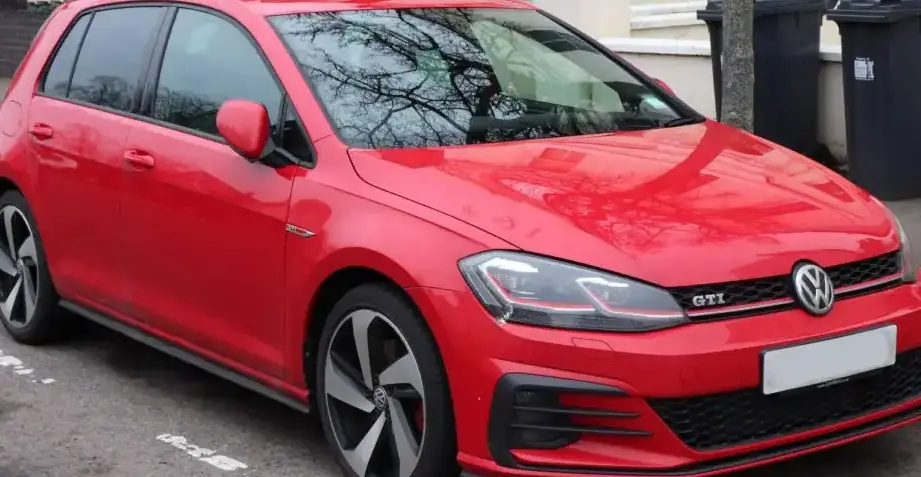
The Volkswagen Golf VII 1.4 TSI (150 hp) represents a significant iteration in the Golf lineage, produced from April 2014 to June 2017. This five-door hatchback, built on the MQB (Modular Transversal Matrix) platform – also known as the A7 platform – aimed to balance fuel efficiency with respectable performance, slotting into the mid-range of the seventh-generation Golf lineup. It served as a popular choice for buyers seeking a more refined and powerful alternative to the base models, without the added cost of the performance-oriented GTI or diesel variants.
Technical Specifications
| Brand | Volkswagen |
| Model | Golf |
| Generation | Golf VII (5-door) |
| Type (Engine) | 1.4 TSI (150 Hp) |
| Start of production | April, 2014 |
| End of production | June, 2017 |
| Powertrain Architecture | Internal Combustion engine |
| Body type | Hatchback |
| Seats | 5 |
| Doors | 5 |
| Fuel consumption (urban) | 6.6 l/100 km (35.6 US mpg, 42.8 UK mpg, 15.2 km/l) |
| Fuel consumption (extra urban) | 4.3 l/100 km (54.7 US mpg, 65.7 UK mpg, 23.3 km/l) |
| Fuel consumption (combined) | 5.2 l/100 km (45.2 US mpg, 54.3 UK mpg, 19.2 km/l) |
| CO2 emissions | 119 g/km |
| Fuel Type | Petrol (Gasoline) |
| Acceleration 0 – 100 km/h | 8.2 sec |
| Acceleration 0 – 62 mph | 8.2 sec |
| Acceleration 0 – 60 mph | 7.8 sec |
| Maximum speed | 216 km/h (134.22 mph) |
| Emission standard | Euro 6 |
| Weight-to-power ratio | 8.5 kg/Hp, 118.3 Hp/tonne |
| Weight-to-torque ratio | 5.1 kg/Nm, 197.2 Nm/tonne |
| Power | 150 Hp @ 5000-6000 rpm |
| Power per litre | 107.5 Hp/l |
| Torque | 250 Nm @ 1500-3500 rpm (184.39 lb.-ft. @ 1500-3500 rpm) |
| Engine layout | Front, Transverse |
| Engine Model/Code | CZDA, CHPB |
| Engine displacement | 1395 cm3 (85.13 cu. in.) |
| Number of cylinders | 4 |
| Engine configuration | Inline |
| Number of valves per cylinder | 4 |
| Fuel injection system | Direct injection |
| Engine aspiration | Turbocharger, Intercooler |
| Engine oil capacity | 4 l (4.23 US qt | 3.52 UK qt) |
| Kerb Weight | 1268 kg (2795.46 lbs.) |
| Max. weight | 1780 kg (3924.23 lbs.) |
| Max load | 512 kg (1128.77 lbs.) |
| Trunk (boot) space – minimum | 380 l (13.42 cu. ft.) |
| Trunk (boot) space – maximum | 1270 l (44.85 cu. ft.) |
| Fuel tank capacity | 50 l (13.21 US gal | 11 UK gal) |
| Length | 4255 mm (167.52 in.) |
| Width | 1799 mm (70.83 in.) |
| Height | 1452 mm (57.17 in.) |
| Wheelbase | 2637 mm (103.82 in.) |
| Front track | 1549 mm (60.98 in.) |
| Rear (Back) track | 1520 mm (59.84 in.) |
| Minimum turning circle | 10.9 m (35.76 ft.) |
| Drivetrain Architecture | The Internal combustion engine (ICE) drives the front wheels of the vehicle. |
| Drive wheel | Front wheel drive |
| Number of gears and type of gearbox | 6 gears, manual transmission |
| Front brakes | Ventilated discs |
| Rear brakes | Disc |
| Assisting systems | ABS (Anti-lock braking system) |
| Steering type | Steering rack and pinion |
| Tires size | 195/65 R15 |
| Wheel rims size | 6J x 15 |
Powertrain & Engine Architecture
At the heart of the Golf VII 1.4 TSI (150 hp) lies the EA211 engine family, specifically the CZDA or CHPB engine code depending on the production year and market. This 1.4-liter inline-four cylinder engine utilizes direct fuel injection and a turbocharger with an intercooler to deliver a balance of power and efficiency. The engine employs a timing chain, contributing to reduced maintenance compared to timing belt systems. The fuel injection system is a sophisticated direct injection setup, allowing for precise fuel delivery and optimized combustion. The engine’s valvetrain features four valves per cylinder, enhancing breathing and contributing to its power output. The six-speed manual transmission was standard, providing a relatively direct connection between the engine and the front wheels.
Driving Characteristics
The 150 hp 1.4 TSI engine, paired with the six-speed manual transmission, offered a responsive and engaging driving experience. Acceleration from 0-60 mph took approximately 7.8 seconds, making it adequately quick for everyday driving and highway merging. The turbocharger provides a noticeable boost in power, particularly in the mid-range, offering good overtaking capability. While not as exhilarating as the Golf GTI, the 1.4 TSI provided sufficient power for most drivers. The gear ratios were well-matched, allowing for comfortable cruising at highway speeds while still providing ample torque for city driving. Compared to the base 1.6-liter engine, the 1.4 TSI offered a significant performance upgrade, while remaining more economical than the higher-output 2.0-liter TSI found in the GTI.
Equipment & Trim Levels
The Golf VII 1.4 TSI (150 hp) typically came equipped with a respectable level of standard features. These included air conditioning, power windows, power mirrors, a touchscreen infotainment system, and alloy wheels. Higher trim levels, such as Comfortline and Highline, added features like automatic climate control, parking sensors, rain-sensing wipers, and upgraded upholstery. Optional extras included a panoramic sunroof, navigation system, and advanced driver-assistance systems like adaptive cruise control and lane-keeping assist. Interior upholstery was typically cloth, with leather options available on higher trims. The dashboard layout was clean and modern, with a focus on ergonomics and ease of use.
Chassis & Braking
The Golf VII utilized a MacPherson strut front suspension and a multi-link rear suspension, providing a comfortable and controlled ride. The suspension was tuned to balance handling and comfort, making it suitable for both city driving and longer journeys. The braking system consisted of ventilated discs on the front wheels and solid discs on the rear. ABS (Anti-lock Braking System) was standard, enhancing safety and stability during emergency braking. The chassis was designed to be lightweight yet rigid, contributing to the Golf’s overall handling characteristics. Stabilizer bars were fitted to both the front and rear axles to reduce body roll during cornering.
Market Reception & Comparison
The Golf VII 1.4 TSI (150 hp) was generally well-received by automotive critics. It was praised for its blend of performance, fuel efficiency, and practicality. Compared to other trims in the Golf lineup, the 1.4 TSI offered a sweet spot between affordability and driving enjoyment. Fuel economy was a strong point, with combined figures around 45.2 US mpg. Reliability was generally good, although some owners reported minor issues with the turbocharger and fuel injection system. Compared to the 1.6-liter base engine, the 1.4 TSI offered a noticeable performance improvement, while the 2.0-liter TSI (GTI) provided significantly more power but at a higher price point.
Legacy
The Volkswagen Golf VII 1.4 TSI (150 hp) remains a popular choice in the used car market. The EA211 engine has proven to be relatively reliable, although regular maintenance is crucial. Common issues include carbon buildup on the intake valves, which can affect performance, and potential turbocharger wear. Despite these potential issues, the Golf VII 1.4 TSI offers a compelling package of practicality, fuel efficiency, and driving enjoyment, making it a solid choice for buyers seeking a well-rounded compact hatchback. Its continued presence on the road is a testament to its enduring quality and appeal.