Technical Specifications
| Brand | Volkswagen |
| Model | Golf |
| Generation | Golf VII (5-door) |
| Type (Engine) | 1.4 TSI (150 Hp) DSG |
| Start of production | April, 2014 |
| End of production | June, 2017 |
| Powertrain Architecture | Internal Combustion engine |
| Body type | Hatchback |
| Seats | 5 |
| Doors | 5 |
| Fuel consumption (urban) | 6.2 l/100 km (37.9 US mpg, 45.6 UK mpg, 16.1 km/l) |
| Fuel consumption (extra urban) | 4.4 l/100 km (53.5 US mpg, 64.2 UK mpg, 22.7 km/l) |
| Fuel consumption (combined) | 5 l/100 km (47 US mpg, 56.5 UK mpg, 20 km/l) |
| CO2 emissions | 116 g/km |
| Fuel Type | Petrol (Gasoline) |
| Acceleration 0 – 100 km/h | 8.2 sec |
| Acceleration 0 – 62 mph | 8.2 sec |
| Acceleration 0 – 60 mph | 7.8 sec |
| Maximum speed | 216 km/h (134.22 mph) |
| Emission standard | Euro 6 |
| Weight-to-power ratio | 8.6 kg/Hp, 116.5 Hp/tonne |
| Weight-to-torque ratio | 5.2 kg/Nm, 194.1 Nm/tonne |
| Power | 150 Hp @ 5000-6000 rpm |
| Power per litre | 107.5 Hp/l |
| Torque | 250 Nm @ 1500-3500 rpm (184.39 lb.-ft. @ 1500-3500 rpm) |
| Engine layout | Front, Transverse |
| Engine Model/Code | CZDA, CHPB |
| Engine displacement | 1395 cm3 (85.13 cu. in.) |
| Number of cylinders | 4 |
| Engine configuration | Inline |
| Number of valves per cylinder | 4 |
| Fuel injection system | Direct injection |
| Engine aspiration | Turbocharger, Intercooler |
| Engine oil capacity | 4 l (4.23 US qt | 3.52 UK qt) |
| Kerb Weight | 1288 kg (2839.55 lbs.) |
| Max. weight | 1800 kg (3968.32 lbs.) |
| Max load | 512 kg (1128.77 lbs.) |
| Trunk (boot) space – minimum | 380 l (13.42 cu. ft.) |
| Trunk (boot) space – maximum | 1270 l (44.85 cu. ft.) |
| Fuel tank capacity | 50 l (13.21 US gal | 11 UK gal) |
| Length | 4255 mm (167.52 in.) |
| Width | 1799 mm (70.83 in.) |
| Height | 1452 mm (57.17 in.) |
| Wheelbase | 2637 mm (103.82 in.) |
| Front track | 1549 mm (60.98 in.) |
| Rear (Back) track | 1520 mm (59.84 in.) |
| Minimum turning circle | 10.9 m (35.76 ft.) |
| Drivetrain Architecture | The Internal combustion engine (ICE) drives the front wheels of the vehicle. |
| Drive wheel | Front wheel drive |
| Number of gears and type of gearbox | 7 gears, automatic transmission DSG |
| Front brakes | Ventilated discs |
| Rear brakes | Disc |
| Assisting systems | ABS (Anti-lock braking system) |
| Steering type | Steering rack and pinion |
| Tires size | 195/65 R15 |
| Wheel rims size | 6J x 15 |
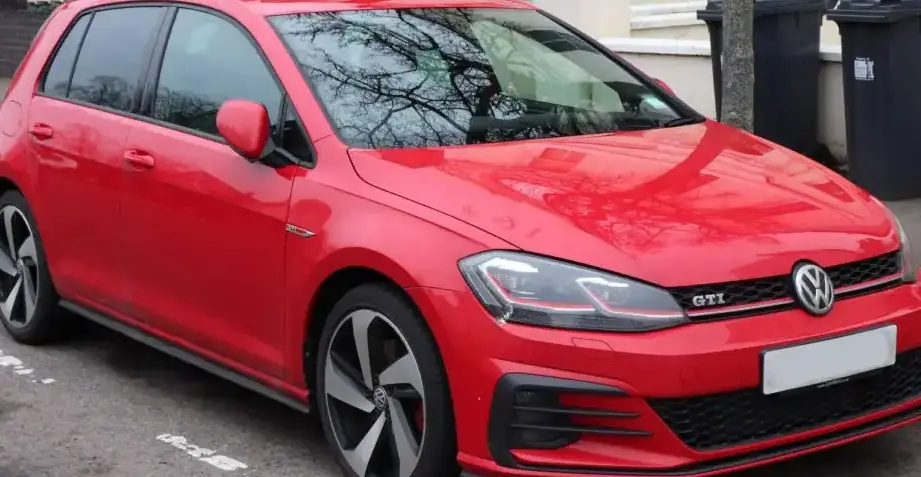
The Volkswagen Golf VII 1.4 TSI DSG, produced from 2014 to 2017, occupied a significant position within the seventh-generation Golf lineup. Built upon the Volkswagen Group’s MQB (Modular Transverse Matrix) platform – specifically the 1HX0/A3 variant – this model aimed to deliver a balance of performance, fuel efficiency, and modern technology. It served as a popular mid-range option, appealing to buyers who desired a refined driving experience without the higher price tag of the GTI or the specialized nature of the diesel models. The Golf VII represented a substantial evolution of the iconic Golf, incorporating advancements in safety, comfort, and connectivity.
Powertrain & Engine Architecture
The 1.4 TSI engine, designated with engine codes CZDA or CHPB, is the core of this Golf variant. This engine belongs to Volkswagen’s EA211 engine family, renowned for its compact dimensions and efficiency. It utilizes direct fuel injection, injecting fuel directly into the combustion chamber for precise control and improved power output. A single turbocharger, coupled with an intercooler, boosts intake air density, enhancing performance. The engine’s valvetrain features four valves per cylinder, optimizing gas exchange. The seven-speed dual-clutch gearbox (DSG) is integral to this variant’s performance. The DSG operates with two separate clutches, pre-selecting the next gear for incredibly fast and smooth shifts, improving both acceleration and fuel economy compared to a conventional automatic transmission.
Driving Characteristics
The combination of the 150 horsepower 1.4 TSI engine and the seven-speed DSG transmission resulted in a responsive and engaging driving experience. Acceleration from 0 to 60 mph was achieved in around 7.8 seconds, with a top speed of 134 mph. The DSG transmission effectively managed power delivery, keeping the engine within its optimal torque range. Compared to the base 1.2 TSI engine, the 1.4 TSI offered a noticeable performance improvement. However, it didn’t quite match the spirited acceleration of the 1.8 TSI or the torque-rich diesel options. Some drivers noted a slight hesitation from the DSG at low speeds, a characteristic sometimes observed in earlier DSG units. The overall driving experience was characterized by refinement and ease of use, making it well-suited for daily commutes and longer journeys.
Equipment & Trim Levels
The Golf VII 1.4 TSI DSG came standard with a solid array of features. These typically included air conditioning, alloy wheels, a touchscreen infotainment system, and essential safety systems like ABS, ESP (Electronic Stability Program), and multiple airbags. Interior upholstery was generally cloth, with optional upgrades to leather available. Trim levels, varying by market, commonly included ‘Trendline’, ‘Comfortline’, and ‘Highline’. Higher trim levels added features such as automatic climate control, parking sensors, a larger infotainment screen, and enhanced interior materials. Popular optional extras included a panoramic sunroof, a navigation system, and adaptive cruise control, allowing buyers to customize their vehicle to their preferences.
Chassis & Braking
The Golf VII’s chassis was engineered to provide a comfortable yet controlled driving experience. The front suspension utilized MacPherson struts, while the rear suspension employed a multi-link setup. This configuration balanced ride comfort with handling precision. The 1.4 TSI DSG variant typically featured ventilated front disc brakes and solid rear disc brakes. The braking system was enhanced by ABS and ESP, providing increased stability and control during braking maneuvers. Stabilizer bars were fitted to both the front and rear axles to minimize body roll during cornering, contributing to a more confident and stable feel.
Market Reception & Comparison
The Golf VII 1.4 TSI DSG received generally positive reviews from automotive critics. It was praised for its refined engine, efficient DSG transmission, and comfortable ride quality. Fuel economy was a significant strength, averaging around 47 US mpg in combined driving. Compared to the 1.8 TSI, the 1.4 TSI offered a more accessible price point, though with slightly less performance. The diesel variants, like the 1.6 TDI and 2.0 TDI, provided superior fuel economy but lacked the smoothness and responsiveness of the 1.4 TSI. Reliability was generally good, although some owners reported occasional issues with the DSG transmission, particularly in early production years. Regular DSG servicing, as recommended by Volkswagen, was crucial for maintaining optimal performance and longevity.
Legacy
The Volkswagen Golf VII 1.4 TSI DSG continues to be a sought-after vehicle in the used car market. Its blend of practicality, efficiency, and modern features makes it an attractive option for buyers seeking a well-rounded hatchback. The EA211 engine has proven to be a durable and reliable powerplant, and the DSG transmission, when properly maintained, offers smooth and efficient gear changes. Prospective buyers should be mindful of potential DSG-related issues and verify that the transmission has been serviced according to Volkswagen’s guidelines. The Golf VII 1.4 TSI DSG represents a significant advancement in the Golf lineage, offering a compelling combination of performance, economy, and technology that continues to appeal to drivers today.