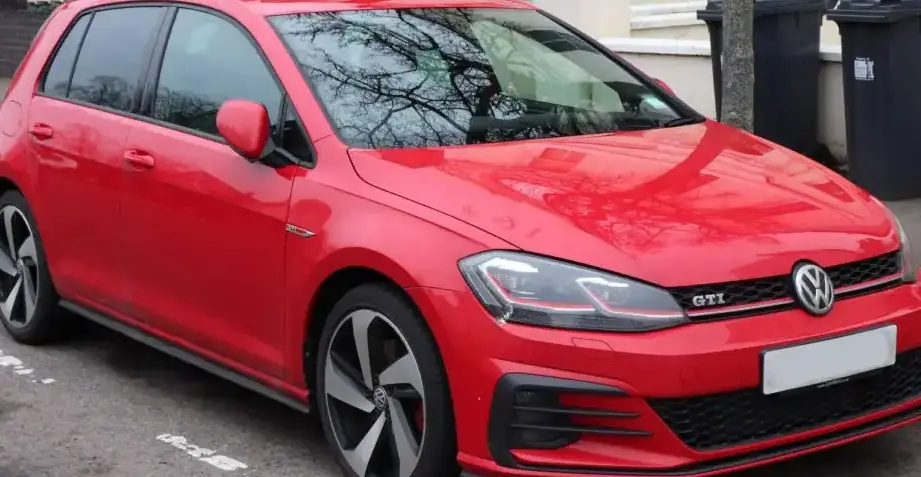
The Volkswagen Golf VII, produced from 2012 to 2020, represented a significant evolution of Volkswagen’s iconic hatchback. Within the seventh generation (internally designated the 5G model), a key variant was the 2.0 TDI with 150 horsepower paired with a dual-clutch gearbox (DSG). This specific configuration was available primarily in Europe and other markets where diesel engines remained popular, seeing production from August 2012 through April 2014. It occupied a mid-range position in the Golf VII lineup, offering a balance between performance, fuel efficiency, and refinement, appealing to drivers seeking a practical yet engaging driving experience.
Technical Specifications
| Brand | Volkswagen |
| Model | Golf |
| Generation | Golf VII (5-door) |
| Type (Engine) | 2.0 TDI (150 Hp) DSG |
| Start of production | August, 2012 |
| End of production | April, 2014 |
| Powertrain Architecture | Internal Combustion engine |
| Body type | Hatchback |
| Seats | 5 |
| Doors | 5 |
| Fuel consumption (urban) | 5.2 l/100 km (45.2 US mpg, 54.3 UK mpg, 19.2 km/l) |
| Fuel consumption (extra urban) | 4 l/100 km (58.8 US mpg, 70.6 UK mpg, 25 km/l) |
| Fuel consumption (combined) | 4.4 l/100 km (53.5 US mpg, 64.2 UK mpg, 22.7 km/l) |
| Fuel Type | Diesel |
| Acceleration 0 – 100 km/h | 8.6 sec |
| Acceleration 0 – 62 mph | 8.6 sec |
| Acceleration 0 – 60 mph | 8.2 sec |
| Maximum speed | 212 km/h (131.73 mph) |
| Weight-to-power ratio | 9.2 kg/Hp, 109.1 Hp/tonne |
| Weight-to-torque ratio | 4.3 kg/Nm, 232.7 Nm/tonne |
| Power | 150 Hp @ 3000-4000 rpm |
| Power per litre | 76.2 Hp/l |
| Torque | 320 Nm @ 1750-3000 rpm (236.02 lb.-ft. @ 1750-3000 rpm) |
| Engine layout | Front, Transverse |
| Engine Model/Code | CRBC, CRLB |
| Engine displacement | 1968 cm3 (120.09 cu. in.) |
| Number of cylinders | 4 |
| Engine configuration | Inline |
| Fuel injection system | Diesel Commonrail |
| Engine aspiration | Turbocharger, Intercooler |
| Engine oil capacity | 4.7 l (4.97 US qt | 4.14 UK qt) |
| Kerb Weight | 1375 kg (3031.36 lbs.) |
| Max. weight | 1880 kg (4144.69 lbs.) |
| Max load | 505 kg (1113.33 lbs.) |
| Trunk (boot) space – minimum | 380 l (13.42 cu. ft.) |
| Trunk (boot) space – maximum | 1270 l (44.85 cu. ft.) |
| Fuel tank capacity | 50 l (13.21 US gal | 11 UK gal) |
| Length | 4255 mm (167.52 in.) |
| Width | 1799 mm (70.83 in.) |
| Height | 1452 mm (57.17 in.) |
| Wheelbase | 2637 mm (103.82 in.) |
| Front track | 1549 mm (60.98 in.) |
| Rear (Back) track | 1520 mm (59.84 in.) |
| Minimum turning circle | 10.9 m (35.76 ft.) |
| Drivetrain Architecture | Front wheel drive |
| Number of gears | 6 |
| Gearbox type | Automatic transmission |
| Front brakes | Ventilated discs |
| Assisting systems | ABS (Anti-lock braking system) |
| Steering type | Steering rack and pinion |
| Power steering | Electric Steering |
Powertrain & Engine Architecture
The heart of this Golf VII variant is the 2.0-liter inline-four cylinder diesel engine, identified by engine codes CRBC or CRLB. This engine belongs to Volkswagen’s modular engine family, known for its compact design and efficiency. It utilizes a common rail direct injection system, delivering fuel directly into the combustion chamber at extremely high pressure for optimized combustion. A turbocharger with an intercooler is employed to boost power output and improve torque across a wider rev range. The engine features four valves per cylinder (DOHC) and utilizes a variable geometry turbocharger (VGT) to enhance responsiveness. The six-speed DSG (Direct-Shift Gearbox) is a dual-clutch transmission that provides quick, seamless gear changes, contributing to both performance and fuel economy. Unlike a traditional automatic, the DSG essentially consists of two separate manual gearboxes within one housing, allowing for pre-selection of the next gear.
Driving Characteristics
The 150 horsepower and 320 Nm (236 lb-ft) of torque delivered by the 2.0 TDI engine, combined with the six-speed DSG, provided a respectable level of performance. Acceleration from 0 to 60 mph took approximately 8.2 seconds, and the car could reach a top speed of 131.73 mph. While not as quick as the Golf GTI or models equipped with the more powerful 2.0 TDI variants, this configuration offered ample power for everyday driving and comfortable highway cruising. The DSG transmission contributed to smooth acceleration and minimized power loss during gear changes. The gear ratios were tuned for a balance between fuel efficiency and responsiveness, with a relatively long final drive to aid in highway economy. Compared to the manual transmission versions of the same engine, the DSG offered convenience and slightly quicker acceleration, but some enthusiasts preferred the more direct feel of a manual gearbox.
Equipment & Trim Levels
The 2.0 TDI 150 hp DSG typically came equipped as a mid-range trim level, often designated as ‘Comfortline’ or similar depending on the specific market. Standard features generally included air conditioning, power windows, power mirrors, a multi-function steering wheel, and an infotainment system with a touchscreen display. Safety features such as ABS, electronic stability control, and multiple airbags were also standard. Optional extras included features like a sunroof, leather upholstery, navigation system, parking sensors, and adaptive cruise control. Interior upholstery was typically cloth, with the option of upgrading to leather or Alcantara. The dashboard layout was clean and functional, with a focus on ergonomics.
Chassis & Braking
The Golf VII’s chassis was a key element in its handling prowess. The 2.0 TDI variant utilized independent suspension at all four wheels – MacPherson struts at the front and a multi-link setup at the rear. This configuration provided a good balance between ride comfort and handling precision. Braking systems varied slightly depending on the specific trim level and market, but typically featured ventilated disc brakes at the front and either disc or drum brakes at the rear. ABS (Anti-lock Braking System) was standard, along with electronic brake-force distribution and brake assist. Stabilizer bars were fitted to both the front and rear axles to reduce body roll during cornering.
Market Reception & Comparison
The 2.0 TDI 150 hp DSG variant of the Golf VII was generally well-received by automotive critics. It was praised for its fuel efficiency, comfortable ride, and refined driving experience. Compared to the lower-powered 1.6 TDI models, the 2.0 TDI offered significantly more performance and a more relaxed driving experience, particularly on the highway. However, it was more expensive to purchase and maintain than the 1.6 TDI. Compared to the higher-output 2.0 TDI variants (typically around 184 hp), the 150 hp version offered a better balance between performance and fuel economy, making it a popular choice for drivers who prioritized practicality and efficiency. Fuel economy figures of around 53.5 US mpg combined were highly competitive for its class.
Legacy
The 2.0 TDI engine, in various iterations, proved to be a reliable and durable powertrain. The DSG transmission, while more complex than a traditional automatic, also demonstrated good long-term reliability when properly maintained. In the used car market, the Golf VII 2.0 TDI 150 hp DSG remains a popular choice due to its blend of practicality, efficiency, and driving enjoyment. However, potential buyers should be aware of the importance of regular DSG servicing (fluid and filter changes) to ensure continued smooth operation. The engine itself is generally robust, but like any diesel, it’s important to check for signs of wear and tear, such as excessive smoke or unusual noises. Overall, this variant represents a well-rounded and capable package within the highly successful Golf VII range.