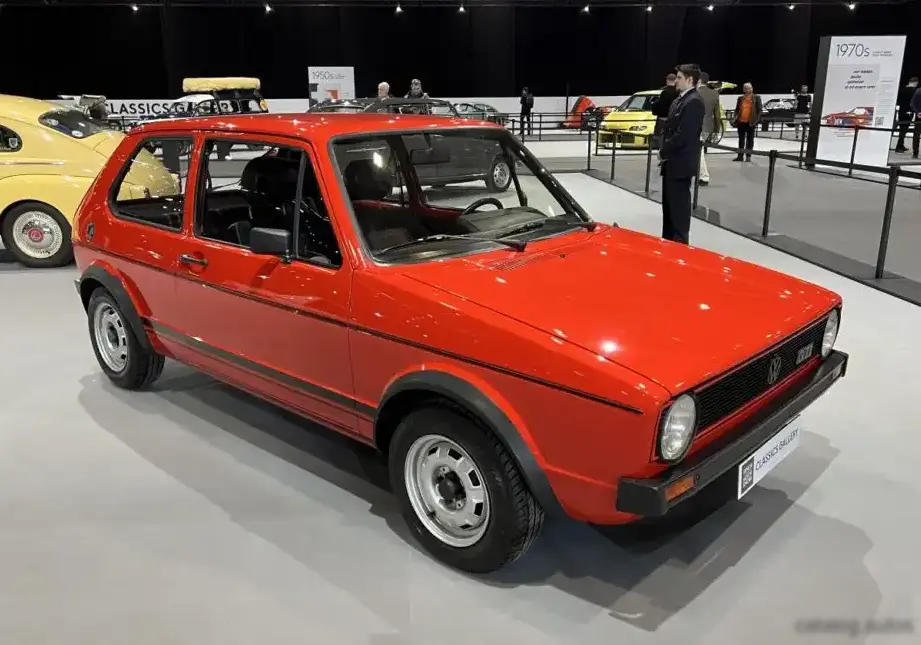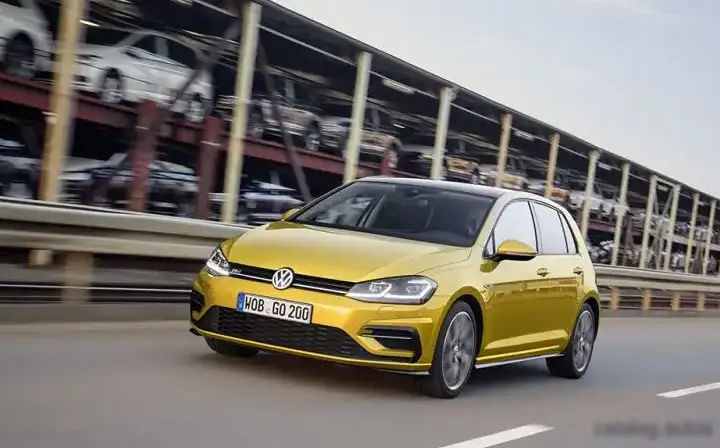
The Volkswagen Golf VII, specifically the 5-door hatchback produced from 2017 to 2020 following the facelift, represents a significant evolution of Volkswagen’s iconic compact car. The 1.4 TSI (147 hp) Tiptronic variant occupied a middle ground within the Golf VII lineup, offering a balance between performance, fuel efficiency, and affordability. This model was primarily aimed at buyers seeking a comfortable and practical daily driver with the convenience of an automatic transmission. It served as a popular choice in European markets, where compact hatchbacks are highly favored, and also saw moderate sales in other regions.
Technical Specifications
| Brand | Volkswagen |
| Model | Golf |
| Generation | Golf VII (5-door, facelift 2017) |
| Type (Engine) | 1.4 TSI (147 Hp) Tiptronic |
| Start of production | 2017 |
| End of production | 2020 |
| Powertrain Architecture | Internal Combustion engine |
| Body type | Hatchback |
| Seats | 5 |
| Doors | 5 |
| Fuel consumption (urban) | 8.1 l/100 km (29 US mpg, 34.9 UK mpg, 12.3 km/l) |
| Fuel consumption (extra urban) | 6.4 l/100 km (36.8 US mpg, 44.1 UK mpg, 15.6 km/l) |
| Fuel consumption (combined) | 7.4 l/100 km (31.8 US mpg, 38.2 UK mpg, 13.5 km/l) |
| Fuel Type | Petrol (Gasoline) |
| Weight-to-power ratio | 9.3 kg/Hp, 107.9 Hp/tonne |
| Weight-to-torque ratio | 5.4 kg/Nm, 183.6 Nm/tonne |
| Power | 147 Hp @ 5000 rpm |
| Power per litre | 105.4 Hp/l |
| Torque | 250 Nm @ 1500-3500 rpm (184.39 lb.-ft. @ 1500-3500 rpm) |
| Engine layout | Front, Transverse |
| Engine Model/Code | DGXA |
| Engine displacement | 1395 cm3 (85.13 cu. in.) |
| Number of cylinders | 4 |
| Engine configuration | Inline |
| Cylinder Bore | 74.5 mm (2.93 in.) |
| Piston Stroke | 80 mm (3.15 in.) |
| Compression ratio | 10:1 |
| Number of valves per cylinder | 4 |
| Fuel injection system | Direct injection |
| Engine aspiration | Turbocharger, Intercooler |
| Valvetrain | DOHC |
| Engine oil capacity | 4 l (4.23 US qt | 3.52 UK qt) |
| Coolant | 10 l (10.57 US qt | 8.8 UK qt) |
| Kerb Weight | 1362 kg (3002.7 lbs.) |
| Max. weight | 1890 kg (4166.74 lbs.) |
| Max load | 528 kg (1164.04 lbs.) |
| Trunk (boot) space – minimum | 493 l (17.41 cu. ft.) |
| Trunk (boot) space – maximum | 1521 l (53.71 cu. ft.) |
| Fuel tank capacity | 50 l (13.21 US gal | 11 UK gal) |
| Length | 4258 mm (167.64 in.) |
| Width | 1799 mm (70.83 in.) |
| Height | 1477 mm (58.15 in.) |
| Wheelbase | 2637 mm (103.82 in.) |
| Front track | 1549 mm (60.98 in.) |
| Rear (Back) track | 1520 mm (59.84 in.) |
| Ride height (ground clearance) | 137 mm (5.39 in.) |
| Drag coefficient (Cd) | 0.29 |
| Minimum turning circle (turning diameter) | 10.9 m (35.76 ft.) |
| Drivetrain Architecture | The Internal combustion engine (ICE) drives the front wheels of the vehicle. |
| Drive wheel | Front wheel drive |
| Number of gears and type of gearbox | 8 gears, automatic transmission |
| Front suspension | Independent type McPherson |
| Rear suspension | Independent multi-link suspension |
| Front brakes | Ventilated discs, 287×25 mm |
| Rear brakes | Disc, 272×10 mm |
| Assisting systems | ABS (Anti-lock braking system) |
| Steering type | Steering rack and pinion |
| Power steering | Electric Steering |
| Tires size | 205/55 R16 |
| Wheel rims size | 6.5J x 16 |
Powertrain & Engine Architecture
The heart of the Golf VII 1.4 TSI Tiptronic is the DGXA engine, a 1.4-liter turbocharged inline-four cylinder gasoline engine. This engine utilizes direct fuel injection (DFI) and an intercooled turbocharger to deliver a respectable 147 horsepower and 250 Nm (184 lb-ft) of torque. The engine’s design emphasizes efficiency and drivability, with peak torque available from a low 1500 rpm, providing good responsiveness in everyday driving situations. The DOHC valvetrain with four valves per cylinder contributes to the engine’s breathing efficiency. The ‘Tiptronic’ designation refers to the 8-speed automatic transmission, a conventional torque-converter automatic known for its smooth shifts and reliability. This transmission allows for both fully automatic operation and manual gear selection via the gear selector or steering wheel-mounted paddles (depending on the specific trim level).
Driving Characteristics
The 1.4 TSI Tiptronic offers a comfortable and refined driving experience. While not as sporty as the Golf GTI or R models, it provides adequate acceleration for most driving scenarios. The 8-speed automatic transmission is well-tuned, offering smooth and timely gear changes. The relatively low torque output means that the engine needs to be revved to access its full potential, and it doesn’t offer the same punch as higher-powered variants. The gear ratios are optimized for fuel efficiency, resulting in relaxed cruising at highway speeds. Compared to the 6-speed manual version of the same engine, the Tiptronic offers greater convenience, especially in urban traffic, but sacrifices some driver engagement and potentially a slight reduction in fuel economy.
Equipment & Trim Levels
The 1.4 TSI Tiptronic trim typically included standard features such as air conditioning, power windows, power mirrors, a touchscreen infotainment system with Bluetooth connectivity, and a suite of safety features including ABS, ESP, and multiple airbags. Higher trim levels offered additional features like automatic climate control, heated seats, a larger touchscreen display, navigation system, and parking sensors. Interior upholstery was typically cloth, with optional leather upgrades available. The dashboard layout was consistent across the Golf VII range, featuring a clean and modern design.
Chassis & Braking
The Golf VII’s chassis is based on the MQB platform, known for its lightweight construction and rigidity. The 1.4 TSI Tiptronic variant utilized an independent McPherson strut suspension at the front and an independent multi-link suspension at the rear, providing a comfortable ride and good handling characteristics. The braking system consisted of ventilated discs at the front and solid discs at the rear. ABS (Anti-lock Braking System) was standard, enhancing braking performance and stability. Stabilizer bars were fitted to both the front and rear axles to reduce body roll during cornering.
Market Reception & Comparison
The Golf VII 1.4 TSI Tiptronic was generally well-received by automotive critics. It was praised for its comfortable ride, refined engine, and user-friendly automatic transmission. However, some reviewers noted that the engine lacked the outright performance of more powerful Golf variants. Fuel economy was considered to be good, although not class-leading. Compared to the 1.6 TDI diesel variant, the 1.4 TSI offered slightly less fuel efficiency but provided a more responsive driving experience. Against the more powerful 2.0 TSI models, it represented a more affordable option with a focus on practicality and comfort.
Legacy
The 1.4 TSI engine, in various iterations, has proven to be a reliable and durable powertrain. The 8-speed automatic transmission has also demonstrated good long-term reliability. In the used car market, the Golf VII 1.4 TSI Tiptronic remains a popular choice due to its balance of affordability, practicality, and fuel efficiency. Regular maintenance, including oil changes and timing belt replacements (where applicable), is crucial to ensure the longevity of this powertrain. While some early versions of the 1.4 TSI engine were prone to minor oil consumption issues, these were largely addressed in later revisions. Overall, the Golf VII 1.4 TSI Tiptronic represents a well-rounded and dependable compact car that continues to offer good value for money.