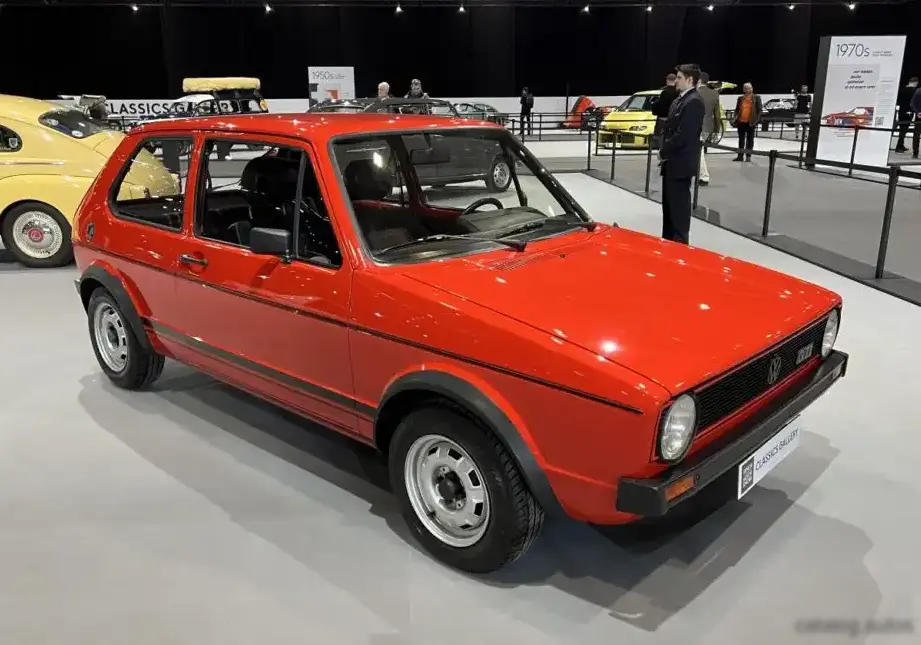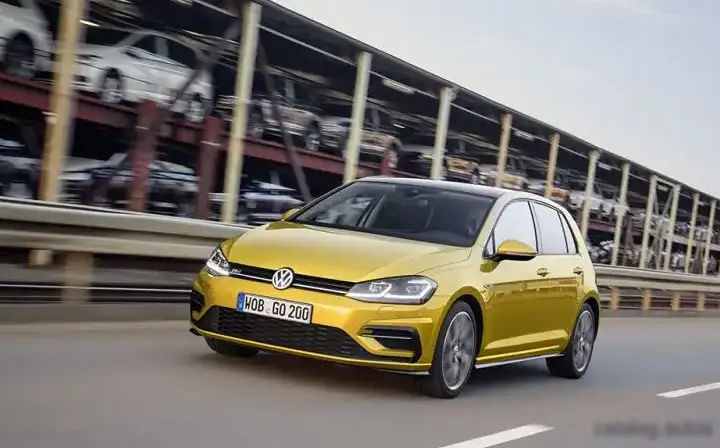
The Volkswagen Golf VII, specifically the 5-door hatchback produced during the 2017 facelift and continuing through 2019, represented a significant evolution of the iconic Golf lineage. The 1.5 TGI (130 hp) DSG variant, introduced in January 2019, was a key offering in Volkswagen’s strategy to provide fuel-efficient and environmentally conscious options within the Golf range. This model combined a turbocharged gasoline engine with the capability to run on Compressed Natural Gas (CNG), appealing to markets with established CNG infrastructure and incentives. It sat as a mid-range option, bridging the gap between the base petrol engines and the more powerful TSI variants, offering a balance of performance and economy.
Technical Specifications
| Brand | Volkswagen |
| Model | Golf |
| Generation | Golf VII (5-door, facelift 2017) |
| Type (Engine) | 1.5 TGI (130 Hp) DSG |
| Start of production | January, 2019 |
| End of production | 2019 |
| Powertrain Architecture | Internal Combustion engine |
| Body type | Hatchback |
| Seats | 5 |
| Doors | 5 |
| Fuel consumption (urban) | 4.5 l/100 km (52.3 US mpg, 62.8 UK mpg, 22.2 km/l) |
| Fuel consumption (extra urban) | 2.9 l/100 km (81.1 US mpg, 97.4 UK mpg, 34.5 km/l) |
| Fuel consumption (combined) | 3.5 l/100 km (67.2 US mpg, 80.7 UK mpg, 28.6 km/l) |
| CO2 emissions | 95 g/km |
| Fuel Type | Petrol / CNG |
| Acceleration 0 – 100 km/h | 9.6 sec |
| Acceleration 0 – 62 mph | 9.6 sec |
| Acceleration 0 – 60 mph | 9.1 sec |
| Maximum speed | 206 km/h (128 mph) |
| Emission standard | Euro 6 |
| Weight-to-power ratio | 10 kg/Hp, 100.4 Hp/tonne |
| Weight-to-torque ratio | 6.5 kg/Nm, 154.4 Nm/tonne |
| Power | 130 Hp |
| Power per litre | 86.8 Hp/l |
| Torque | 200 Nm @ 1400-4000 rpm (147.51 lb.-ft. @ 1400-4000 rpm) |
| Engine layout | Front, Transverse |
| Engine Model/Code | DHFA |
| Engine displacement | 1498 cm3 (91.41 cu. in.) |
| Number of cylinders | 4 |
| Engine configuration | Inline |
| Number of valves per cylinder | 4 |
| Fuel injection system | Direct injection |
| Engine aspiration | Turbocharger |
| Engine oil capacity | 4.3 l (4.54 US qt | 3.78 UK qt) |
| Kerb Weight | 1295 kg (2854.99 lbs.) |
| Max. weight | 1890 kg (4166.74 lbs.) |
| Max load | 595 kg (1311.75 lbs.) |
| Trunk (boot) space – minimum | 380 l (13.42 cu. ft.) |
| Trunk (boot) space – maximum | 1270 l (44.85 cu. ft.) |
| Fuel tank capacity | 9 l (2.38 US gal | 1.98 UK gal) |
| CNG cylinder capacity | 17.3 kg |
| Max. roof load | 75 kg (165.35 lbs.) |
| Permitted trailer load with brakes (8%) | 1700 kg (3747.86 lbs.) |
| Permitted trailer load with brakes (12%) | 1400 kg (3086.47 lbs.) |
| Permitted trailer load without brakes | 680 kg (1499.14 lbs.) |
| Permitted towbar download | 80 kg (176.37 lbs.) |
| Length | 4258 mm (167.64 in.) |
| Width | 1790-1799 mm (70.47 – 70.83 in.) |
| Width including mirrors | 2027 mm (79.8 in.) |
| Height | 1492 mm (58.74 in.) |
| Wheelbase | 2620 mm (103.15 in.) |
| Front track | 1533-1549 mm (60.35 – 60.98 in.) |
| Rear (Back) track | 1504-1521 mm (59.21 – 59.88 in.) |
| Ride height (ground clearance) | 142 mm (5.59 in.) |
| Drive wheel | Front wheel drive |
| Number of gears and type of gearbox | 7 gears, automatic transmission DSG |
| Front brakes | Disc |
| Rear brakes | Disc |
Powertrain & Engine Architecture
The heart of the Golf VII 1.5 TGI DSG is the DHFA engine code, a 1.5-liter inline-four cylinder gasoline engine. This engine utilizes direct fuel injection and is coupled with a turbocharger to deliver a balance of power and efficiency. A key feature is its bi-fuel capability, allowing it to run on either gasoline or Compressed Natural Gas (CNG). When running on CNG, the engine management system adjusts to optimize combustion for the alternative fuel. The engine’s valvetrain employs four valves per cylinder, contributing to its breathing efficiency. The dual-clutch, seven-speed DSG (Direct-Shift Gearbox) transmission provides quick and smooth gear changes, enhancing both performance and fuel economy. The DSG’s programming is tuned to prioritize efficiency in lower gears and provide responsive shifts during acceleration.
Driving Characteristics
The 130 hp output and 200 Nm (147.51 lb-ft) of torque, available from 1400-4000 rpm, provide adequate performance for everyday driving. While not as brisk as the higher-powered TSI variants, the 1.5 TGI DSG offers a smooth and refined driving experience. The DSG transmission effectively manages the engine’s powerband, providing seamless acceleration. Compared to the manual transmission versions, the DSG offers convenience and slightly improved fuel economy. The gear ratios are optimized for both urban and highway driving, with taller gears contributing to lower engine speeds at cruising speeds. Switching to CNG slightly reduces power output, but the lower fuel cost often outweighs this minor performance difference.
Equipment & Trim Levels
The Golf VII 1.5 TGI DSG typically came equipped with a respectable level of standard features. These included air conditioning, a touchscreen infotainment system with Bluetooth connectivity, alloy wheels, and a suite of safety features such as ABS, ESP (Electronic Stability Program), and multiple airbags. Higher trim levels offered options such as automatic climate control, a larger touchscreen display, navigation system, parking sensors, and adaptive cruise control. Interior upholstery was typically cloth, with leather options available as upgrades. The dashboard layout was consistent with other Golf VII models, featuring a clean and functional design.
Chassis & Braking
The Golf VII’s chassis is a well-engineered platform known for its balanced handling and ride comfort. The 1.5 TGI DSG variant utilized a MacPherson strut front suspension and a multi-link rear suspension. The braking system consisted of disc brakes on all four wheels, providing adequate stopping power. ABS (Anti-lock Braking System) was standard, enhancing safety during emergency braking situations. Stabilizer bars were fitted to both the front and rear axles to reduce body roll during cornering. The suspension tuning was generally geared towards comfort, but still provided a reasonably engaging driving experience.
Market Reception & Comparison
The Golf VII 1.5 TGI DSG was generally well-received by critics as a practical and economical option. Its bi-fuel capability was a major selling point in markets with established CNG infrastructure. Fuel economy was a key strength, with the combined cycle consumption of 3.5 l/100 km (67.2 US mpg) being significantly better than comparable gasoline-only models. Compared to the 1.0 TSI and 1.6 TDI variants, the 1.5 TGI offered a more refined driving experience and slightly more power. However, it was more expensive than the base models. Reliability was generally good, with the 1.5 TGI engine proving to be a durable and dependable unit.
Legacy
The Volkswagen Golf VII 1.5 TGI DSG represents a step towards alternative fuel vehicles and sustainable transportation. While CNG infrastructure remains limited in some regions, the model demonstrated Volkswagen’s commitment to reducing emissions and offering fuel-efficient options. On the used car market, these models are often sought after by drivers looking for a cost-effective and environmentally friendly vehicle. The DHFA engine, coupled with the DSG transmission, has proven to be a reliable powertrain, and well-maintained examples continue to provide years of service. The Golf VII 1.5 TGI DSG remains a testament to Volkswagen’s engineering prowess and its ability to adapt to changing market demands.