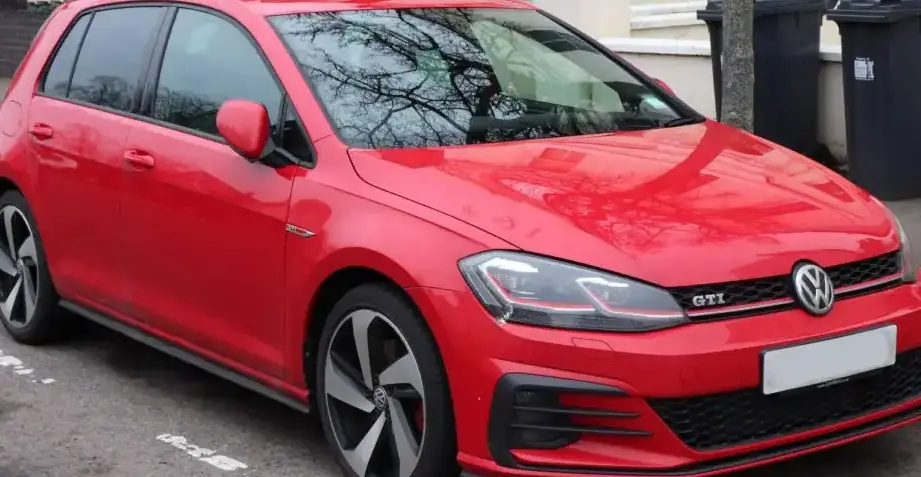
The Volkswagen Golf VII GTD 2.0 TDI (184 hp) DSG, produced from March 2013 to 2017, represents a compelling blend of performance and efficiency within the seventh generation Golf lineup. Positioned as a sporty diesel variant, the GTD offered a more engaging driving experience than the standard TDI models while maintaining the practicality and refinement expected of the Golf. This five-door hatchback was primarily aimed at the European market, where diesel engines held significant popularity, but also saw limited import into other regions. It sat above the base TDI trims and below the full-performance GTI, offering a unique proposition for drivers seeking a balance between economy and spirited driving.
Technical Specifications
| Brand | Volkswagen |
| Model | Golf |
| Generation | Golf VII (5-door) |
| Type (Engine) | GTD 2.0 TDI (184 Hp) DSG |
| Start of production | March, 2013 |
| End of production | 2017 |
| Powertrain Architecture | Internal Combustion engine |
| Body type | Hatchback |
| Seats | 4 |
| Doors | 5 |
| Fuel consumption (urban) | 5.5 l/100 km (42.8 US mpg, 51.4 UK mpg, 18.2 km/l) |
| Fuel consumption (extra urban) | 4 l/100 km (58.8 US mpg, 70.6 UK mpg, 25 km/l) |
| Fuel consumption (combined) | 4.5 l/100 km (52.3 US mpg, 62.8 UK mpg, 22.2 km/l) |
| CO2 emissions | 119 g/km |
| Fuel Type | Diesel |
| Acceleration 0 – 100 km/h | 7.5 sec |
| Acceleration 0 – 62 mph | 7.5 sec |
| Acceleration 0 – 60 mph | 7.1 sec |
| Maximum speed | 228 km/h (141.67 mph) |
| Emission standard | Euro 6 |
| Weight-to-power ratio | 7.6 kg/Hp, 131.9 Hp/tonne |
| Weight-to-torque ratio | 3.7 kg/Nm, 272.4 Nm/tonne |
| Power | 184 Hp @ 3500-4000 rpm |
| Power per litre | 93.5 Hp/l |
| Torque | 380 Nm @ 1750-3250 rpm (280.27 lb.-ft. @ 1750-3250 rpm) |
| Engine layout | Front, Transverse |
| Engine Model/Code | CUNA, DGCA |
| Engine displacement | 1968 cm3 (120.09 cu. in.) |
| Number of cylinders | 4 |
| Engine configuration | Inline |
| Number of valves per cylinder | 4 |
| Fuel injection system | Diesel Commonrail |
| Engine aspiration | Turbocharger, Intercooler |
| Engine oil capacity | 4.7 l (4.97 US qt | 4.14 UK qt) |
| Kerb Weight | 1395 kg (3075.45 lbs.) |
| Max. weight | 1880 kg (4144.69 lbs.) |
| Max load | 485 kg (1069.24 lbs.) |
| Trunk (boot) space – minimum | 380 l (13.42 cu. ft.) |
| Trunk (boot) space – maximum | 1270 l (44.85 cu. ft.) |
| Fuel tank capacity | 50 l (13.21 US gal | 11 UK gal) |
| Length | 4268 mm (168.03 in.) |
| Width | 1799 mm (70.83 in.) |
| Height | 1442 mm (56.77 in.) |
| Wheelbase | 2631 mm (103.58 in.) |
| Front track | 1538 mm (60.55 in.) |
| Rear (Back) track | 1517 mm (59.72 in.) |
| Minimum turning circle | 10.9 m (35.76 ft.) |
| Drivetrain Architecture | The Internal combustion engine (ICE) drives the front wheels of the vehicle. |
| Drive wheel | Front wheel drive |
| Number of gears and type of gearbox | 6 gears, automatic transmission DSG |
| Front brakes | Ventilated discs |
| Assisting systems | ABS (Anti-lock braking system) |
| Steering type | Steering rack and pinion |
Powertrain & Engine Architecture
At the heart of the Golf VII GTD is the 2.0-liter four-cylinder diesel engine, typically identified by engine codes CUNA or DGCA. This engine is a member of the Volkswagen Group’s modular engine family, known for its robust construction and efficiency. The GTD variant utilizes a common rail direct injection system, delivering fuel at extremely high pressures for optimized combustion. A turbocharger with an intercooler further enhances performance, boosting power output to 184 horsepower and 380 Nm (280 lb-ft) of torque. The torque curve is notably flat, providing strong pulling power across a wide rev range. The engine features four valves per cylinder and a timing belt, requiring periodic replacement as part of scheduled maintenance. The dual-clutch DSG (Direct-Shift Gearbox) transmission, with six forward gears, is standard. This transmission offers quick and smooth gear changes, contributing to both performance and fuel economy. The DSG’s programming is tailored to the GTD, providing a more responsive and sporty feel compared to the standard TDI models.
Driving Characteristics
The Golf VII GTD with the 184 hp engine and DSG transmission delivers a refined yet engaging driving experience. Acceleration from 0 to 62 mph (0-100 km/h) takes approximately 7.5 seconds, making it noticeably quicker than the lower-powered TDI variants. The DSG transmission effectively manages the engine’s torque, providing seamless acceleration in both automatic and manual modes. The gear ratios are well-chosen, offering a balance between quick acceleration and comfortable cruising. While not as overtly sporty as the Golf GTI, the GTD offers ample power for overtaking and maintaining highway speeds. The suspension is tuned for a comfortable ride, but also provides good body control in corners. Compared to the manual transmission versions, the DSG offers quicker shifts and eliminates the need for clutch operation, but some enthusiasts may prefer the greater control of a manual gearbox.
Equipment & Trim Levels
The GTD trim level came well-equipped as standard. Interior features typically included sport seats upholstered in a unique cloth/Alcantara combination, a leather-wrapped multi-function steering wheel, and stainless steel pedal caps. The dashboard featured GTD-specific trim elements and a color infotainment system. Standard safety features included ABS, ESP (Electronic Stability Program), and multiple airbags. Optional extras included features such as a panoramic sunroof, navigation system, adaptive cruise control, and parking sensors. The GTD also offered a range of customization options, allowing buyers to personalize their vehicle with different wheel designs, exterior colors, and interior trim choices.
Chassis & Braking
The Golf VII GTD utilizes a MacPherson strut front suspension and a multi-link rear suspension, providing a comfortable and controlled ride. The suspension is slightly stiffer than the standard Golf models to enhance handling. The braking system consists of ventilated disc brakes at the front and either disc or drum brakes at the rear, depending on the specific configuration. ABS (Anti-lock Braking System) and ESP (Electronic Stability Program) are standard, providing enhanced safety and stability. The steering is a rack-and-pinion system with electric power assistance, offering precise and responsive steering feel.
Market Reception & Comparison
The Golf VII GTD was generally well-received by automotive critics, who praised its blend of performance, efficiency, and practicality. It was often lauded as a compelling alternative to petrol-powered hot hatches, offering similar performance with significantly better fuel economy. Compared to the Golf GTI, the GTD offered a more refined and mature driving experience, with a greater emphasis on comfort and fuel efficiency. The lower-powered TDI models were more affordable but lacked the GTD’s performance and sporty character. The GTD’s fuel economy of around 52.3 US mpg (4.5 l/100 km) made it an attractive option for drivers covering long distances. Reliability was generally good, although, like all modern diesel vehicles, the GTD’s emissions control systems (particularly the diesel particulate filter) required careful maintenance.
Legacy
The Golf VII GTD 2.0 TDI (184 hp) DSG remains a popular choice in the used car market. Its combination of performance, efficiency, and practicality continues to appeal to buyers seeking a versatile and well-rounded hatchback. The 2.0 TDI engine, while subject to scrutiny regarding emissions regulations in later years, is generally considered to be a robust and reliable unit when properly maintained. The DSG transmission, while requiring occasional servicing, is known for its smooth and efficient operation. The GTD’s enduring appeal lies in its ability to deliver a rewarding driving experience without compromising on everyday usability, making it a standout model within the seventh-generation Golf range.