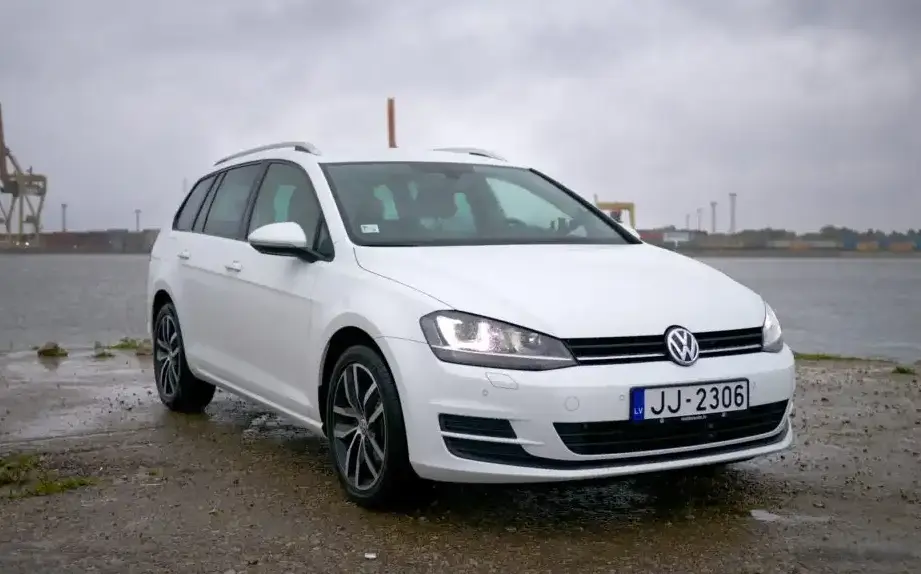
The Volkswagen Golf VII Variant 2.0 TDI 4MOTION, produced from May 2013 to 2014, represents a compelling blend of practicality, efficiency, and all-weather capability within the seventh generation Golf lineup. As a station wagon (estate) body style, it catered to buyers needing increased cargo space compared to the standard hatchback, while the 2.0 TDI engine paired with the 4MOTION all-wheel-drive system offered a premium driving experience. This variant occupied a mid-to-upper position within the Golf VII Variant range, appealing to those prioritizing performance and security in diverse driving conditions. It was primarily marketed in Europe, where station wagons remain a popular choice, and to a lesser extent in other markets where the Golf’s versatility was valued.
Technical Specifications
| Brand | Volkswagen |
| Model | Golf |
| Generation | Golf VII Variant |
| Type (Engine) | 2.0 TDI (150 Hp) 4MOTION |
| Start of production | May, 2013 |
| End of production | 2014 |
| Powertrain Architecture | Internal Combustion engine |
| Body type | Station wagon (estate) |
| Seats | 5 |
| Doors | 5 |
| Fuel consumption (economy) – urban | 5.8 l/100 km (40.6 US mpg, 48.7 UK mpg, 17.2 km/l) |
| Fuel consumption (economy) – extra urban | 4.2 l/100 km (56 US mpg, 67.3 UK mpg, 23.8 km/l) |
| Fuel consumption (economy) – combined | 4.8 l/100 km (49 US mpg, 58.9 UK mpg, 20.8 km/l) |
| Fuel Type | Diesel |
| Acceleration 0 – 100 km/h | 8.9 sec |
| Acceleration 0 – 62 mph | 8.9 sec |
| Acceleration 0 – 60 mph | 8.5 sec |
| Maximum speed | 214 km/h (132.97 mph) |
| Weight-to-power ratio | 10.2 kg/Hp, 98.2 Hp/tonne |
| Weight-to-torque ratio | 4.8 kg/Nm, 209.4 Nm/tonne |
| Power | 150 Hp @ 3500-4000 rpm |
| Power per litre | 76.2 Hp/l |
| Torque | 320 Nm @ 1750-3000 rpm (236.02 lb.-ft. @ 1750-3000 rpm) |
| Engine layout | Front, Transverse |
| Engine Model/Code | CRBC, CRLB |
| Engine displacement | 1968 cm3 (120.09 cu. in.) |
| Number of cylinders | 4 |
| Engine configuration | Inline |
| Fuel injection system | Diesel Commonrail |
| Engine aspiration | Turbocharger, Intercooler |
| Engine oil capacity | 4.7 l (4.97 US qt | 4.14 UK qt) |
| Kerb Weight | 1528 kg (3368.66 lbs.) |
| Max. weight | 2010 kg (4431.29 lbs.) |
| Max load | 482 kg (1062.63 lbs.) |
| Trunk (boot) space – minimum | 605 l (21.37 cu. ft.) |
| Trunk (boot) space – maximum | 1620 l (57.21 cu. ft.) |
| Fuel tank capacity | 50 l (13.21 US gal | 11 UK gal) |
| Length | 4562 mm (179.61 in.) |
| Width | 1799 mm (70.83 in.) |
| Height | 1481 mm (58.31 in.) |
| Wheelbase | 2635 mm (103.74 in.) |
| Front track | 1549 mm (60.98 in.) |
| Rear (Back) track | 1520 mm (59.84 in.) |
| Minimum turning circle | 10.9 m (35.76 ft.) |
| Drive wheel | All wheel drive (4×4) |
| Number of gears | 6 gears, manual transmission |
| Assisting systems | ABS (Anti-lock braking system) |
| Steering type | Steering rack and pinion |
INTRODUCTION
The Golf VII Variant, launched in 2013, built upon the success of the Golf Mk7 hatchback, offering a more practical and spacious alternative. The 2.0 TDI 4MOTION variant specifically targeted drivers seeking a refined and capable estate car. It was built on the Volkswagen Group’s MQB (Modular Transverse Matrix) platform – 1HX0/A3 – which underpinned a wide range of vehicles, allowing for economies of scale and a consistent driving experience across different brands and models. This particular version aimed to provide a balance between fuel efficiency, performance, and all-weather traction, making it a popular choice for families and individuals who frequently travel or live in regions with inclement weather.
Powertrain & Engine Architecture
At the heart of the Golf VII Variant 2.0 TDI 4MOTION lies the CRBC or CRLB engine code, a 1968cc inline-four cylinder diesel engine. This engine utilizes a common rail direct injection system, delivering fuel directly into the combustion chamber at extremely high pressure for optimized combustion and reduced emissions. A turbocharger with an intercooler further enhances performance by forcing more air into the engine, boosting power and torque. The engine’s valvetrain features four valves per cylinder (DOHC), contributing to its efficient operation. The 4MOTION all-wheel-drive system employs a Haldex multi-plate clutch, automatically distributing torque between the front and rear axles as needed, providing enhanced grip and stability. The six-speed manual transmission was standard, offering precise gear changes and a direct connection to the engine. The gear ratios were tuned to balance acceleration with fuel economy, prioritizing mid-range torque for everyday driving.
Driving Characteristics
The 2.0 TDI 4MOTION variant delivered a composed and refined driving experience. With 150 horsepower and 320 Nm (236 lb-ft) of torque, it offered brisk acceleration, reaching 0-60 mph in approximately 8.5 seconds and a top speed of 133 mph. While not as overtly sporty as some of the petrol-powered Golf variants, the diesel engine’s abundant torque provided strong pulling power, making it well-suited for carrying passengers and luggage. The 4MOTION system significantly enhanced traction, particularly on slippery surfaces, inspiring confidence in challenging conditions. Compared to the lower-powered 1.6 TDI models, the 2.0 TDI offered noticeably more performance, while remaining more fuel-efficient than the higher-output petrol engines. The manual transmission, while engaging, required a degree of driver involvement, unlike the optional DSG dual-clutch transmission available on other Golf models.
Equipment & Trim Levels
The Golf VII Variant 2.0 TDI 4MOTION typically came equipped with a generous level of standard features. These included air conditioning, alloy wheels, a touchscreen infotainment system with Bluetooth connectivity, and a comprehensive suite of safety features such as ABS, ESP (Electronic Stability Program), and multiple airbags. Interior upholstery was typically cloth, with optional leather upgrades available. Higher trim levels offered additional features such as automatic climate control, parking sensors, and a premium sound system. Optional extras included a panoramic sunroof, adaptive cruise control, and navigation system. The dashboard layout was clean and modern, with a focus on ergonomics and ease of use.
Chassis & Braking
The Golf VII Variant’s chassis was tuned to provide a comfortable yet controlled ride. The front suspension utilized MacPherson struts, while the rear suspension employed a multi-link setup, offering excellent wheel control and minimizing body roll. Braking duties were handled by ventilated disc brakes at the front and either disc or drum brakes at the rear, depending on the specific trim level. The ABS system ensured effective braking performance in emergency situations. Stabilizer bars were fitted to both the front and rear axles, further enhancing stability and reducing body lean during cornering. The 4MOTION system added to the vehicle’s stability, particularly during braking on uneven surfaces.
Market Reception & Comparison
The Golf VII Variant 2.0 TDI 4MOTION was generally well-received by automotive critics. It was praised for its practicality, fuel efficiency, and all-weather capability. Compared to other trims in the Golf VII Variant lineup, the 2.0 TDI 4MOTION offered a compelling combination of performance and economy. While the 1.6 TDI models were more affordable, they lacked the power and refinement of the 2.0 TDI. The petrol-powered variants offered more spirited performance but at the expense of fuel economy. The 4MOTION system added a premium to the price, but it was considered a worthwhile investment for drivers living in regions with harsh winters or challenging road conditions.
Legacy
The 2.0 TDI engine, in various iterations, proved to be a reliable and durable powerplant. However, like many modern diesel engines, it was subject to scrutiny regarding emissions and potential issues with the diesel particulate filter (DPF). Proper maintenance, including regular oil changes and DPF regeneration, is crucial for ensuring long-term reliability. In the used car market, the Golf VII Variant 2.0 TDI 4MOTION remains a popular choice, commanding a reasonable price due to its practicality, efficiency, and reputation for build quality. Its blend of comfort, performance, and all-weather capability continues to appeal to a wide range of buyers.