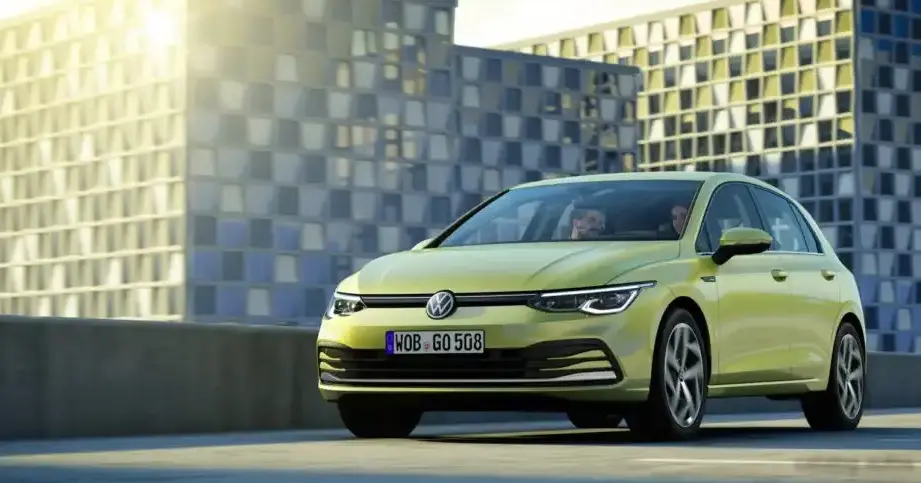
The Volkswagen Golf VIII 1.0 TSI (110 hp) represents an entry point into the eighth generation of Volkswagen’s iconic Golf hatchback, launched in March 2020 and continuing through 2024 model years. Positioned as a fuel-efficient and accessible option within the Golf VIII lineup, this variant aimed to provide a balance between affordability, practicality, and modern technology. It primarily served the European market, where smaller displacement engines are favored due to taxation and fuel costs, but was also available in select other regions. This model is built on the MQB platform (specifically the A3 iteration), shared with other Volkswagen Group vehicles like the SEAT Leon, Skoda Octavia, and Audi A3.
Technical Specifications
| Brand | Volkswagen |
| Model | Golf |
| Generation | Golf VIII |
| Type (Engine) | 1.0 TSI (110 Hp) |
| Start of production | March, 2020 |
| End of production | 2024 |
| Powertrain Architecture | Internal Combustion engine |
| Body type | Hatchback |
| Seats | 5 |
| Doors | 5 |
| Fuel consumption at Low speed (WLTP) | 7 l/100 km (33.6 US mpg, 40.4 UK mpg, 14.3 km/l) |
| Fuel consumption at Medium speed (WLTP) | 5.3 l/100 km (44.4 US mpg, 53.3 UK mpg, 18.9 km/l) |
| Fuel consumption at high speed (WLTP) | 4.6 l/100 km (51.1 US mpg, 61.4 UK mpg, 21.7 km/l) |
| Fuel consumption at very high speed (WLTP) | 5.4 l/100 km (43.6 US mpg, 52.3 UK mpg, 18.5 km/l) |
| Combined fuel consumption (WLTP) | 5.3 l/100 km (44.4 US mpg, 53.3 UK mpg, 18.9 km/l) |
| CO2 emissions (WLTP) | 121 g/km |
| Fuel consumption (economy) – urban (NEDC) | 5.4-5.5 l/100 km (43.6 – 42.8 US mpg, 52.3 – 51.4 UK mpg, 18.5 – 18.2 km/l) |
| Fuel consumption (economy) – extra urban (NEDC) | 4 l/100 km (58.8 US mpg, 70.6 UK mpg, 25 km/l) |
| Fuel consumption (economy) – combined (NEDC) | 4.6 l/100 km (51.1 US mpg, 61.4 UK mpg, 21.7 km/l) |
| CO2 emissions (NEDC) | 106 g/km |
| Fuel Type | Petrol (Gasoline) |
| Acceleration 0 – 100 km/h | 10.2 sec |
| Acceleration 0 – 62 mph | 10.2 sec |
| Acceleration 0 – 60 mph | 9.7 sec |
| Maximum speed | 202 km/h (125.52 mph) |
| Emission standard | Euro 6d-ISC-FCM |
| Weight-to-power ratio | 10.7 kg/Hp, 93.1 Hp/tonne |
| Weight-to-torque ratio | 5.9 kg/Nm, 169.2 Nm/tonne |
| Power | 110 Hp |
| Power per litre | 110.1 Hp/l |
| Torque | 200 Nm @ 2000-3000 rpm (147.51 lb.-ft. @ 2000-3000 rpm) |
| Engine layout | Front, Transverse |
| Engine Model/Code | DLAA |
| Engine displacement | 999 cm3 (60.96 cu. in.) |
| Number of cylinders | 3 |
| Engine configuration | Inline |
| Cylinder Bore | 74.5 mm (2.93 in.) |
| Piston Stroke | 76.4 mm (3.01 in.) |
| Compression ratio | 10.5:1 |
| Number of valves per cylinder | 4 |
| Fuel injection system | Direct injection |
| Engine aspiration | Turbocharger, Intercooler |
| Engine oil capacity | 4 l (4.23 US qt | 3.52 UK qt) |
| Kerb Weight | 1182 kg (2605.86 lbs.) |
| Max. weight | 1750 kg (3858.09 lbs.) |
| Max load | 568 kg (1252.23 lbs.) |
| Trunk (boot) space – minimum | 381 l (13.45 cu. ft.) |
| Trunk (boot) space – maximum | 1237 l (43.68 cu. ft.) |
| Max. roof load | 75 kg (165.35 lbs.) |
| Permitted trailer load with brakes (8%) | 1500 kg (3306.93 lbs.) |
| Permitted trailer load with brakes (12%) | 1300 kg (2866.01 lbs.) |
| Permitted trailer load without brakes | 620 kg (1366.87 lbs.) |
| Permitted towbar download | 80 kg (176.37 lbs.) |
| Length | 4284 mm (168.66 in.) |
| Width | 1789 mm (70.43 in.) |
| Height | 1491 mm (58.7 in.) |
| Wheelbase | 2619 mm (103.11 in.) |
| Front track | 1533-1549 mm (60.35 – 60.98 in.) |
| Rear (Back) track | 1504-1520 mm (59.21 – 59.84 in.) |
| Minimum turning circle (turning diameter) | 10.9 m (35.76 ft.) |
| Drivetrain Architecture | The Internal combustion engine (ICE) drives the front wheels of the vehicle. |
| Drive wheel | Front wheel drive |
| Number of gears and type of gearbox | 6 gears, manual transmission |
Powertrain & Engine Architecture
The Golf VIII 1.0 TSI utilizes the EA211 family of engines, specifically the DLAA code. This is a three-cylinder, 1.0-liter turbocharged gasoline engine. It features direct fuel injection, delivering fuel directly into the combustion chamber for improved efficiency and power. The engine employs a single scroll turbocharger with an intercooler to manage intake air temperature. The valvetrain consists of four valves per cylinder, operated by a timing chain. The engine’s electronic engine management system carefully controls fuel injection, ignition timing, and turbocharger boost to optimize performance and emissions. This particular variant is typically paired with a 6-speed manual transmission, although a 7-speed dual-clutch DSG automatic transmission was also available as an option. The automatic transmission provides quicker shifts and improved fuel economy, but at a higher cost.
Driving Characteristics
The 110 hp 1.0 TSI engine in the Golf VIII provides adequate performance for everyday driving. Acceleration from 0-60 mph takes approximately 9.7 seconds, and top speed is around 125 mph. While not particularly sporty, the engine delivers a usable amount of torque (200 Nm or 147 lb-ft) between 2000 and 3000 rpm, making it reasonably responsive in typical driving situations. Compared to higher-output Golf VIII variants like the 1.5 eTSI or the GTI, the 1.0 TSI feels noticeably less powerful, especially when fully loaded or tackling steep inclines. The manual transmission offers a precise and engaging driving experience, while the optional DSG automatic provides smooth and efficient gear changes. The gear ratios are tuned for fuel economy, meaning the engine can feel slightly strained at higher speeds.
Equipment & Trim Levels
The Golf VIII 1.0 TSI (110 hp) typically served as the entry-level trim in many markets. Standard equipment generally included air conditioning, a touchscreen infotainment system with Apple CarPlay and Android Auto compatibility, LED headlights, and a suite of safety features such as automatic emergency braking and lane departure warning. Interior upholstery was typically cloth, and the dashboard featured a minimalist design. Optional extras included larger alloy wheels, a digital instrument cluster, adaptive cruise control, and a panoramic sunroof. Higher trim levels added features like leather upholstery, upgraded sound systems, and more advanced driver-assistance systems.
Chassis & Braking
The Golf VIII 1.0 TSI utilizes a MacPherson strut front suspension and a multi-link rear suspension. The suspension is tuned for comfort and ride quality, providing a relatively smooth ride over most road surfaces. Braking systems typically consisted of disc brakes on the front wheels and drum brakes on the rear wheels, although some variants featured disc brakes all around. Anti-lock Braking System (ABS) and Electronic Stability Control (ESC) were standard safety features. Stabilizer bars were fitted to both the front and rear axles to reduce body roll during cornering.
Market Reception & Comparison
The Golf VIII 1.0 TSI (110 hp) was generally well-received by automotive critics as a practical and fuel-efficient option. It was praised for its comfortable ride, modern technology, and reasonable price point. However, some critics noted that the engine could feel underpowered in certain situations, particularly when carrying passengers or luggage. Compared to the 1.5 eTSI mild-hybrid variant, the 1.0 TSI offered lower running costs but less performance. The 1.0 TSI also provided better fuel economy than the more powerful gasoline engines, making it an attractive option for drivers prioritizing efficiency.
Legacy
The EA211 1.0 TSI engine has proven to be a relatively reliable powertrain, although some early models experienced issues with the timing chain tensioner. Regular maintenance, including oil changes and timing chain inspections, is crucial for ensuring long-term reliability. In the used car market, the Golf VIII 1.0 TSI (110 hp) represents a good value proposition for buyers seeking a practical and affordable hatchback. Its fuel efficiency and relatively low maintenance costs make it an appealing choice for daily commuting and urban driving. The Golf VIII continues to be a popular choice in the compact hatchback segment, and the 1.0 TSI variant remains a viable option for budget-conscious buyers.