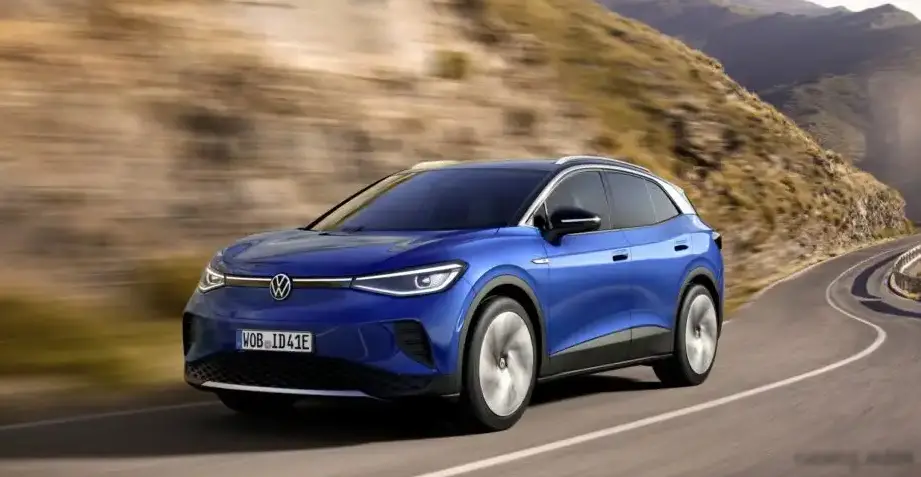
The Volkswagen ID.4 82 kWh, producing 286 horsepower, represents a significant step in Volkswagen’s transition to electric vehicles. Introduced in October 2023, this variant occupies a central position within the ID.4 lineup, offering a balance between range, performance, and practicality. Built on the MEB platform – Volkswagen’s modular electric drive matrix – the ID.4 aims to provide a compelling all-electric SUV experience for the North American market and beyond. It’s designed to compete with other compact electric SUVs like the Tesla Model Y, Hyundai IONIQ 5, and Ford Mustang Mach-E.
Technical Specifications
| Brand | Volkswagen |
| Model | ID.4 |
| Generation | ID.4 |
| Type (Engine) | 82 kWh (286 Hp) |
| Start of production | October, 2023 |
| Powertrain Architecture | BEV (Electric Vehicle) |
| Body type | SUV |
| Seats | 5 |
| Doors | 5 |
| Fuel Type | Electricity |
| Acceleration 0 – 100 km/h | 6.7 sec |
| Acceleration 0 – 62 mph | 6.7 sec |
| Acceleration 0 – 60 mph | 6.4 sec |
| Maximum speed | 180 km/h (111.85 mph) |
| Weight-to-power ratio | 7.5 kg/Hp (132.7 Hp/tonne) |
| Weight-to-torque ratio | 4 kg/Nm (252.8 Nm/tonne) |
| Gross battery capacity | 82 kWh |
| Net (usable) battery capacity | 77 kWh |
| Battery voltage | 352 V |
| Battery technology | Lithium-ion (Li-Ion) |
| Battery location | Below the floor |
| All-electric range (WLTP) | 550 km (341.75 mi) |
| Average Energy consumption (WLTP) | 16.1 kWh/100 km (25.91 kWh/100 mi) |
| MPGe | 130 |
| km/kWh | 6.2 |
| mi/kWh | 3.9 |
| Electric motor power | 286 Hp |
| Electric motor Torque | 545 Nm (401.97 lb.-ft.) |
| Electric motor model/code | APP550 |
| Electric motor location | Rear axle, Transverse |
| Electric motor type | Synchronous |
| System power | 286 Hp |
| System torque | 545 Nm (401.97 lb.-ft.) |
| Kerb Weight | 2156 kg (4753.17 lbs.) |
| Max. weight | 2690 kg (5930.43 lbs.) |
| Max load | 534 kg (1177.27 lbs.) |
| Trunk (boot) space – minimum | 543 l (19.18 cu. ft.) |
| Trunk (boot) space – maximum | 1575 l (55.62 cu. ft.) |
| Max. roof load | 75 kg (165.35 lbs.) |
| Permitted trailer load with brakes (8%) | 1200 kg (2645.55 lbs.) |
| Permitted trailer load with brakes (12%) | 1000 kg (2204.62 lbs.) |
| Permitted trailer load without brakes | 750 kg (1653.47 lbs.) |
| Permitted towbar download | 75 kg (165.35 lbs.) |
| Length | 4584 mm (180.47 in.) |
| Width | 1852 mm (72.91 in.) |
| Width including mirrors | 2108 mm (82.99 in.) |
| Height | 1634 mm (64.33 in.) |
| Wheelbase | 2771 mm (109.09 in.) |
| Front track | 1588-1598 mm (62.52 – 62.91 in.) |
| Rear (Back) track | 1564-1574 mm (61.57 – 61.97 in.) |
| Drag coefficient (Cd) | 0.28 |
| Minimum turning circle | 10.3 m (33.79 ft.) |
| Approach angle | 15.9° |
| Departure angle | 16.7° |
| Ramp-over angle | 12.9° |
| Drivetrain Architecture | One electric motor drives the rear wheels. |
| Drive wheel | Rear wheel drive |
| Number of gears | 1 |
| Gearbox type | Automatic transmission |
| Front suspension | Independent, type McPherson with coil spring and anti-roll bar |
| Rear suspension | Independent multi-link spring suspension with stabilizer |
| Front brakes | Ventilated discs |
| Rear brakes | Drum |
| Assisting systems | ABS (Anti-lock braking system) |
| Steering type | Steering rack and pinion |
| Power steering | Electric |
| Front tires | 235/55 R19 |
| Rear tires | 255/50 R19 |
| Wheel rims size | 8J x 19 |
Powertrain & Engine Architecture
The ID.4 82 kWh utilizes a permanently magnetized synchronous motor (PSM) located on the rear axle. This motor, designated APP550, delivers 286 horsepower and 401.97 lb.-ft. of torque. The motor is powered by an 82 kWh (gross) / 77 kWh (net) lithium-ion battery pack positioned under the vehicle floor. The battery pack operates at 352 volts. Unlike traditional internal combustion engines, this powertrain doesn’t rely on a multi-gear transmission; instead, it employs a single-speed automatic gearbox. This simplicity contributes to the efficiency and smooth acceleration characteristic of electric vehicles. The MEB platform’s architecture allows for potential dual-motor, all-wheel-drive configurations in other ID.4 variants, but this model is rear-wheel drive.
Driving Characteristics
The rear-wheel-drive configuration of the ID.4 82 kWh provides a balanced driving experience. Acceleration from 0 to 60 mph is achieved in approximately 6.4 seconds. The instant torque delivery of the electric motor provides brisk acceleration, particularly in the lower speed ranges. The single-speed transmission ensures seamless power delivery without noticeable gear changes. Compared to higher-performance ID.4 variants with dual motors, this version prioritizes efficiency and range over outright speed. The rear-wheel drive setup can exhibit a slight tendency towards oversteer under hard cornering, but the electronic stability control system effectively mitigates this.
Equipment & Trim Levels
The ID.4 82 kWh typically comes standard with a comprehensive suite of features, including a 10-inch touchscreen infotainment system with Apple CarPlay and Android Auto compatibility, a digital instrument cluster, and a suite of advanced driver-assistance systems (ADAS) such as forward collision warning, automatic emergency braking, and lane-keeping assist. Interior upholstery is generally cloth, with leatherette options available. Higher trim levels may include features like a panoramic sunroof, heated front seats, and premium audio systems. Optional extras often include adaptive cruise control, park assist, and upgraded wheel designs.
Chassis & Braking
The ID.4 features an independent suspension system, with McPherson struts at the front and a multi-link setup at the rear. This configuration provides a comfortable ride quality and good handling characteristics. The front brakes are ventilated discs, while the rear brakes are drums – a cost-saving measure common in this class of vehicle. The electric steering system offers precise and responsive control. The vehicle’s relatively low center of gravity, due to the battery pack’s placement, contributes to its stability and cornering ability.
Market Reception & Comparison
The ID.4 82 kWh has been generally well-received by automotive critics, praised for its spacious interior, comfortable ride, and competitive range. However, some criticisms have focused on the infotainment system’s occasionally slow response times and the lack of physical buttons. Compared to other ID.4 trims, the 82 kWh model offers a significant range advantage over the smaller battery pack options. Its fuel economy, measured in MPGe, is competitive with other electric SUVs in its class. Reliability reports are still emerging, but early indications suggest that the ID.4 is generally reliable, although some owners have reported minor software glitches.
Legacy
The Volkswagen ID.4 82 kWh represents a pivotal model in Volkswagen’s electrification strategy. Its long-term reliability will be crucial in establishing Volkswagen as a major player in the EV market. As battery technology continues to improve and charging infrastructure expands, the ID.4 is poised to become an increasingly popular choice for consumers seeking a practical and environmentally friendly SUV. On the used car market, the ID.4 is expected to hold its value reasonably well, particularly models with well-maintained batteries and comprehensive service histories.