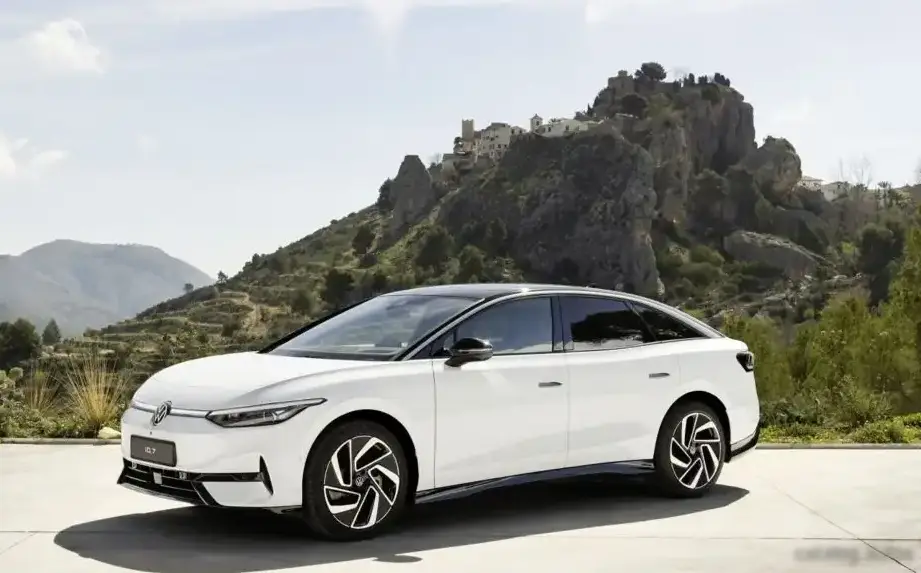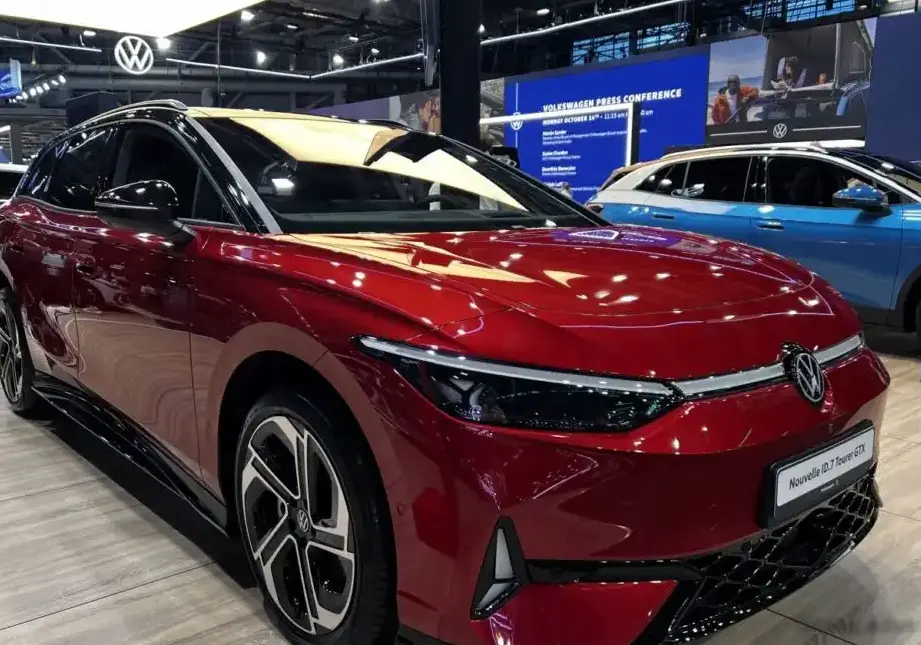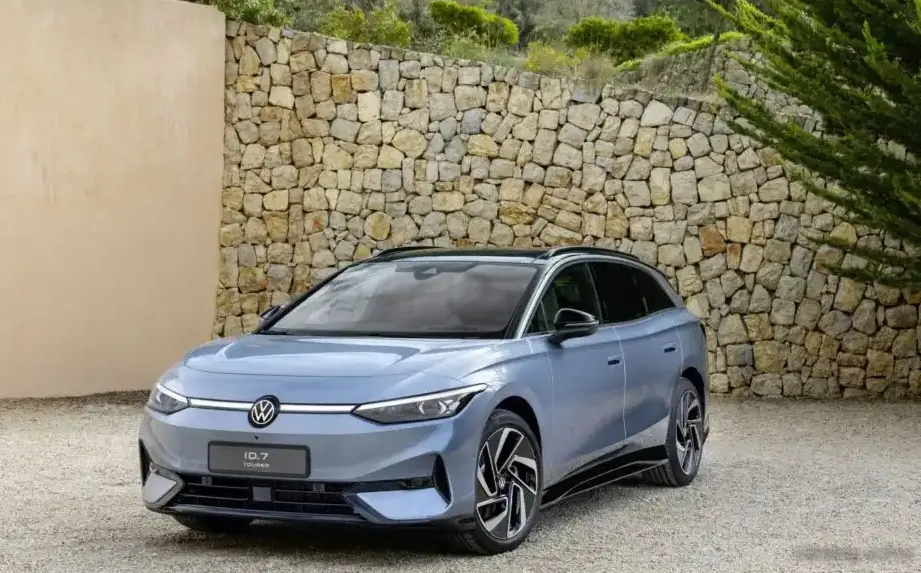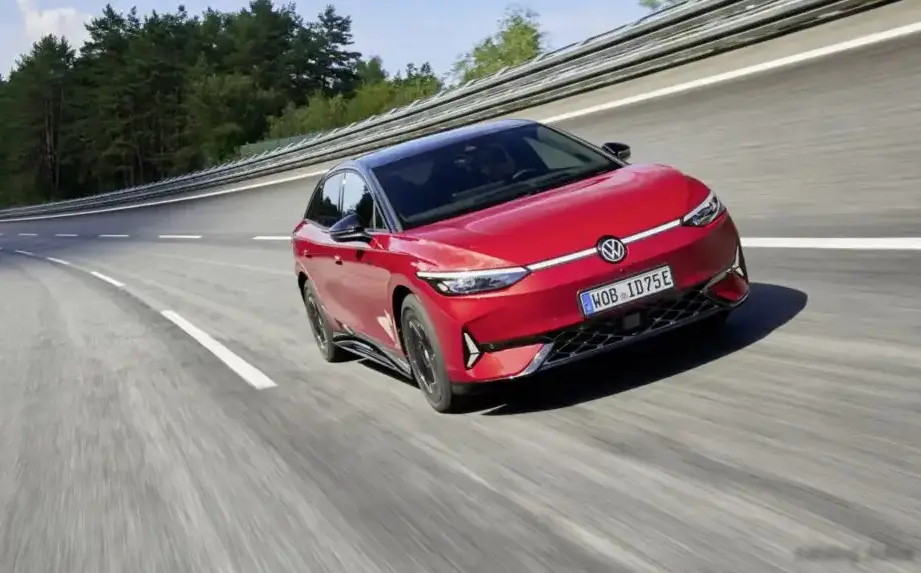
The Volkswagen ID.7 GTX 91 kWh is a high-performance, all-wheel-drive variant of the ID.7 fastback, introduced in June 2024. Representing the performance-oriented “GTX” sub-brand within Volkswagen’s ID. series of electric vehicles, the ID.7 GTX aims to deliver enhanced driving dynamics and a more sporty experience compared to the standard ID.7 models. It builds upon the foundation of the ID.7, which itself is Volkswagen’s flagship electric sedan, positioned as a direct competitor to vehicles like the Tesla Model 3 and Hyundai Ioniq 6. The GTX variant specifically targets drivers seeking a blend of electric efficiency, spaciousness, and brisk acceleration.
Technical Specifications
| Brand | Volkswagen |
| Model | ID.7 |
| Generation | ID.7 |
| Type (Engine) | GTX 91 kWh (340 Hp) 4MOTION |
| Start of production | June, 2024 |
| Powertrain Architecture | BEV (Electric Vehicle) |
| Body type | Fastback |
| Seats | 5 |
| Doors | 5 |
| Fuel Type | Electricity |
| Acceleration 0 – 100 km/h | 5.4 sec |
| Acceleration 0 – 62 mph | 5.4 sec |
| Acceleration 0 – 60 mph | 5.1 sec |
| Maximum speed | 180 km/h (111.85 mph) |
| Weight-to-power ratio | 6.6 kg/Hp, 150.9 Hp/tonne |
| Weight-to-torque ratio | 4 kg/Nm, 248.6 Nm/tonne |
| Gross battery capacity | 91 kWh |
| Net (usable) battery capacity | 86 kWh |
| Battery voltage | 383 V |
| Battery technology | Lithium nickel manganese cobalt oxides (Li-NMC) |
| Battery location | Below the floor |
| All-electric range (WLTP) | 595 km (369.72 mi) |
| Average Energy consumption (WLTP) | 16.2 kWh/100 km (26.07 kWh/100 mi) |
| Average Energy consumption (MPGe) | 129 MPGe |
| Average Energy consumption (km/kWh) | 6.2 km/kWh |
| Average Energy consumption (mi/kWh) | 3.8 mi/kWh |
| Electric motor 1 location | Rear axle, Transverse |
| Electric motor 1 type | Synchronous |
| Electric motor 2 location | Front axle, Transverse |
| Electric motor 2 type | Asynchronous |
| System power | 340 Hp |
| System torque | 560 Nm (413.03 lb.-ft.) |
| Kerb Weight | 2253 kg (4967.01 lbs.) |
| Max. weight | 2790 kg (6150.9 lbs.) |
| Max load | 537 kg (1183.88 lbs.) |
| Trunk (boot) space – minimum | 532 l (18.79 cu. ft.) |
| Trunk (boot) space – maximum | 1586 l (56.01 cu. ft.) |
| Max. roof load | 75 kg (165.35 lbs.) |
| Permitted trailer load with brakes (8%) | 1400 kg (3086.47 lbs.) |
| Permitted trailer load with brakes (12%) | 1200 kg (2645.55 lbs.) |
| Permitted trailer load without brakes | 750 kg (1653.47 lbs.) |
| Permitted towbar download | 75 kg (165.35 lbs.) |
| Length | 4961 mm (195.31 in.) |
| Width | 1862 mm (73.31 in.) |
| Width including mirrors | 2141 mm (84.29 in.) |
| Height | 1535 mm (60.43 in.) |
| Wheelbase | 2971 mm (116.97 in.) |
| Front track | 1588-1598 mm (62.52 – 62.91 in.) |
| Rear (Back) track | 1557-1569 mm (61.3 – 61.77 in.) |
| Minimum turning circle | 12.3 m (40.35 ft.) |
| Front brakes | Ventilated discs |
| Gearbox | 1 gears, automatic transmission |
| Front tires | 235/50 R19; 235/45 R20; 235/40 R21 |
| Rear tires | 255/45 R19; 255/40 R20; 265/35 R21 |
Powertrain & Engine Architecture
The ID.7 GTX utilizes a dual-motor all-wheel-drive (4MOTION) powertrain. Unlike traditional internal combustion engine vehicles, it doesn’t have an “engine” in the conventional sense. Instead, it employs two electric motors – a permanently excited synchronous motor on the rear axle and an asynchronous motor on the front axle. This configuration allows for intelligent torque vectoring, enhancing handling and stability. The combined system output is 340 horsepower and 560 Nm (413 lb-ft) of torque. The 91 kWh (gross) / 86 kWh (net) lithium-ion battery pack, composed of lithium nickel manganese cobalt oxide (Li-NMC) cells, is located under the vehicle floor, contributing to a low center of gravity. The battery operates at a nominal voltage of 383V. The GTX variant doesn’t feature a multi-speed gearbox; it utilizes a single-speed automatic transmission, typical for electric vehicles, providing seamless acceleration. The battery supports DC fast charging, allowing for a significant range boost in a relatively short time.
Driving Characteristics
The ID.7 GTX delivers noticeably quicker acceleration than the standard ID.7 models, achieving 0-60 mph in approximately 5.1 seconds. The dual-motor setup provides instant torque and confident traction in various driving conditions. The all-wheel-drive system enhances cornering stability and provides a more secure feel, particularly on wet or slippery surfaces. While the single-speed transmission simplifies the driving experience, it does mean the GTX lacks the distinct gear changes found in vehicles with multi-speed transmissions. The steering is precise and well-weighted, offering a good balance between responsiveness and comfort. Regenerative braking is adjustable, allowing drivers to customize the level of deceleration when lifting off the accelerator pedal.
Equipment & Trim Levels
The GTX trim level builds upon the already well-equipped ID.7, adding several sporty and distinctive features. Standard equipment typically includes a large touchscreen infotainment system, digital instrument cluster, premium upholstery (often incorporating GTX-specific design elements), and a panoramic sunroof. Available options may include advanced driver-assistance systems (ADAS) such as adaptive cruise control, lane-keeping assist, and automatic emergency braking. Exterior styling cues differentiate the GTX from other ID.7 models, often including unique bumpers, badging, and wheel designs. Interior trim accents and sport seats further emphasize the performance-oriented nature of the GTX.
Chassis & Braking
The ID.7 GTX features an independent suspension system, with McPherson struts at the front and a multi-link setup at the rear. Stabilizer bars are included on both axles to reduce body roll during cornering. The braking system utilizes ventilated disc brakes on all four wheels, providing ample stopping power. ABS (Anti-lock Braking System) is standard, enhancing safety and control during emergency braking situations. The GTX variant may feature slightly stiffer suspension tuning compared to the standard ID.7 to improve handling and reduce body roll.
Market Reception & Comparison
The ID.7 GTX has been generally well-received by automotive critics, who praise its brisk acceleration, comfortable ride, and spacious interior. Compared to the standard ID.7, the GTX offers a more engaging driving experience and a sportier aesthetic. Its range of approximately 595 km (369.72 miles) on the WLTP cycle is competitive within the electric vehicle segment. However, some reviewers have noted that the infotainment system can be complex to navigate. Compared to rivals like the Tesla Model 3 Performance, the ID.7 GTX offers a more traditional interior layout and a more comfortable ride, while the Tesla prioritizes performance and technology.
Legacy
As a relatively new model, the long-term reliability of the ID.7 GTX remains to be fully established. However, Volkswagen has a strong reputation for building durable and reliable vehicles. The electric powertrain is expected to require less maintenance than a traditional internal combustion engine, reducing the potential for long-term repair costs. The ID.7 GTX represents Volkswagen’s commitment to expanding its electric vehicle lineup and offering customers a wider range of options to meet their needs. Its position as a performance-oriented variant within the ID.7 family is likely to contribute to the model’s overall success in the competitive electric vehicle market.