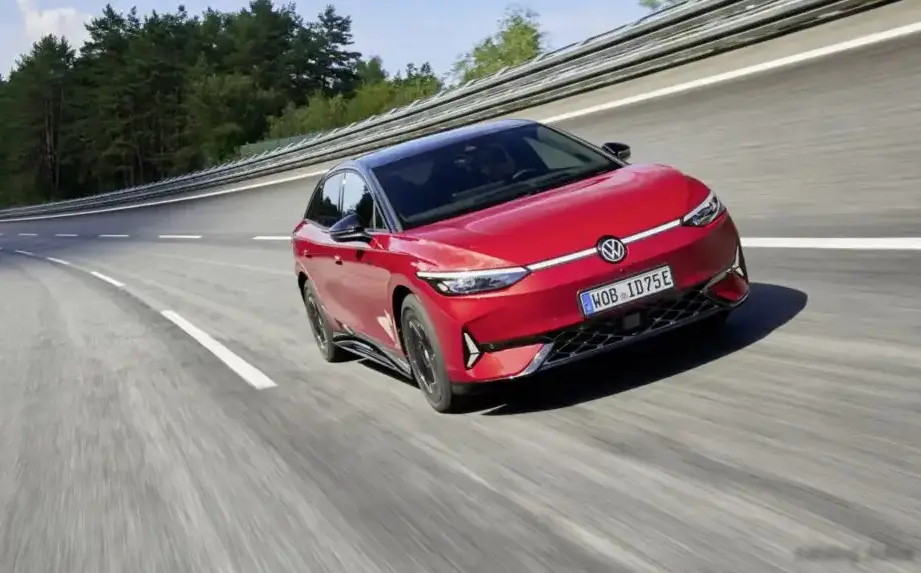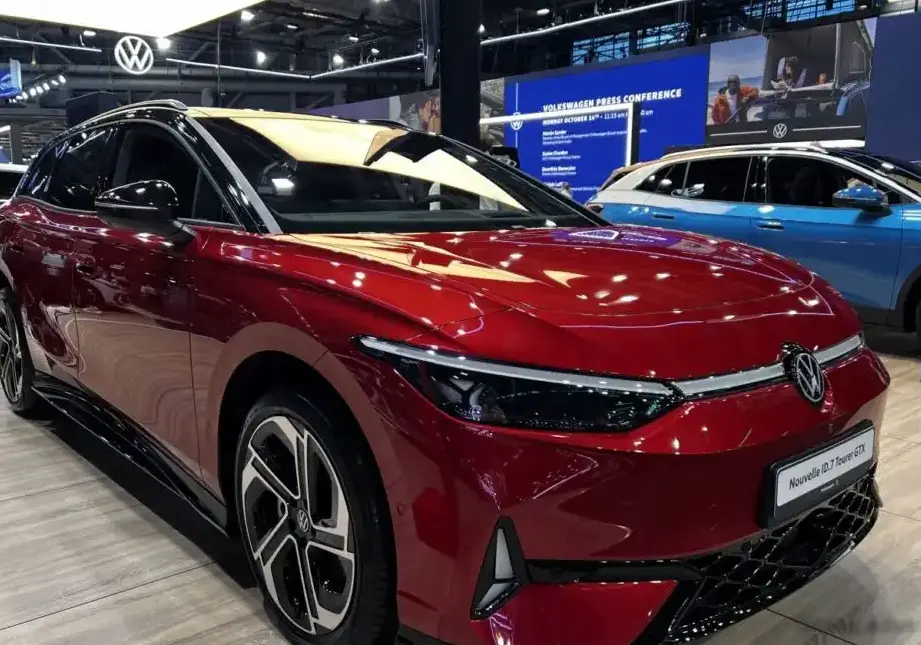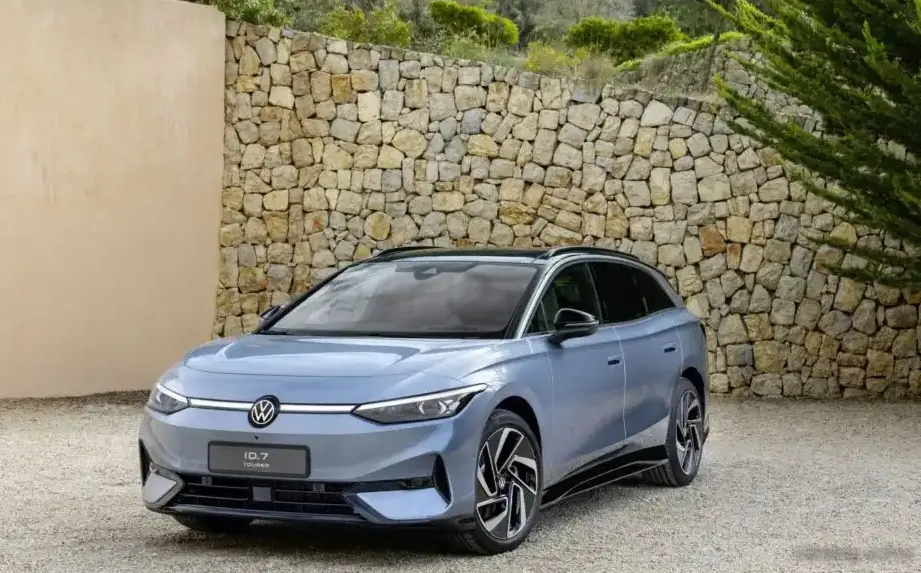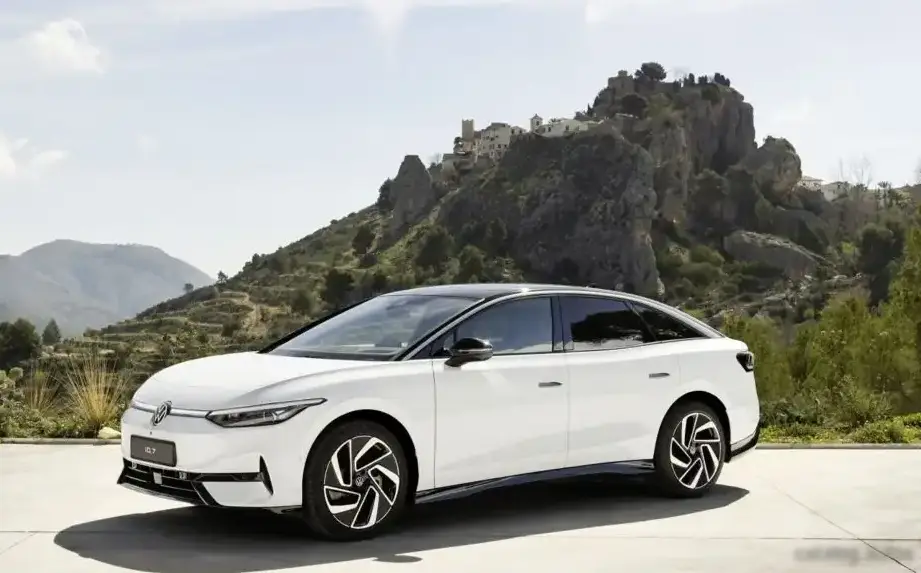
The Volkswagen ID.7 Pro 82 kWh, producing 286 horsepower, represents Volkswagen’s entry into the competitive all-electric fastback sedan market. Introduced in August 2023, it’s built upon the MEB platform – Volkswagen’s modular electric drive matrix – designed to underpin a wide range of electric vehicles. The ID.7 Pro is positioned as a mid-to-upper range offering within the ID.7 lineup, prioritizing extended range and a comfortable driving experience. It aims to compete with vehicles like the Tesla Model 3 and Hyundai Ioniq 6, offering a blend of practicality, technology, and efficiency.
Technical Specifications
| Brand | Volkswagen |
| Model | ID.7 |
| Generation | ID.7 |
| Type (Engine) | Pro 82 kWh (286 Hp) |
| Start of production | August, 2023 |
| Powertrain Architecture | BEV (Electric Vehicle) |
| Body type | Fastback |
| Seats | 5 |
| Doors | 5 |
| Fuel Type | Electricity |
| Acceleration 0 – 100 km/h | 6.5 sec |
| Acceleration 0 – 62 mph | 6.5 sec |
| Acceleration 0 – 60 mph | 6.2 sec |
| Maximum speed | 180 km/h (111.85 mph) |
| Weight-to-power ratio | 7.3 kg/Hp, 136.4 Hp/tonne |
| Weight-to-torque ratio | 3.8 kg/Nm, 259.9 Nm/tonne |
| Gross battery capacity | 82 kWh |
| Net (usable) battery capacity | 77 kWh |
| Battery voltage | 350 V |
| Battery technology | Lithium nickel manganese cobalt oxides (Li-NMC) |
| Battery weight | 493 kg (1086.88 lbs) |
| Battery location | Below the floor |
| All-electric range (WLTP) | 599-621 km (372.2 – 385.87 mi) |
| Average Energy consumption (WLTP) | 14.1-14.7 kWh/100 km (22.69 – 23.66 kWh/100 mi) |
| MPGe | 149 – 142 |
| km/kWh | 7.1 – 6.8 |
| mi/kWh | 4.4 – 4.2 |
| Electric motor power | 286 Hp |
| Electric motor Torque | 545 Nm (401.97 lb.-ft.) |
| Electric motor model/code | APP550 |
| Electric motor location | Rear axle, Transverse |
| Electric motor type | Synchronous |
| System power | 286 Hp |
| System torque | 545 Nm (401.97 lb.-ft.) |
| Kerb Weight | 2097 kg (4623.09 lbs) |
| Max. weight | 2630 kg (5798.16 lbs) |
| Max load | 533 kg (1175.06 lbs) |
| Trunk (boot) space – minimum | 532 l (18.79 cu. ft.) |
| Trunk (boot) space – maximum | 1586 l (56.01 cu. ft.) |
| Max. roof load | 75 kg (165.35 lbs) |
| Permitted trailer load with brakes (8%) | 1200 kg (2645.55 lbs) |
| Permitted trailer load with brakes (12%) | 1000 kg (2204.62 lbs) |
| Permitted trailer load without brakes | 750 kg (1653.47 lbs) |
| Permitted towbar download | 75 kg (165.35 lbs) |
| Length | 4961 mm (195.31 in) |
| Width | 1862 mm (73.31 in) |
| Width including mirrors | 2141 mm (84.29 in) |
| Height | 1536 mm (60.47 in) |
| Wheelbase | 2966 mm (116.77 in) |
| Front track | 1588-1598 mm (62.52 – 62.91 in) |
| Rear (Back) track | 1559-1569 mm (61.38 – 61.77 in) |
| Front overhang | 906 mm (35.67 in) |
| Rear overhang | 1089 mm (42.87 in) |
| Drag coefficient (Cd) | 0.23 |
| Minimum turning circle | 10.9 m (35.76 ft) |
| Approach angle | 14.2° |
| Departure angle | 13.9° |
| Ramp-over angle | 9.3° |
| Drivetrain Architecture | One electric motor drives the rear wheels |
| Drive wheel | Rear wheel drive |
| Number of gears | 1, automatic transmission |
| Front suspension | Independent, type McPherson with coil spring and anti-roll bar |
| Rear suspension | Independent multi-link spring suspension with stabilizer |
| Front brakes | Ventilated discs |
| Rear brakes | Drum |
| Steering type | Steering rack and pinion |
| Power steering | Electric |
| Front tires | 235/50 R19; 235/45 R20 |
| Rear tires | 255/45 R19; 255/40 R20 |
| Front wheel rims | 8J x 19; 8.5J x 20 |
| Rear wheel rims | 8.5J x 19; 9.5J x 20 |
Powertrain & Engine Architecture
The ID.7 Pro utilizes a single rear-mounted synchronous electric motor (APP550) producing 286 horsepower and 401.97 lb-ft of torque. The motor is powered by an 82 kWh (gross) / 77 kWh (net) lithium-ion battery pack utilizing Lithium nickel manganese cobalt oxides (Li-NMC) chemistry. The battery is positioned low in the vehicle floor, contributing to a lower center of gravity and improved handling. The car employs a single-speed automatic transmission, typical of electric vehicles, focusing on smooth and efficient power delivery. The MEB platform allows for fast charging capabilities, supporting DC fast charging at up to 170 kW, enabling a significant range boost in a relatively short time. The battery management system is crucial for optimizing battery life, performance, and thermal regulation.
Driving Characteristics
The ID.7 Pro delivers brisk acceleration, achieving 0-60 mph in approximately 6.2 seconds. The rear-wheel-drive configuration provides a balanced feel, although it may exhibit some traction limitations in adverse weather conditions. The single-speed transmission offers seamless acceleration, without the gear changes experienced in traditional internal combustion engine vehicles. The car’s weight (4623.09 lbs) is noticeable, but the low center of gravity contributes to stable cornering. Regenerative braking is adjustable, allowing drivers to customize the level of deceleration when lifting off the accelerator, maximizing energy recovery and extending range. Compared to potential future performance variants of the ID.7, the Pro model prioritizes efficiency and comfort over outright speed.
Equipment & Trim Levels
The ID.7 Pro comes standard with a comprehensive suite of features, including a 12.3-inch touchscreen infotainment system, a digital instrument cluster, and advanced driver-assistance systems (ADAS) such as adaptive cruise control, lane keeping assist, and automatic emergency braking. Interior upholstery typically consists of cloth or leatherette options, with higher trims offering full leather. Available options include a panoramic sunroof, premium sound system, and ventilated front seats. The ID.7 Pro’s interior design emphasizes minimalism and user-friendliness, with a focus on intuitive controls and a spacious cabin.
Chassis & Braking
The ID.7 Pro features an independent suspension system, with McPherson struts at the front and a multi-link setup at the rear. This configuration provides a comfortable ride quality and good handling characteristics. The front brakes are ventilated discs, while the rear brakes are drums – a cost-saving measure that doesn’t significantly impact overall braking performance given the vehicle’s weight and regenerative braking system. Electric power steering provides precise and responsive steering feel. Tire sizes vary depending on the trim level, ranging from 235/50 R19 to 255/40 R20.
Market Reception & Comparison
The ID.7 Pro has been generally well-received by automotive critics, praised for its spacious interior, comfortable ride, and long driving range. However, some reviewers have noted the infotainment system can be occasionally laggy and the rear drum brakes are a compromise. Compared to other electric sedans in its class, the ID.7 Pro offers a competitive range and price point. Its energy consumption of 14.1-14.7 kWh/100 km is comparable to other efficient EVs. Reliability data is still emerging, but early reports suggest the MEB platform is proving to be relatively robust.
Legacy
The Volkswagen ID.7 Pro represents a significant step forward in Volkswagen’s transition to electric mobility. The MEB platform and its associated powertrain technology are expected to be utilized in a wide range of future Volkswagen models. The long-term reliability of the APP550 motor and Li-NMC battery pack remains to be seen, but Volkswagen’s extensive experience in automotive engineering suggests a reasonable expectation of durability. On the used car market, the ID.7 Pro is likely to hold its value well, particularly as demand for electric vehicles continues to grow. Its combination of range, practicality, and technology positions it as a compelling option for environmentally conscious buyers.