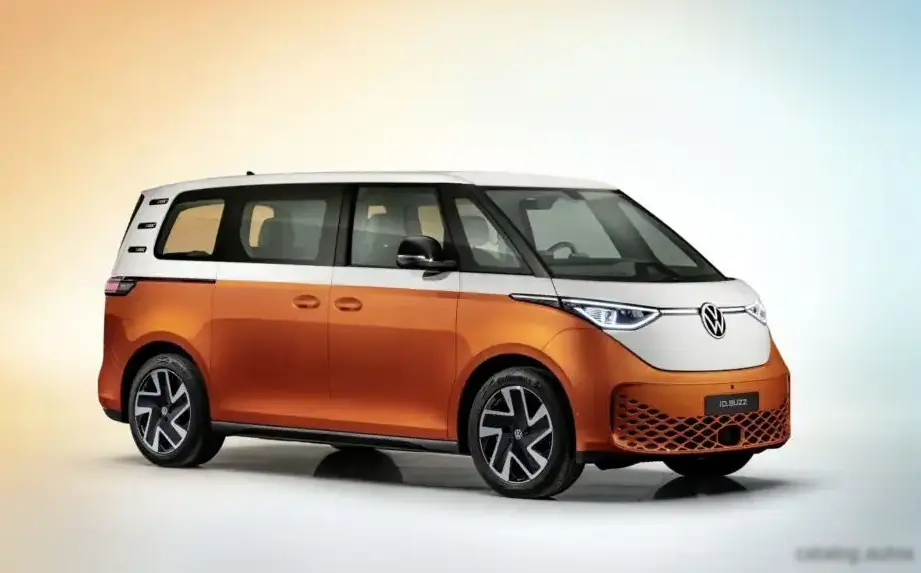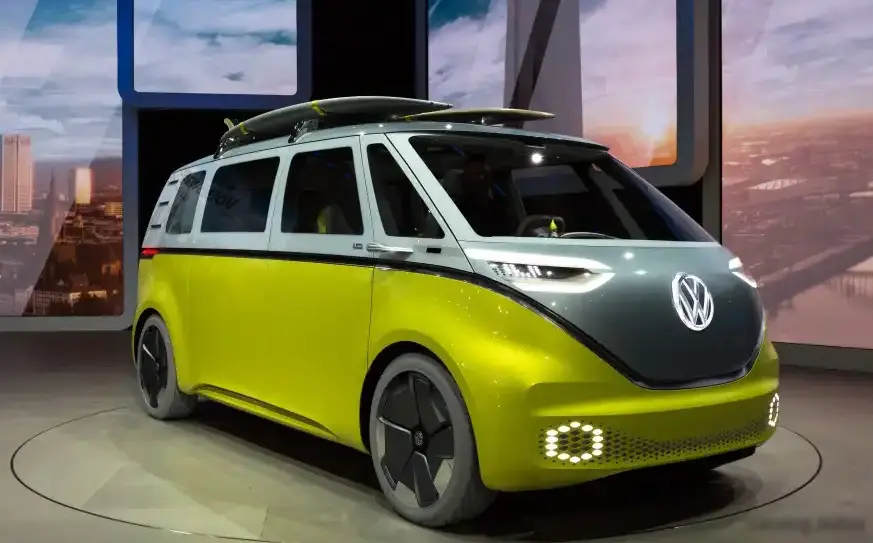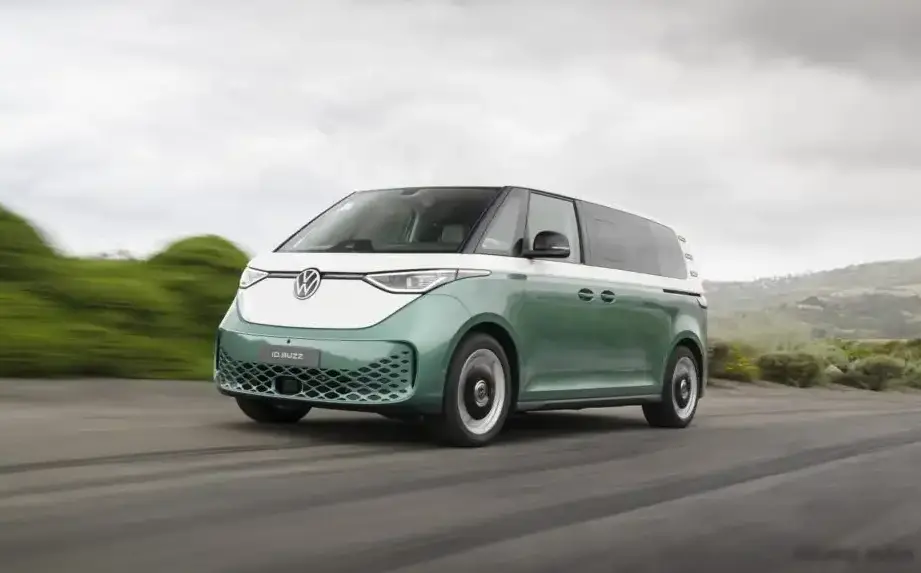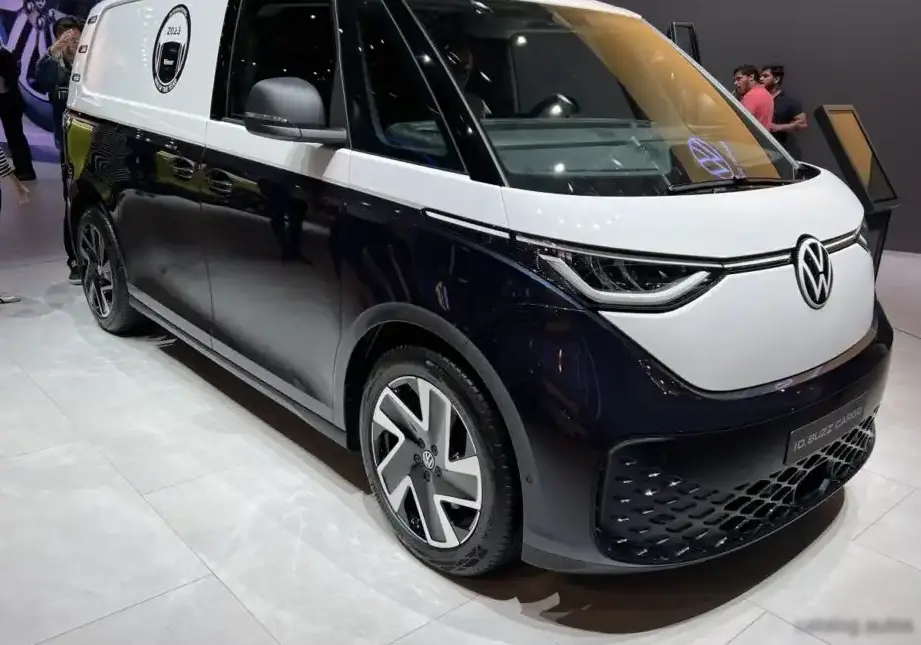
The Volkswagen ID. Buzz Cargo, specifically the 82 kWh (204 Hp) variant, represents Volkswagen’s entry into the electric commercial vehicle market. Introduced in 2022 and produced through June 2024, this model is a battery electric vehicle (BEV) designed primarily for commercial use, offering a spacious cargo area and zero-emission operation. It’s built on the Volkswagen Group’s MEB platform, shared with other ID. family vehicles like the ID.4, but tailored for cargo and light commercial applications. The ID. Buzz Cargo is positioned as a modern alternative to traditional panel vans, appealing to businesses seeking sustainable transportation solutions.
Technical Specifications
| Brand | Volkswagen |
| Model | ID. Buzz |
| Generation | ID. Buzz Cargo |
| Type (Engine) | 82 kWh (204 Hp) |
| Start of production | 2022 |
| End of production | June, 2024 |
| Powertrain Architecture | BEV (Electric Vehicle) |
| Body type | MPV |
| Seats | 2 |
| Doors | 5 |
| Fuel Type | Electricity |
| Acceleration 0 – 100 km/h | 10.2 sec |
| Acceleration 0 – 62 mph | 10.2 sec |
| Acceleration 0 – 60 mph | 9.7 sec |
| Maximum speed | 145 km/h (90.1 mph) |
| Weight-to-power ratio | 11.5 kg/Hp, 86.7 Hp/tonne |
| Weight-to-torque ratio | 7.6 kg/Nm, 131.8 Nm/tonne |
| Gross battery capacity | 82 kWh |
| Net (usable) battery capacity | 77 kWh |
| Battery technology | Lithium-ion (Li-Ion) |
| Battery location | Below the floor |
| All-electric range (WLTP) | 402-425 km (249.79 – 264.08 mi) |
| Average Energy consumption (WLTP) | 20.4-22.2 kWh/100 km (32.83 – 35.73 kWh/100 mi) |
| MPGe | 103 – 94 |
| km/kWh | 4.9 – 4.5 |
| mi/kWh | 3 – 2.8 |
| Electric motor power | 204 Hp |
| Electric motor Torque | 310 Nm (228.64 lb.-ft.) |
| Electric motor model/code | EBJ |
| Electric motor location | Rear axle, Transverse |
| Electric motor type | Synchronous |
| System power | 204 Hp |
| System torque | 310 Nm (228.64 lb.-ft.) |
| Kerb Weight | 2352 kg (5185.27 lbs.) |
| Max. weight | 3000 kg (6613.87 lbs.) |
| Max load | 648 kg (1428.6 lbs.) |
| Trunk (boot) space – maximum | 3900 l (137.73 cu. ft.) |
| Max. roof load | 100 kg (220.46 lbs.) |
| Permitted trailer load with brakes (12%) | 1000 kg (2204.62 lbs.) |
| Permitted towbar download | 50 kg (110.23 lbs.) |
| Length | 4712 mm (185.51 in.) |
| Width | 1985 mm (78.15 in.) |
| Width including mirrors | 2212 mm (87.09 in.) |
| Height | 1927-1951 mm (75.87 – 76.81 in.) |
| Wheelbase | 2989 mm (117.68 in.) |
| Front track | 1673 mm (65.87 in.) |
| Rear (Back) track | 1670 mm (65.75 in.) |
| Drag coefficient (Cd) | 0.290 |
| Minimum turning circle (turning diameter) | 11.09 m (36.38 ft.) |
| Drivetrain Architecture | One electric motor drives the rear wheels. |
| Drive wheel | Rear wheel drive |
| Number of gears and type of gearbox | 1 gears, automatic transmission |
| Front suspension | McPherson |
| Rear suspension | Independent multi-link suspension |
| Assisting systems | ABS (Anti-lock braking system) |
| Steering type | Steering rack and pinion |
| Power steering | Electric Steering |
| Wheel rims size | 18 |
Powertrain & Engine Architecture
The ID. Buzz Cargo is powered by a single electric motor, designated EBJ, located on the rear axle. This synchronous motor produces 204 horsepower and 310 Nm (228.64 lb.-ft.) of torque. The power is delivered through a single-speed automatic transmission, characteristic of most electric vehicles. The 82 kWh battery pack, situated under the vehicle floor, provides a usable capacity of 77 kWh. This battery utilizes lithium-ion technology and supports fast charging capabilities, allowing for a significant range replenishment in a relatively short time. The MEB platform’s architecture allows for efficient packaging of the battery, maximizing interior space. The vehicle’s electronic control unit (ECU) manages power delivery, regenerative braking, and thermal management of the battery pack.
Driving Characteristics
The rear-wheel-drive configuration of the ID. Buzz Cargo contributes to a balanced driving experience, particularly when loaded. While not designed for outright speed, the 204 hp motor provides adequate acceleration for urban and highway driving, achieving 0-60 mph in approximately 9.7 seconds. The single-speed transmission offers seamless acceleration, and the instant torque delivery of the electric motor provides responsive performance. Compared to potential future higher-performance variants, this 204 hp version prioritizes efficiency and practicality over sporty driving dynamics. The low center of gravity, due to the battery pack’s placement, enhances stability. Regenerative braking is adjustable, allowing drivers to customize the level of deceleration when lifting off the accelerator.
Equipment & Trim Levels
The ID. Buzz Cargo is primarily focused on functionality, with a relatively streamlined trim level structure. Standard equipment includes features essential for commercial use, such as a durable interior trim, a driver’s seat with adjustable lumbar support, and a comprehensive suite of safety systems including ABS, stability control, and multiple airbags. Infotainment is provided through a touchscreen display, offering navigation, Bluetooth connectivity, and smartphone integration. Optional extras include features like parking sensors, a rearview camera, and upgraded interior materials. The interior is designed for ease of cleaning and durability, reflecting its commercial purpose.
Chassis & Braking
The ID. Buzz Cargo utilizes a McPherson strut suspension setup at the front and an independent multi-link suspension at the rear. This configuration provides a comfortable ride quality, even when the vehicle is fully loaded. The rear suspension is tuned to handle heavier payloads effectively. Braking is handled by disc brakes on all four wheels, with ABS (Anti-lock Braking System) as standard. The vehicle’s weight distribution, influenced by the battery pack’s location, contributes to stable braking performance. The steering system employs an electric power steering setup, providing precise and responsive control.
Market Reception & Comparison
The ID. Buzz Cargo has been generally well-received by critics for its innovative design, spacious interior, and zero-emission operation. Its range of 402-425 km (249.79 – 264.08 mi) on the WLTP cycle is competitive within the electric commercial vehicle segment. Compared to traditional diesel-powered vans, the ID. Buzz Cargo offers lower running costs due to reduced fuel and maintenance expenses. However, its initial purchase price is higher. Compared to other electric vans, such as the Ford E-Transit, the ID. Buzz Cargo distinguishes itself with its unique retro-inspired styling and focus on a more refined driving experience.
Legacy
The Volkswagen ID. Buzz Cargo represents a significant step towards electrification in the commercial vehicle sector. The longevity of the powertrain is expected to be high, given the relatively simple mechanical design of electric motors compared to internal combustion engines. The MEB platform’s modularity allows for potential future upgrades and variations. As the used car market matures, the ID. Buzz Cargo is likely to retain its value due to increasing demand for electric vehicles and the growing emphasis on sustainable transportation. The vehicle’s impact extends beyond its practical utility, serving as a symbol of Volkswagen’s commitment to a greener future.