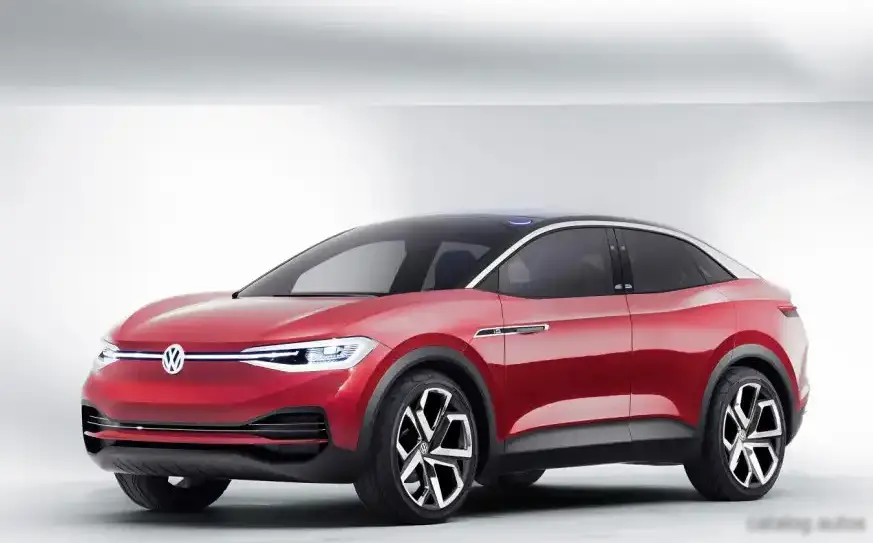
The Volkswagen ID. CROZZ Concept, showcased in 2017, represented Volkswagen’s vision for a future all-electric compact SUV. This concept vehicle was a crucial step in the development of the ID. family, previewing many of the design and technological features that would eventually appear in production models like the ID.4. The CROZZ Concept specifically highlighted Volkswagen’s ambitions for a sporty, long-range electric vehicle with all-wheel drive capabilities. Production of the concept vehicle was limited to 2017, serving primarily as a technology demonstrator and public relations exercise.
Technical Specifications
| Brand | Volkswagen |
| Model | ID. CROZZ |
| Generation | ID. CROZZ Concept |
| Type (Engine) | 83 kWh (306 Hp) AWD |
| Start of production | 2017 |
| End of production | 2017 |
| Powertrain Architecture | BEV (Electric Vehicle) |
| Body type | SUV |
| Seats | 4 |
| Doors | 5 |
| Fuel Type | Electricity |
| Maximum speed | 180 km/h (111.85 mph) |
| Gross battery capacity | 83 kWh |
| All-electric range | 500 km (310.69 mi) |
| Electric motor 1 Power | 102 Hp |
| Electric motor 1 Torque | 140 Nm (103.26 lb.-ft.) |
| Electric motor 2 Power | 204 Hp |
| Electric motor 2 Torque | 310 Nm (228.64 lb.-ft.) |
| System power | 306 Hp |
| System torque | 450 Nm (331.9 lb.-ft.) |
| Length | 4625 mm (182.09 in.) |
| Width | 1891 mm (74.45 in.) |
| Height | 1609 mm (63.35 in.) |
| Wheelbase | 2773 mm (109.17 in.) |
| Front track | 1592 mm (62.68 in.) |
| Rear track | 1594 mm (62.76 in.) |
| Drive wheel | All wheel drive (4×4) |
| Tires size | 245/45 R21 |
| Wheel rims size | 21 |
Powertrain & Engine Architecture
The ID. CROZZ Concept utilized a fully electric powertrain, designated as a BEV (Battery Electric Vehicle). It featured a dual-motor setup, providing all-wheel drive capability. The front motor produced 102 horsepower, while the rear motor generated 204 horsepower, resulting in a combined system output of 306 horsepower and 450 Nm (331.9 lb.-ft.) of torque. The vehicle was powered by an 83 kWh battery pack, strategically positioned in the floor of the vehicle to lower the center of gravity and improve handling. The battery pack was designed for fast charging, although specific charging times were not fully detailed in the concept’s specifications. The electrical architecture was a significant departure from traditional internal combustion engine vehicles, relying on a high-voltage system and sophisticated power electronics to manage energy flow.
Driving Characteristics
While the ID. CROZZ Concept was never subjected to extensive road tests by independent reviewers, Volkswagen indicated that the dual-motor all-wheel drive system provided brisk acceleration and confident handling. The combined 306 horsepower allowed for a 0-100 km/h (0-62 mph) time estimated around 5.1 seconds. The low center of gravity, thanks to the battery pack’s placement, contributed to a stable and engaging driving experience. The concept’s electronic control systems likely included torque vectoring, further enhancing cornering agility. The instant torque delivery characteristic of electric motors provided responsive acceleration in all driving situations. The concept aimed to deliver a driving experience comparable to a sporty gasoline-powered SUV, but with the added benefits of zero emissions and quiet operation.
Equipment & Trim Levels
As a concept vehicle, the ID. CROZZ did not have traditional trim levels. However, it showcased a range of advanced features intended for future production models. The interior featured a minimalist design with a focus on digital interfaces. A large, interactive touchscreen served as the primary control center for the vehicle’s functions. The seats were upholstered in a combination of leather and sustainable materials. The concept also included advanced driver-assistance systems, such as adaptive cruise control, lane keeping assist, and automated parking. Exterior features included distinctive LED lighting, aerodynamic wheels, and a sleek, coupe-like roofline. The interior lighting was fully customizable, creating a modern and inviting atmosphere.
Chassis & Braking
The ID. CROZZ Concept utilized a modern suspension system designed to balance comfort and handling. While specific details were limited, it likely featured independent suspension on all four wheels. The low-slung battery pack contributed to a lower center of gravity, enhancing stability. The braking system incorporated regenerative braking, which helped to recapture energy during deceleration and extend the vehicle’s range. The concept was equipped with large-diameter disc brakes on all wheels to provide ample stopping power. The tires, sized 245/45 R21, were designed to maximize grip and minimize rolling resistance.
Market Reception & Comparison
The ID. CROZZ Concept received generally positive reception from the automotive press. Critics praised its futuristic design, spacious interior, and promising electric powertrain. It was seen as a bold statement of Volkswagen’s commitment to electric mobility. Compared to other electric SUVs of the time, such as the Tesla Model X and the Hyundai Kona Electric (which was still in development), the ID. CROZZ Concept offered a more conventional SUV shape and a focus on practicality. The concept’s 500 km (310.69 mi) range was competitive with other long-range electric vehicles. However, as a concept vehicle, it lacked the real-world testing and refinement of production models.
Legacy
The ID. CROZZ Concept played a significant role in shaping Volkswagen’s ID. family of electric vehicles. Many of the design elements and technological features showcased in the concept were incorporated into the production ID.4, which launched in 2021. The concept demonstrated Volkswagen’s ability to create compelling and competitive electric vehicles. The 83 kWh battery pack and dual-motor all-wheel drive system foreshadowed the powertrain options that would eventually be offered in the ID.4. While the ID. CROZZ itself was never sold to the public, its legacy lives on in the successful ID.4 and other upcoming ID. models. The concept helped to establish Volkswagen as a leader in the electric vehicle market and paved the way for a future of sustainable mobility.