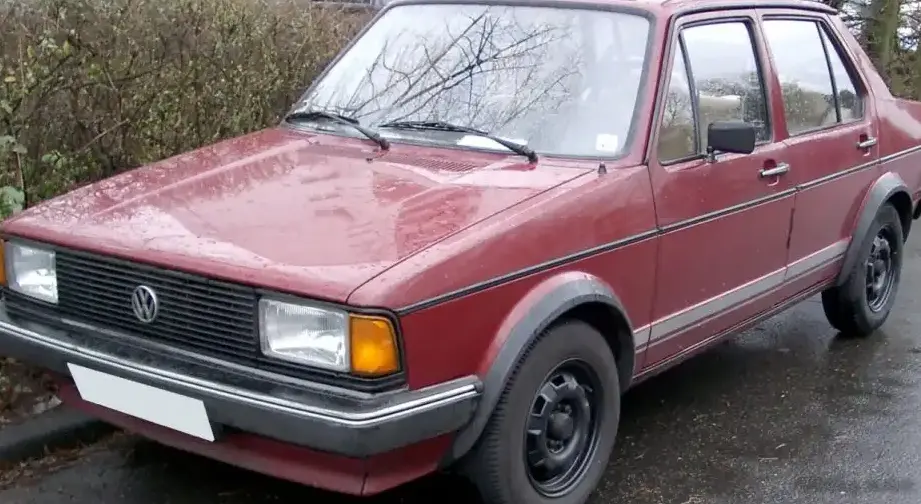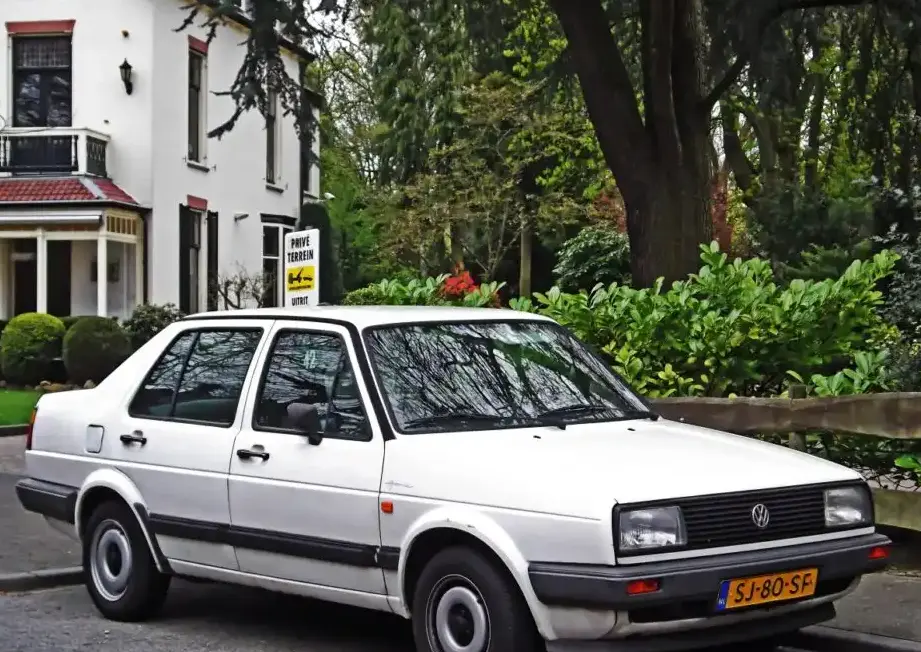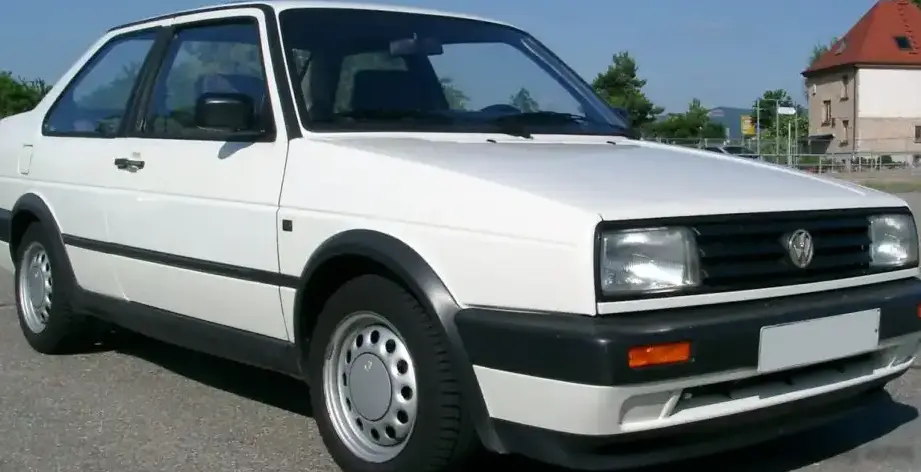
The Volkswagen Jetta II, specifically the 2-door facelift model produced from 1987 to 1991 with the 1.8-liter engine producing 107 horsepower, represents a significant evolution of Volkswagen’s compact sedan. Positioned as a practical and relatively affordable option within the Jetta II range, this variant aimed to balance fuel efficiency with acceptable performance for everyday driving. It was part of the A2 generation (internally known as the 19E/1G), which built upon the success of the original Jetta (A1) by offering a more refined and spacious package. This particular configuration, with its 1.8-liter engine and typically a 5-speed manual transmission, was a common sight on European roads and found a niche market in North America as well.
Technical Specifications
| Brand | Volkswagen |
| Model | Jetta |
| Generation | Jetta II (2-doors, facelift 1987) |
| Type (Engine) | 1.8 (107 Hp) |
| Start of production | 1987 |
| End of production | 1991 |
| Powertrain Architecture | Internal Combustion engine |
| Body type | Sedan |
| Seats | 5 |
| Doors | 2 |
| Fuel Type | Petrol (Gasoline) |
| Acceleration 0 – 100 km/h | 10.6 sec |
| Acceleration 0 – 62 mph | 10.6 sec |
| Acceleration 0 – 60 mph | 10.1 sec |
| Maximum speed | 184 km/h (114.33 mph) |
| Weight-to-power ratio | 9 kg/Hp, 110.9 Hp/tonne |
| Weight-to-torque ratio | 6.1 kg/Nm, 162.7 Nm/tonne |
| Power | 107 Hp @ 5400 rpm |
| Power per litre | 60.1 Hp/l |
| Torque | 157 Nm @ 3800 rpm (115.8 lb.-ft. @ 3800 rpm) |
| Engine layout | Front, Transverse |
| Engine Model/Code | RG |
| Engine displacement | 1781 cm3 (108.68 cu. in.) |
| Number of cylinders | 4 |
| Engine configuration | Inline |
| Cylinder Bore | 81 mm (3.19 in.) |
| Piston Stroke | 86.4 mm (3.4 in.) |
| Compression ratio | 10:1 |
| Number of valves per cylinder | 2 |
| Fuel injection system | Multi-port manifold injection |
| Engine aspiration | Naturally aspirated engine |
| Valvetrain | SOHC |
| Engine oil capacity | 4 l (4.23 US qt | 3.52 UK qt) |
| Coolant | 6.5 l (6.87 US qt | 5.72 UK qt) |
| Kerb Weight | 965 kg (2127.46 lbs) |
| Max. weight | 1470 kg (3240.8 lbs) |
| Max load | 505 kg (1113.33 lbs) |
| Trunk (boot) space – minimum | 575 l (20.31 cu. ft.) |
| Fuel tank capacity | 55 l (14.53 US gal | 12.1 UK gal) |
| Length | 4385 mm (172.64 in.) |
| Width | 1675 mm (65.94 in.) |
| Height | 1415 mm (55.71 in.) |
| Wheelbase | 2475 mm (97.44 in.) |
| Front track | 1427 mm (56.18 in.) |
| Rear (Back) track | 1422 mm (55.98 in.) |
| Drivetrain Architecture | The Internal combustion engine (ICE) drives the front wheels of the vehicle. |
| Drive wheel | Front wheel drive |
| Number of gears and type of gearbox | 5 gears, manual transmission |
| Front suspension | Independent type McPherson |
| Rear suspension | Spring Strut |
| Front brakes | Ventilated discs |
| Rear brakes | Disc |
| Steering type | Steering rack and pinion |
| Power steering | Hydraulic Steering |
| Tires size | 175/70 R13 |
| Wheel rims size | 13 |
Powertrain & Engine Architecture
The heart of this Jetta II variant is the Volkswagen RG engine, an 1.8-liter inline four-cylinder gasoline engine. This engine, part of the EA82 family, featured a single overhead camshaft (SOHC) valvetrain operating two valves per cylinder. The RG code designates a specific iteration of this engine, typically found in European and some North American markets. Fuel delivery was handled by Bosch multi-port fuel injection, a significant improvement over earlier carbureted systems, contributing to better fuel economy and reduced emissions. The engine’s 107 horsepower output at 5400 rpm and 115.8 lb-ft of torque at 3800 rpm were respectable for its displacement and time, though not particularly groundbreaking. The engine’s transverse mounting and front-wheel-drive configuration were standard for Volkswagen at the time, optimizing space utilization and handling characteristics. The 5-speed manual transmission was the most common pairing, offering a balance between fuel efficiency and driver control.
Driving Characteristics
The 1.8-liter Jetta II offered a comfortable and predictable driving experience. Acceleration from 0-60 mph took around 10.1 seconds, making it adequate for everyday commuting and highway merging, but not particularly sporty. The 5-speed manual transmission allowed drivers to keep the engine in its optimal power band, providing reasonable responsiveness. Compared to the more powerful GTI models or those equipped with the larger 1.9-liter diesel engine, the 1.8-liter felt less eager to rev and offered less overall performance. However, it excelled in fuel economy, making it a popular choice for drivers prioritizing practicality. The gear ratios were tuned for a balance of acceleration and cruising efficiency, with a relatively tall fifth gear for relaxed highway driving. The steering, while not overly communicative, was precise and predictable, contributing to a stable and confident feel on the road.
Equipment & Trim Levels
The 1.8-liter Jetta II typically came with a fairly basic level of equipment, reflecting its position as an entry-level or mid-range trim. Standard features generally included cloth upholstery, a basic stereo system, manual windows and door locks, and a relatively simple dashboard layout. Optional extras could include power windows, central locking, a sunroof, and upgraded stereo systems. Interior trim levels varied depending on the market, but generally focused on durability and practicality rather than luxury. The 2-door configuration offered easier access to the rear seats than the 4-door model, but at the expense of rear passenger space.
Chassis & Braking
The Jetta II utilized a McPherson strut front suspension and a spring strut rear suspension, providing a comfortable ride and predictable handling. Front brakes were ventilated discs, offering good stopping power, while rear brakes were typically solid discs. The suspension was tuned for a balance between comfort and handling, prioritizing ride quality over outright sportiness. Stabilizer bars were often included, helping to reduce body roll during cornering. The chassis was relatively lightweight, contributing to the car’s fuel efficiency and agility.
Market Reception & Comparison
The 1.8-liter Jetta II was generally well-received by automotive critics as a practical and reliable compact sedan. It was praised for its fuel efficiency, comfortable ride, and spacious interior. However, it was often criticized for its relatively modest performance compared to more powerful rivals. Compared to the GTI models, the 1.8-liter Jetta offered a more affordable and fuel-efficient alternative, but at the expense of driving excitement. The 1.9-liter diesel Jetta offered even better fuel economy but lacked the 1.8-liter’s responsiveness. In terms of reliability, the 1.8-liter engine proved to be generally robust, although regular maintenance was essential to prevent issues such as oil leaks and coolant system failures.
Legacy
The 1.8-liter Jetta II remains a popular choice among classic car enthusiasts and budget-minded drivers. The RG engine, while not known for its high performance, is relatively simple to maintain and repair. Parts availability is generally good, although some components may be becoming increasingly difficult to find. Well-maintained examples of this Jetta II variant can still provide reliable transportation and a nostalgic driving experience. Its enduring appeal lies in its blend of practicality, affordability, and Volkswagen’s reputation for build quality. Today, these cars are often seen as a gateway into classic Volkswagen ownership, offering a relatively affordable and accessible entry point into the world of vintage German engineering.