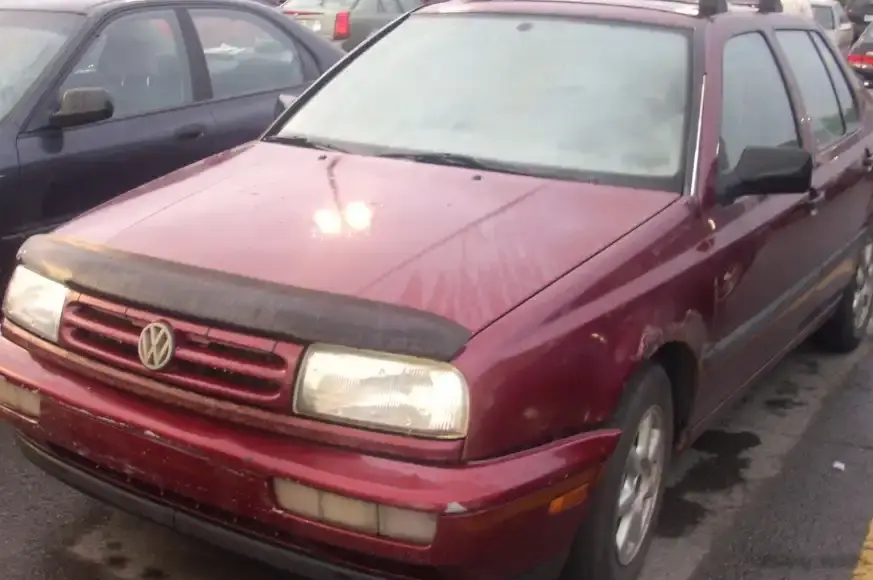
The Volkswagen Jetta III 2.8 VR6, produced between 1992 and 1998, represented a significant step forward for the Jetta model line. Built on the Volkswagen Group’s A3 platform (also known as the 1HX0 chassis code), this generation Jetta aimed to offer a more refined and sophisticated experience than its predecessors. The 2.8 VR6 variant, boasting 172 horsepower, occupied the premium position within the Jetta III range, offering a compelling blend of performance and comfort. It was primarily marketed in Europe and North America as a compact executive car, appealing to buyers seeking a sporty yet practical sedan.
Technical Specifications
| Brand | Volkswagen |
| Model | Jetta |
| Generation | Jetta III |
| Type (Engine) | 2.8 VR6 (172 Hp) |
| Start of production | 1992 |
| End of production | 1998 |
| Powertrain Architecture | Internal Combustion engine |
| Body type | Sedan |
| Seats | 5 |
| Doors | 4 |
| Fuel consumption (urban) | 12.5 l/100 km (18.8 US mpg) |
| Fuel consumption (extra urban) | 7.3 l/100 km (32.2 US mpg) |
| Fuel consumption (combined) | 8.9 l/100 km (26.4 US mpg) |
| Fuel Type | Petrol (Gasoline) |
| Acceleration 0 – 100 km/h | 7.8 sec |
| Acceleration 0 – 62 mph | 7.8 sec |
| Acceleration 0 – 60 mph | 7.4 sec |
| Maximum speed | 225 km/h (139.81 mph) |
| Weight-to-power ratio | 7.8 kg/Hp |
| Weight-to-torque ratio | 7.7 kg/Nm |
| Power | 172 Hp @ 5800 rpm |
| Torque | 175 Nm @ 4200 rpm (129.07 lb.-ft. @ 4200 rpm) |
| Engine layout | Front, Transverse |
| Engine Model/Code | AAA |
| Engine displacement | 2792 cm3 (170.38 cu. in.) |
| Number of cylinders | 6 |
| Engine configuration | VR-engine |
| Cylinder Bore | 81 mm (3.19 in.) |
| Piston Stroke | 90.3 mm (3.56 in.) |
| Compression ratio | 10:1 |
| Number of valves per cylinder | 2 |
| Fuel injection system | Multi-port manifold injection |
| Engine aspiration | Naturally aspirated engine |
| Valvetrain | OHC |
| Engine oil capacity | 5.5 l (5.81 US qt | 4.84 UK qt) |
| Coolant capacity | 10.4 l (10.99 US qt | 9.15 UK qt) |
| Kerb Weight | 1340 kg (2954.19 lbs.) |
| Max. weight | 1725 kg (3802.97 lbs.) |
| Max load | 385 kg (848.78 lbs.) |
| Trunk (boot) space – minimum | 425 l (15.01 cu. ft.) |
| Trunk (boot) space – maximum | 885 l (31.25 cu. ft.) |
| Fuel tank capacity | 55 l (14.53 US gal | 12.1 UK gal) |
| Length | 4380 mm (172.44 in.) |
| Width | 1710 mm (67.32 in.) |
| Height | 1405 mm (55.31 in.) |
| Wheelbase | 2475 mm (97.44 in.) |
| Front track | 1450 mm (57.09 in.) |
| Rear track | 1434 mm (56.46 in.) |
| Drivetrain Architecture | Front wheel drive |
| Number of gears | 5 gears, manual transmission |
| Front suspension | Wishbone |
| Rear suspension | Suspension with traction connecting levers |
| Front brakes | Ventilated discs |
| Rear brakes | Drum |
| Assisting systems | ABS (Anti-lock braking system) |
| Steering type | Steering rack and pinion |
| Power steering | Hydraulic Steering |
| Tires size | 205/50 R15 |
| Wheel rims size | 6.5J x 15 |
INTRODUCTION
The Jetta III 2.8 VR6 was a significant offering in Volkswagen’s lineup during the mid-1990s. It built upon the success of the second-generation Jetta, offering a more modern design, improved safety features, and a wider range of engine options. The VR6 engine, a unique Volkswagen design, was the flagship powerplant, providing a noticeable performance advantage over the base 1.8L and 2.0L four-cylinder engines. This variant aimed to compete with other compact executive sedans like the BMW 3 Series and Audi A4, offering a more affordable alternative with a distinctive character.
Powertrain & Engine Architecture
The heart of the Jetta III 2.8 VR6 is the AAA engine code, a 2.8-liter naturally aspirated VR6 engine. This engine is notable for its narrow-angle V6 configuration – a 15-degree V-angle, allowing it to be packaged more compactly than a traditional V6. This compact design was crucial for fitting the engine into the Jetta’s front-wheel-drive chassis. The engine utilizes multi-port fuel injection and a single overhead camshaft (OHC) per cylinder bank. The VR6’s valvetrain is relatively simple, contributing to its reliability. The 172 horsepower and 175 Nm (129 lb-ft) of torque were delivered smoothly throughout the rev range. The engine’s inherent balance, due to its firing order and design, resulted in a refined and relatively vibration-free driving experience. The five-speed manual transmission was standard, providing precise gear changes and allowing the driver to fully exploit the engine’s power.
Driving Characteristics
The Jetta III 2.8 VR6 offered a noticeably more engaging driving experience than its four-cylinder counterparts. The 0-60 mph time of around 7.4 seconds was respectable for the era, and the engine provided ample power for both highway cruising and spirited driving. The five-speed manual transmission’s gear ratios were well-matched to the engine’s powerband, allowing for quick acceleration in each gear. While not a dedicated sports sedan, the VR6 Jetta offered a good balance of performance and comfort. The steering was precise, and the suspension provided a comfortable ride without excessive body roll. Compared to the 1.8L and 2.0L models, the VR6 felt significantly more responsive and capable, making it a popular choice for drivers who prioritized performance.
Equipment & Trim Levels
The 2.8 VR6 Jetta typically came with a higher level of standard equipment than the lower-trim models. Standard features often included power windows, power locks, air conditioning, and an upgraded sound system. Interior upholstery was typically cloth, but leather options were available. The dashboard featured a clean and functional design, with easy-to-read gauges. Optional extras included a sunroof, alloy wheels, and a more advanced audio system. The VR6 trim was often identified by subtle exterior cues, such as a unique grille and badging.
Chassis & Braking
The Jetta III utilized a front-wheel-drive chassis with an independent front suspension (wishbone) and a semi-independent rear suspension (traction connecting levers). The front suspension provided good handling and ride comfort, while the rear suspension helped to maximize interior space. Braking duties were handled by ventilated discs at the front and drum brakes at the rear. Anti-lock braking system (ABS) was standard, enhancing safety and control during hard braking. The suspension was tuned to provide a balance between comfort and handling, making it suitable for both daily commuting and occasional spirited driving.
Market Reception & Comparison
The Jetta III 2.8 VR6 was generally well-received by automotive critics. It was praised for its smooth and powerful engine, comfortable ride, and refined interior. However, some critics noted that the price was higher than comparable models from other manufacturers. Compared to the base Jetta models, the VR6 offered a significant performance upgrade, but it also came with a higher price tag and slightly lower fuel economy. The VR6 was often seen as a more sophisticated and desirable alternative to the 1.8L and 2.0L models, appealing to buyers who were willing to pay a premium for extra performance and refinement.
Legacy
The Jetta III 2.8 VR6 has developed a loyal following among enthusiasts. The VR6 engine is known for its durability and relatively simple maintenance requirements. While not immune to age-related issues, the engine is generally considered to be reliable if properly maintained. Today, well-maintained examples of the Jetta III 2.8 VR6 are becoming increasingly collectible. The car’s unique character, combined with the VR6 engine’s distinctive sound and performance, make it a desirable classic for those seeking a nostalgic and engaging driving experience. Parts availability is generally good, although some specific VR6 components may be more difficult to find. The Jetta III 2.8 VR6 remains a testament to Volkswagen’s engineering prowess and a reminder of a time when compact sedans could offer a compelling blend of performance, comfort, and style.