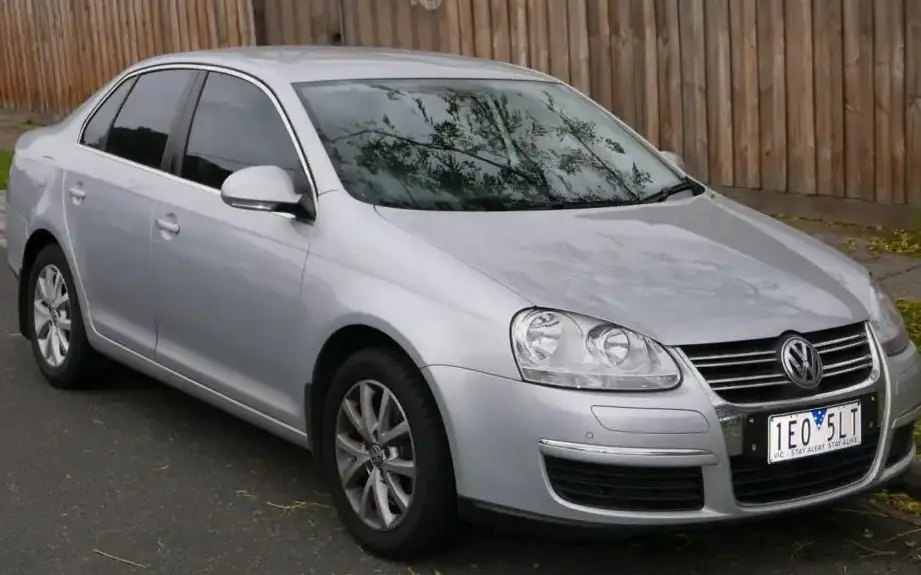
The Volkswagen Jetta V 2.0 TSI (200 Hp) DSG, produced from 2008 to 2010, represented a significant step forward in performance and technology for the fifth generation Jetta (model code 1K). Positioned as a mid-to-upper trim level within the Jetta V range, it offered a compelling blend of power, efficiency, and refinement, appealing to drivers seeking a more engaging experience than the base models. This variant was primarily marketed in Europe and other global markets, serving as a key competitor in the compact sedan segment. It utilized Volkswagen’s then-new direct-injection turbocharged engine technology paired with the advanced DSG (Direct-Shift Gearbox) dual-clutch transmission.
Technical Specifications
| Brand | Volkswagen |
| Model | Jetta |
| Generation | Jetta V |
| Type (Engine) | 2.0 TSI (200 Hp) DSG |
| Start of production | 2008 |
| End of production | 2010 |
| Powertrain Architecture | Internal Combustion engine |
| Body type | Sedan |
| Seats | 5 |
| Doors | 4 |
| Fuel consumption (economy) – urban (NEDC) | 10.6 l/100 km (22.2 US mpg, 26.6 UK mpg, 9.4 km/l) |
| Fuel consumption (economy) – extra urban (NEDC) | 6.1 l/100 km (38.6 US mpg, 46.3 UK mpg, 16.4 km/l) |
| Fuel consumption (economy) – combined (NEDC) | 7.6 l/100 km (30.9 US mpg, 37.2 UK mpg, 13.2 km/l) |
| CO2 emissions (NEDC) | 180 g/km |
| Fuel Type | Petrol (Gasoline) |
| Acceleration 0 – 100 km/h | 7.2 sec |
| Acceleration 0 – 62 mph | 7.2 sec |
| Acceleration 0 – 60 mph | 6.8 sec |
| Maximum speed | 233 km/h (144.78 mph) |
| Emission standard | Euro 4 |
| Weight-to-power ratio | 7 kg/Hp, 143.8 Hp/tonne |
| Weight-to-torque ratio | 5 kg/Nm, 201.3 Nm/tonne |
| Power | 200 Hp @ 5100 rpm |
| Power per litre | 100.8 Hp/l |
| Torque | 280 Nm @ 1800-5000 rpm (206.52 lb.-ft. @ 1800-5000 rpm) |
| Engine layout | Front, Transverse |
| Engine Model/Code | CAWB |
| Engine displacement | 1984 cm3 (121.07 cu. in.) |
| Number of cylinders | 4 |
| Engine configuration | Inline |
| Cylinder Bore | 82.5 mm (3.25 in.) |
| Piston Stroke | 92.8 mm (3.65 in.) |
| Compression ratio | 9.6:1 |
| Number of valves per cylinder | 4 |
| Fuel injection system | Direct injection |
| Engine aspiration | Turbocharger, Intercooler |
| Valvetrain | DOHC |
| Engine oil capacity | 4.6 l (4.86 US qt | 4.05 UK qt) |
| Coolant | 8 l (8.45 US qt | 7.04 UK qt) |
| Kerb Weight | 1391 kg (3066.63 lbs.) |
| Max. weight | 1960 kg (4321.06 lbs.) |
| Max load | 569 kg (1254.43 lbs.) |
| Trunk (boot) space – minimum | 527 l (18.61 cu. ft.) |
| Fuel tank capacity | 55 l (14.53 US gal | 12.1 UK gal) |
| Max. roof load | 75 kg (165.35 lbs.) |
| Permitted trailer load with brakes (8%) | 1700 kg (3747.86 lbs.) |
| Permitted trailer load with brakes (12%) | 1400 kg (3086.47 lbs.) |
| Permitted trailer load without brakes | 720 kg (1587.33 lbs.) |
| Permitted towbar download | 75 kg (165.35 lbs.) |
| Length | 4554 mm (179.29 in.) |
| Width | 1781 mm (70.12 in.) |
| Width including mirrors | 2010 mm (79.13 in.) |
| Height | 1459 mm (57.44 in.) |
| Wheelbase | 2578 mm (101.5 in.) |
| Front track | 1534 mm (60.39 in.) |
| Rear (Back) track | 1512 mm (59.53 in.) |
| Minimum turning circle (turning diameter) | 10.9 m (35.76 ft.) |
| Front suspension | Coil spring, Wishbone, Transverse stabilizer |
| Rear suspension | Independent multi-link suspension, Transverse stabilizer |
| Front brakes | Ventilated discs |
| Rear brakes | Disc |
| Number of gears and type of gearbox | 6 gears, automatic transmission DSG |
INTRODUCTION
The Jetta V 2.0 TSI DSG, launched in 2008, was a key component of Volkswagen’s strategy to offer a more dynamic and technologically advanced compact sedan. Built on the A5 platform (also known as the 1HX0/A3 platform shared with the Golf Mk5 and Audi A3), this variant aimed to bridge the gap between the more affordable, naturally aspirated Jetta models and the high-performance GTI-inspired trims. The 2.0 TSI engine, coupled with the DSG transmission, provided a significant performance upgrade, making it a popular choice for drivers who prioritized both driving enjoyment and everyday practicality.
Powertrain & Engine Architecture
At the heart of the Jetta V 2.0 TSI DSG lies the CAWB engine code, a 1.984-liter (121.07 cubic inches) inline-four cylinder gasoline engine. This engine is characterized by its direct fuel injection (FSI) and turbocharging with an intercooler. Direct injection allows for more precise fuel delivery, improving efficiency and power output. The turbocharger, a K04 unit, forces more air into the cylinders, boosting horsepower and torque. The engine utilizes a dual overhead camshaft (DOHC) valvetrain with four valves per cylinder, optimizing airflow for enhanced performance.
The DSG dual-clutch transmission is a crucial element of this variant. It features six forward gears and operates similarly to two manual transmissions in one, providing incredibly fast and smooth gear changes. This contributes significantly to the car’s acceleration and overall driving experience. The DSG’s electronic control unit (ECU) manages the clutch engagement and gear selection, optimizing for both performance and fuel economy.
Driving Characteristics
The Jetta V 2.0 TSI DSG delivers a noticeably more spirited driving experience compared to the lower-powered Jetta variants. The 200 horsepower and 280 Nm (206.52 lb-ft) of torque provide ample power for both city driving and highway cruising. Acceleration from 0 to 60 mph takes approximately 6.8 seconds, and the car boasts a top speed of 233 km/h (144.78 mph). The DSG transmission ensures quick and seamless gear changes, minimizing power interruption during acceleration. While not as raw or focused as a dedicated sports car, the Jetta V 2.0 TSI DSG offers a refined and engaging driving experience, with a good balance between comfort and performance. The gear ratios are tuned for a blend of acceleration and fuel efficiency, with taller gears for relaxed highway cruising.
Equipment & Trim Levels
The Jetta V 2.0 TSI DSG typically came equipped with a generous array of standard features. These often included air conditioning, power windows and locks, a CD stereo system, and alloy wheels. Higher trim levels added features such as a sunroof, leather upholstery, heated front seats, and a premium sound system. Optional extras included navigation systems, parking sensors, and upgraded interior trim packages. The interior generally featured a functional and well-built design, with comfortable seating and a user-friendly layout. The dashboard configuration was typical of the Jetta V, with a clear instrument cluster and logically placed controls.
Chassis & Braking
The Jetta V 2.0 TSI DSG utilizes a front-wheel-drive layout with a coil spring and wishbone suspension setup at the front, complemented by an independent multi-link suspension at the rear. This suspension configuration provides a good balance between ride comfort and handling. A transverse stabilizer bar is fitted to both the front and rear axles to reduce body roll during cornering. The braking system consists of ventilated discs at the front and solid discs at the rear, providing adequate stopping power for the car’s weight and performance. Anti-lock Braking System (ABS) is standard, enhancing safety and control during emergency braking situations.
Market Reception & Comparison
The Jetta V 2.0 TSI DSG was generally well-received by automotive critics. It was praised for its strong performance, refined handling, and comfortable ride. However, some reviewers noted that the engine could be somewhat noisy under hard acceleration. Compared to the base Jetta models, the 2.0 TSI DSG offered a significant performance upgrade, but at a higher price point. Compared to the Jetta GLI (a sportier variant), the 2.0 TSI DSG offered a more refined and comfortable driving experience, while the GLI prioritized outright performance and a more aggressive aesthetic. Fuel economy was respectable for a turbocharged engine, averaging around 30.9 US mpg in combined driving.
Legacy
The CAWB engine, found in the Jetta V 2.0 TSI DSG, has proven to be relatively reliable, although preventative maintenance is crucial. Common issues include carbon buildup on the intake valves (a characteristic of direct-injection engines) and potential problems with the turbocharger. The DSG transmission, while offering excellent performance, can be more expensive to maintain than a traditional automatic transmission. Today, the Jetta V 2.0 TSI DSG remains a popular choice in the used car market, offering a compelling combination of performance, practicality, and value. Its advanced technology and engaging driving dynamics continue to appeal to enthusiasts seeking a well-rounded compact sedan.