
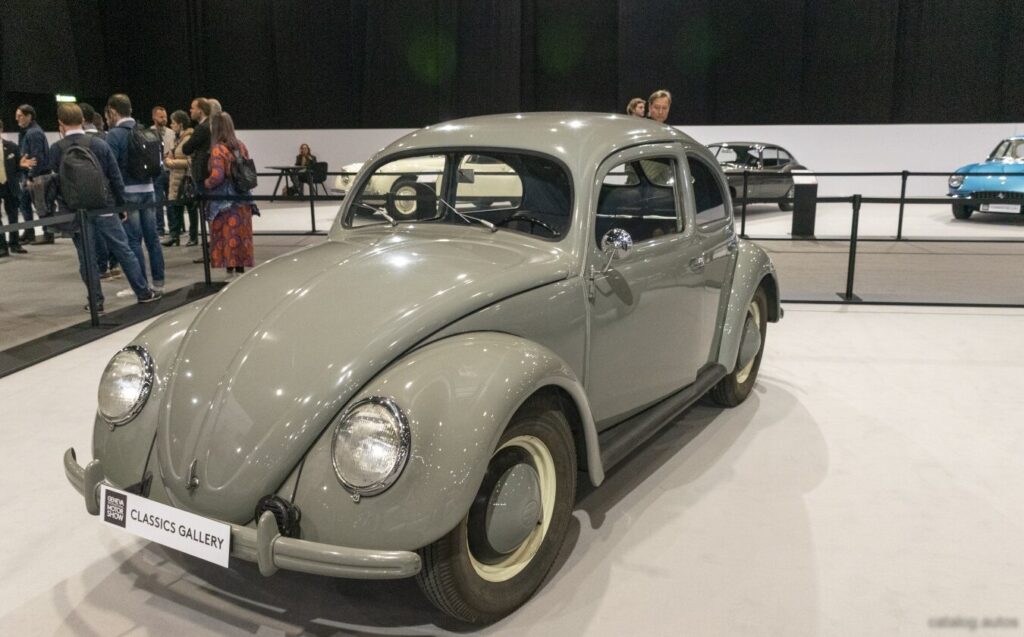
The Volkswagen Käfer, universally known as the Beetle, represents one of the most iconic and influential automobiles in history. Produced from 1938 to 2003, the original Type 1 Beetle underwent numerous iterations. This article focuses specifically on the early 1.2-liter (42005) variant, producing 30 horsepower, manufactured between 1954 and 1965. This version occupied the entry-level position within the Käfer lineup during its production run, representing the most affordable and basic configuration available to consumers. It was a crucial model in establishing the Beetle’s global popularity, particularly in post-war Europe and, later, North America.
The 1.2L Käfer: An Entry-Level Icon
The 1.2-liter Käfer was a cornerstone of Volkswagen’s early success. Introduced as a more accessible alternative to the initially more expensive models, it provided reliable and economical transportation to a wider audience. Its simplicity and robust construction made it a popular choice for families and individuals seeking a practical and durable vehicle. The 1954-1965 production period saw incremental improvements to the Beetle, but the core mechanicals of the 1.2L remained largely consistent, emphasizing affordability and ease of maintenance.
Powertrain & Engine Architecture
The heart of the 1.2-liter Käfer is its air-cooled, naturally aspirated, flat-four engine, internally designated as the 42005. This engine displaced 1192cc (72.6 cubic inches) and produced 30 horsepower at approximately 3300 rpm. The engine featured a pushrod valvetrain operating two valves per cylinder. Fuel delivery was managed by a single Solex carburetor, a common setup for the time. The engine’s design prioritized simplicity and durability over outright performance. The engine block and cylinder heads were constructed from cast iron, while the crankcase was typically made of aluminum. Lubrication was achieved through a pressure-fed system, with a separate oil reservoir located within the engine itself. The engine’s cooling relied entirely on air circulation around the cylinders and cooling fins, making it susceptible to overheating in extremely hot climates or during prolonged periods of strenuous use.
The 1.2L engine was exclusively paired with a four-speed manual transmission. This transmission was fully synchronized, a relatively advanced feature for the era, contributing to smoother gear changes. The transmission’s gear ratios were optimized for fuel efficiency and low-speed torque, reflecting the engine’s limited power output. The drivetrain was rear-wheel drive, a characteristic of the original Beetle design. The lack of a differential limited slip could present challenges in low-traction situations.
Driving Characteristics
The driving experience in a 1.2-liter Käfer is defined by its simplicity and unhurried pace. Acceleration was modest, with a 0-60 mph time estimated to be well over 20 seconds. The engine’s peak torque, though not substantial, was available at relatively low engine speeds, providing adequate pulling power for everyday driving. The four-speed manual transmission required deliberate shifting, and the lack of power steering or assisted brakes meant that the driver needed to exert more physical effort. However, the Beetle’s light weight and nimble handling made it surprisingly enjoyable to drive on winding roads. The suspension, consisting of torsion bars at the front and rear, provided a comfortable ride, absorbing bumps and irregularities in the road surface effectively. The engine’s distinctive air-cooled sound was a defining characteristic of the driving experience.
Equipment & Trim Levels
The 1.2-liter Käfer was offered with minimal standard equipment, reflecting its position as the entry-level model. The interior typically featured vinyl upholstery, simple steel wheels, and basic instrumentation consisting of a speedometer, fuel gauge, and ammeter. The dashboard was constructed from painted metal, and the steering wheel was a two-spoke design. Optional extras included a sunroof, whitewall tires, a radio, and upgraded upholstery. The level of trim was deliberately understated, emphasizing functionality over luxury. The exterior paint options were limited to a small palette of solid colors.
Chassis & Braking
The Käfer’s chassis was a monocoque construction, providing a relatively lightweight and rigid platform. The suspension system, as mentioned previously, utilized torsion bars at both the front and rear, offering a good balance of ride comfort and handling. The braking system consisted of mechanical drum brakes on all four wheels. These brakes were adequate for the Beetle’s weight and performance, but they lacked the stopping power of more modern braking systems. Steering was accomplished through a worm-and-sector mechanism, which provided a direct but somewhat heavy feel. The Beetle’s relatively small turning circle made it easy to maneuver in tight spaces.
Market Reception & Comparison
The 1.2-liter Käfer was widely praised for its reliability, fuel economy, and affordability. Critics acknowledged its modest performance but recognized its value as a practical and economical mode of transportation. Compared to other vehicles in its class, the Beetle offered a unique combination of features and benefits. Its air-cooled engine eliminated the need for a radiator and coolant, simplifying maintenance and reducing the risk of freezing in cold weather. Its rear-engine layout provided ample interior space for its size. However, the Beetle’s limited power and basic equipment levels were drawbacks for some buyers. Later versions of the Käfer, equipped with larger engines and more features, appealed to a broader range of customers. The 1.2L model remained popular among those seeking a simple, reliable, and inexpensive vehicle.
Technical Specifications
| Engine Type | Air-cooled, Flat-Four |
| Displacement | 1192 cc (72.6 cu in) |
| Power Output | 30 hp (22 kW) @ 3300 rpm |
| Fuel System | Solex Carburetor |
| Transmission | 4-Speed Manual |
| Drivetrain | Rear-Wheel Drive |
| Length | 4070 mm (160.24 in) |
| Width | 1540 mm (60.63 in) |
| Height | 1500 mm (59.06 in) |
| Fuel Tank Capacity | 40 liters (10.57 US gal) |
| Engine Oil Capacity | 2.5 liters (2.64 US qt) |
Legacy
The 1.2-liter Käfer, while superseded by more powerful and refined versions of the Beetle, remains a significant chapter in automotive history. Its robust engine and simple design contributed to the Beetle’s reputation for reliability and longevity. Many examples of the 1.2L Käfer are still on the road today, serving as a testament to their durability. In the used car market, these early Beetles are highly sought after by collectors and enthusiasts, particularly those seeking an authentic and original example of this iconic vehicle. The 1.2L engine, while not known for its high performance, is relatively easy to maintain and repair, making it a popular choice for those interested in classic car restoration. The enduring appeal of the Käfer, in all its iterations, continues to inspire automotive designers and enthusiasts around the world.
