
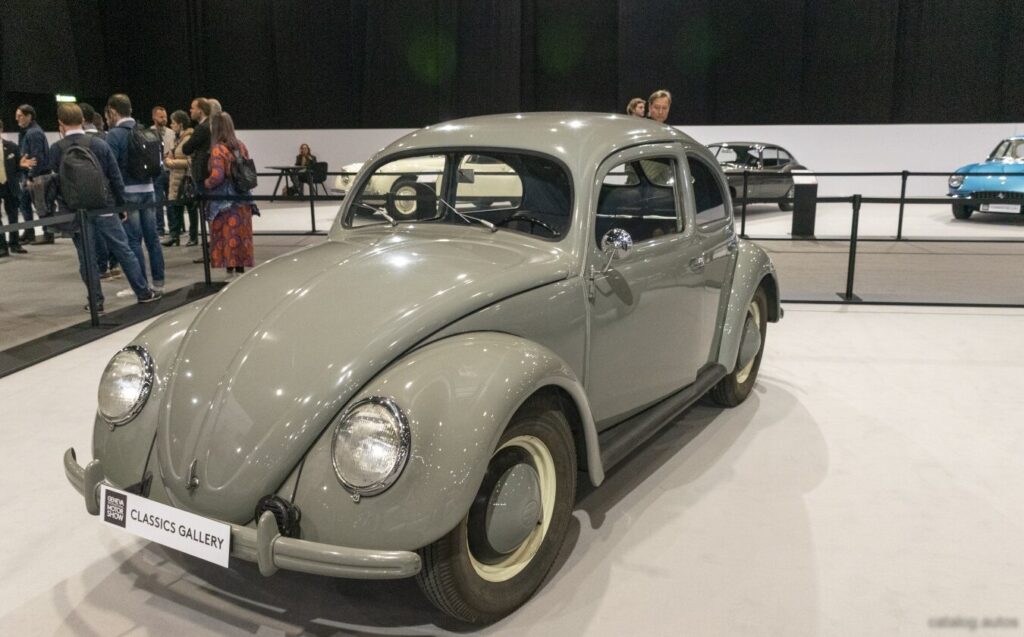
The Volkswagen Käfer 1300, often referred to as the Beetle 1300, was a pivotal iteration of the iconic Volkswagen Beetle, produced between 1965 and 1970. Representing a significant upgrade over the earlier 1200 model, the 1300 featured a larger engine, improved brakes, and subtle styling changes. This variant occupied an important middle ground in the Beetle lineup during its production run, offering a step up in performance and refinement from the base models while remaining more affordable than the later 1500 and 1600 versions. The 1300 was part of the original Käfer (Beetle) series, which spanned from 1938 to 2003, and is identifiable by its specific engine displacement and power output – 1.3 liters producing 40 horsepower.
Volkswagen Käfer 1300: An Overview
The introduction of the Käfer 1300 in 1965 marked a substantial evolution in the Beetle’s development. While retaining the fundamental rear-engine, rear-wheel-drive layout and distinctive silhouette that defined the car, the 1300 addressed several shortcomings of the earlier models. The increased engine capacity provided noticeably improved acceleration and cruising ability, making it a more practical vehicle for contemporary road conditions. The 1300 was sold globally, becoming a popular choice for families and individuals seeking economical and reliable transportation. It served as a bridge between the original, more basic Beetles and the more powerful and feature-rich models that followed.
Powertrain & Engine Architecture
The heart of the Käfer 1300 is its 1285cc, air-cooled, naturally aspirated four-cylinder engine. This engine, designated as Type 111, represented a significant increase in displacement compared to the 1192cc engine found in the earlier 1200 model. The increase in capacity was achieved through a larger bore, increasing the engine’s ability to breathe and produce more power. The engine utilized a pushrod valvetrain operating two valves per cylinder. Fuel delivery was managed by a single Solex carburetor, a common setup for the time. The compression ratio was typically around 7.8:1. The engine produced 40 horsepower (29.8 kW) at 4000 rpm and approximately 84 lb-ft (114 Nm) of torque at 3000 rpm.
Unlike later Beetles, the 1300 did not offer automatic transmission options. All Käfer 1300s were equipped with a four-speed manual gearbox. This gearbox was fully synchronized, improving shift quality and ease of use. The transmission was mechanically operated via a floor-mounted shift lever. The drivetrain consisted of a driveshaft connecting the gearbox to the rear differential, which in turn powered the rear wheels. The engine’s relatively low power output and the manual transmission’s gearing were optimized for fuel efficiency and everyday usability rather than outright performance.
Driving Characteristics
The driving experience in a Käfer 1300 is characterized by its simplicity and engaging nature. The 40 horsepower engine, while not particularly powerful by modern standards, provided adequate performance for typical urban and rural driving conditions of the 1960s. Acceleration was modest, but the engine was relatively responsive, particularly when revved. The four-speed manual transmission required deliberate shifting, but offered a direct connection between the driver and the powertrain. The car’s light weight (approximately 1,830 lbs or 830 kg) contributed to its nimble handling.
Compared to the earlier 1200 Beetle, the 1300 offered a noticeable improvement in cruising speed and hill-climbing ability. However, it was significantly slower than the later 1500 and 1600 models. The 1300’s suspension, consisting of torsion bars at the front and trailing arms at the rear, provided a comfortable ride, although it could be susceptible to body roll in corners. The unassisted steering required some effort, particularly at low speeds, but provided good feedback. The 1300’s driving characteristics were best suited to relaxed, unhurried driving, emphasizing practicality and reliability over sporty performance.
Equipment & Trim Levels
The Käfer 1300 was generally offered in a relatively basic trim level, reflecting its position as a mainstream, affordable vehicle. Standard features typically included cloth upholstery, rubber floor mats, and a simple dashboard with basic instrumentation – speedometer, fuel gauge, and ammeter. The steering wheel was typically a two-spoke design. Exterior features included chrome bumpers, hubcaps, and relatively small exterior mirrors.
Optional extras included a sunroof, whitewall tires, a radio, and upgraded upholstery. Some markets offered additional options such as a heater and a rear window defogger. The interior was functional and utilitarian, prioritizing durability and ease of maintenance over luxury. The Käfer 1300’s interior design remained largely consistent throughout its production run, with minor variations depending on the market and year of manufacture.
Chassis & Braking
The Käfer 1300 utilized a robust chassis construction, consisting of a platform chassis with a separate body. The suspension system, as mentioned previously, employed torsion bars at the front and trailing arms at the rear. A key improvement over the 1200 model was the upgrade to hydraulic drum brakes on all four wheels. This provided significantly improved stopping power and braking performance. The brakes were mechanically operated, but the hydraulic system offered a more consistent and reliable braking feel.
The steering system was a worm-and-roller type, providing a direct but somewhat heavy steering feel. The wheels were typically 15-inch steel wheels, fitted with bias-ply tires. The 1300’s chassis and braking systems were designed for durability and reliability, prioritizing safe and predictable handling over sporty performance. The relatively simple construction made the car easy to maintain and repair.
Market Reception & Comparison
The Käfer 1300 was generally well-received by automotive critics and the public alike. It was praised for its improved performance, reliability, and affordability compared to the earlier 1200 model. Critics noted the increased engine capacity provided a noticeable boost in power and made the car more suitable for highway driving. The upgraded brakes were also widely appreciated.
Compared to the later 1500 and 1600 Beetles, the 1300 offered a more economical entry point into the Beetle ownership experience. However, it lacked the additional power and features of the larger-engined models. Fuel economy was a strong point for the 1300, typically achieving around 30-35 mpg. Reliability was also excellent, with the air-cooled engine proving to be remarkably durable. The Käfer 1300 competed with other small, affordable cars of the era, such as the Ford Anglia and the Hillman Imp.
Technical Specifications
| Engine Type | Air-cooled, four-cylinder, petrol |
| Engine Displacement | 1285 cc (1.3 L) |
| Horsepower | 40 hp (29.8 kW) @ 4000 rpm |
| Torque | 84 lb-ft (114 Nm) @ 3000 rpm |
| Fuel System | Solex Carburetor |
| Transmission | Four-speed manual |
| Drivetrain | Rear-wheel drive |
| Brakes | Hydraulic drum brakes (front & rear) |
| Weight | 1,830 lbs (830 kg) approx. |
| Fuel Capacity | 10.5 US gallons (40 liters) |
| Length | 138.2 in (3512 mm) |
| Width | 65 in (1651 mm) |
| Height | 59.1 in (1501 mm) |
Legacy
The Käfer 1300 holds a significant place in Volkswagen’s history and the broader automotive landscape. It represented a crucial step in the evolution of the Beetle, addressing some of the shortcomings of the earlier models and paving the way for the more powerful and refined versions that followed. The 1300’s robust engine and simple mechanical design contributed to its long-term reliability.
Today, the Käfer 1300 is a popular choice among classic car enthusiasts and collectors. Well-maintained examples are highly sought after, particularly those in original condition. The car’s affordability, simplicity, and iconic status continue to appeal to a wide range of owners. While parts availability can be a challenge, a thriving aftermarket supports the restoration and maintenance of these classic vehicles. The 1300 remains a testament to the enduring appeal of the Volkswagen Beetle and its place as one of the most influential automobiles of all time.
