
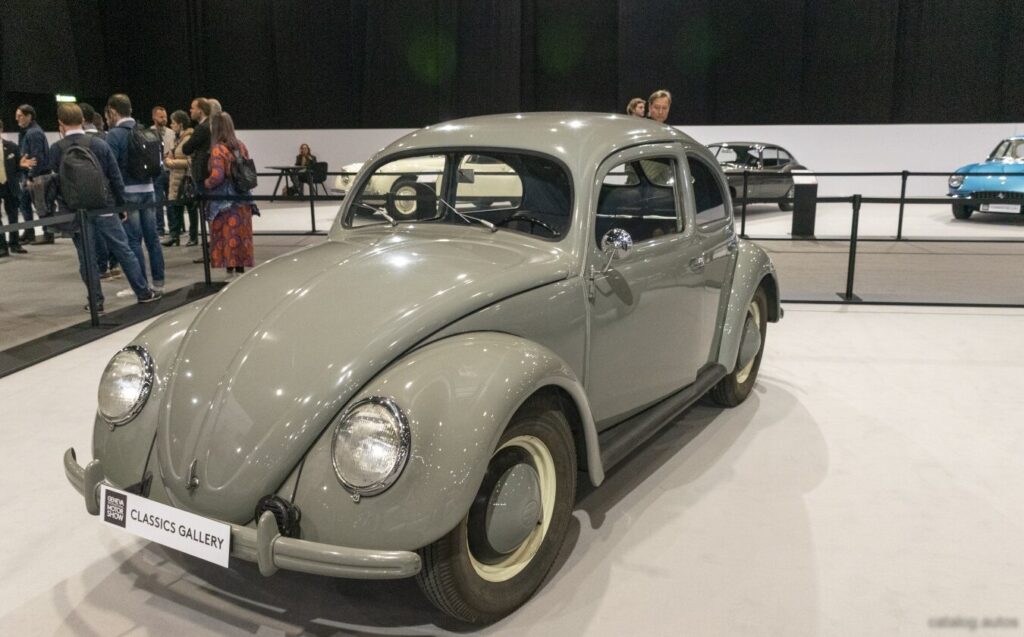
The Volkswagen Käfer 1302 1.2, often referred to as the Super Beetle, produced between 1969 and 1973, represents a significant evolution of the original Volkswagen Beetle. This variant, characterized by its 1.2-liter engine producing 34 horsepower, occupied the entry-level position within the 1302 series, offering a more comfortable and refined driving experience compared to earlier Beetle models. The 1302 designation signifies key mechanical and cosmetic updates, including a curved windshield, a larger rear window, and improved suspension geometry. It was part of the broader Käfer (Beetle) lineage, which spanned decades and became a global automotive icon.
The 1.2-Liter Käfer 1302: A Detailed Overview
The 1302 Super Beetle aimed to address some of the criticisms leveled at the original Beetle, particularly regarding its cramped interior and limited visibility. The changes implemented in the 1302, and subsequently refined in the 1303, were intended to modernize the Beetle while retaining its core characteristics of affordability, reliability, and ease of maintenance. The 1.2-liter engine variant was specifically targeted at buyers seeking economical transportation, prioritizing fuel efficiency and low running costs over outright performance. This model was particularly popular in European markets where smaller displacement engines were favored due to tax regulations and driving conditions.
Powertrain & Engine Architecture
The heart of the Käfer 1302 1.2 is a naturally aspirated, air-cooled, flat-four engine, internally designated as the Type 111. This engine displaced 1192cc (1.2 liters) and produced 34 horsepower (25 kW) at approximately 4000 rpm. The engine featured a simple, yet robust design, with overhead valves operated by pushrods and rockers. Fuel delivery was managed by a single Solex carburetor, providing adequate, though not exceptional, fuel atomization. The compression ratio was typically around 7.8:1. The engine’s oil capacity was 2.5 liters (2.64 US quarts or 2.2 UK quarts).
Unlike later, more powerful Beetles, the 1.2-liter version did not benefit from electronic fuel injection or more sophisticated valvetrain designs. This simplicity contributed to its reliability and ease of repair, but also limited its performance potential. The engine was mounted in the rear of the vehicle, driving the rear wheels through a four-speed manual transmission. An automatic transmission was not offered with this specific engine configuration. The engine’s cooling relied entirely on air circulation, making it susceptible to overheating in extremely hot climates or during prolonged periods of strenuous driving.
Driving Characteristics
The driving experience in a Käfer 1302 1.2 is best described as unhurried. With only 34 horsepower on tap, acceleration was modest, and overtaking required careful planning. The four-speed manual transmission offered a reasonable spread of gears, but the engine lacked the torque to provide strong acceleration in higher gears. Top speed was approximately 115 km/h (71.46 mph). The rear-engine layout contributed to a distinctive handling characteristic, with a tendency towards oversteer, particularly on slippery surfaces. However, experienced drivers could learn to manage this behavior and enjoy the Beetle’s nimble handling. The suspension, while improved over earlier Beetles, still provided a relatively firm ride, especially on uneven roads.
Compared to the later 1.6-liter versions of the 1302 and 1303, the 1.2-liter engine felt significantly underpowered. The 1.6-liter engines offered a noticeable increase in torque and horsepower, resulting in improved acceleration and cruising ability. The 1.2-liter engine, however, excelled in fuel economy, making it an attractive option for drivers prioritizing cost-effectiveness.
Equipment & Trim Levels
The Käfer 1302 1.2 was typically equipped with basic, functional interior appointments. Standard features included cloth upholstery, a simple dashboard with basic instrumentation (speedometer, fuel gauge, and warning lights), and manually operated windows. The steering wheel was typically made of plastic. Optional extras included a radio, a heater, and upgraded upholstery materials. The 1302 featured a more comfortable and spacious interior compared to earlier Beetles, thanks to the redesigned dashboard and improved seat design. The trim level was generally consistent across all 1.2-liter models, with limited options for customization.
Chassis & Braking
The Käfer 1302 1.2 utilized a monocoque chassis with independent suspension on all four wheels. The front suspension employed trailing arms with torsion bars, while the rear suspension featured swing axles with torsion bars. This suspension setup provided a reasonable level of ride comfort and handling, although it was not as sophisticated as the independent suspension systems found in more modern vehicles. The braking system consisted of drum brakes on all four wheels. The brakes were mechanically operated and provided adequate stopping power for the vehicle’s weight and performance. The 1302 did not typically feature a stabilizer bar, contributing to its somewhat pronounced body roll during cornering.
Market Reception & Comparison
The Käfer 1302 1.2 was generally well-received as an affordable and reliable form of transportation. Critics praised its improved comfort and visibility compared to earlier Beetles, but noted its modest performance. It was often compared to other small, economical cars of the era, such as the Fiat 500 and the Mini. The 1.2-liter engine offered excellent fuel economy, making it a popular choice for drivers on a budget. However, its lack of power limited its appeal to those seeking a more engaging driving experience. Compared to the 1.6-liter versions of the 1302, the 1.2-liter model was significantly less expensive to purchase and operate, but also offered less performance and refinement.
Technical Specifications
| Body Type | Coupe, 2 Doors |
| Engine Type | Internal Combustion engine |
| Engine Displacement | 1192 cc (1.2 liters) |
| Engine Power | 34 hp (25 kW) |
| Fuel Type | Petrol (Gasoline) |
| Maximum Speed | 115 km/h (71.46 mph) |
| Fuel Tank Capacity | 40 liters (10.57 US gallons, 8.8 UK gallons) |
| Length | 4070 mm (160.24 in) |
| Width | 1550 mm (61.02 in) |
| Height | 1500 mm (59.06 in) |
| Engine Oil Capacity | 2.5 liters (2.64 US qt, 2.2 UK qt) |
Legacy
The Käfer 1302 1.2, while not the most powerful or desirable version of the Super Beetle, remains a popular choice among classic car enthusiasts. Its simplicity, reliability, and affordability make it an attractive entry point into the world of vintage Volkswagens. Parts availability is generally good, and the engine is relatively easy to maintain and repair. In the used car market today, well-maintained examples of the 1302 1.2 can fetch reasonable prices, reflecting their historical significance and enduring appeal. The 1.2-liter engine, while modest in its output, proved to be remarkably durable, and many examples are still running today, testament to the quality of Volkswagen engineering.
