
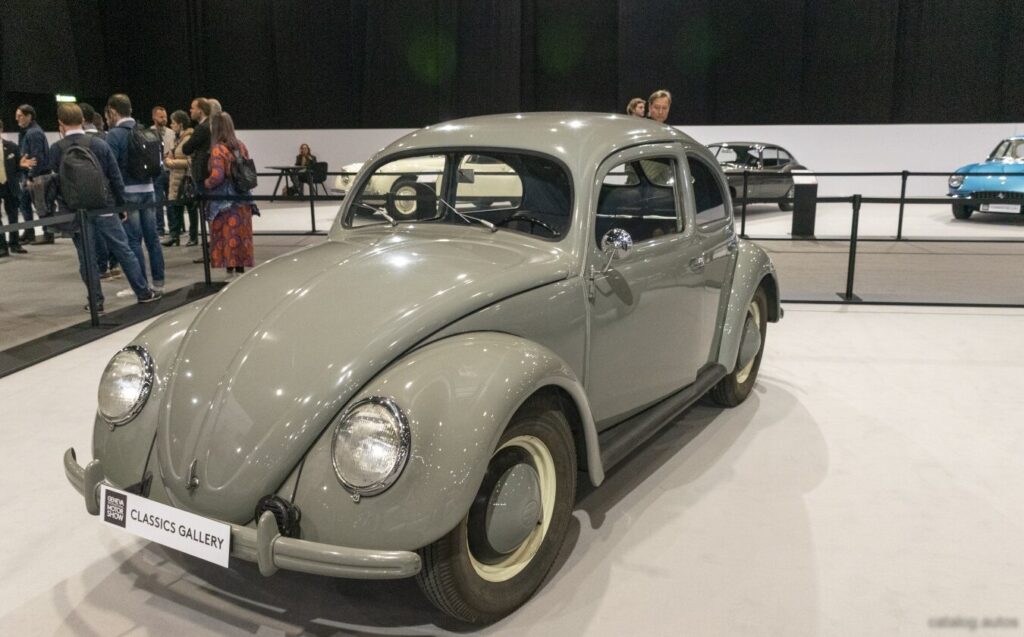
The Volkswagen Käfer 1302 1.3, often referred to as the Super Beetle, produced between 1970 and 1972, represented a significant evolution in the iconic Beetle lineage. This variant, designated by its 44 horsepower 1.3-liter engine, occupied the entry-level position within the 1302 series, offering a more refined driving experience compared to earlier, more spartan Beetles. The 1302 designation signified a major redesign of the original Käfer, incorporating a curved windshield, larger rear window, and a more comfortable interior. This model bridged the gap between the classic Beetle and the later 1303 models, offering a balance of affordability and improved features.
The 1.3-Liter Käfer 1302: A Detailed Overview
The 1302 series marked a substantial departure from the original Beetle design, addressing many criticisms leveled at the earlier models. The most noticeable change was the introduction of a curved windshield, replacing the split window of previous generations. This provided increased headroom and improved visibility. The larger rear window further enhanced visibility and contributed to a more modern aesthetic. The 1.3-liter engine variant, while not the most powerful in the 1302 range, was a popular choice for buyers seeking economical transportation and a relatively comfortable ride.
Powertrain & Engine Architecture
The heart of the Käfer 1302 1.3 was a naturally aspirated, air-cooled, 1.3-liter (1285cc) flat-four engine. This engine, internally designated with various codes depending on the specific market, produced 44 horsepower at approximately 4,800 rpm and 84 lb-ft of torque at 3,000 rpm. The engine utilized a simple, yet robust, pushrod valvetrain operating two valves per cylinder. Fuel delivery was managed by a single Solex carburetor, a common setup for Volkswagen engines of this era. The engine’s air-cooled design eliminated the need for a radiator, simplifying the cooling system and reducing weight. Lubrication was provided by a pressure-fed system with an oil cooler. The engine was mounted rearward, driving the rear wheels through a four-speed manual transmission. While an automatic transmission was offered in some markets, it was less common with the 1.3-liter engine due to the limited power output. The automatic transmission, when equipped, was a three-speed unit.
Driving Characteristics
The driving experience in the Käfer 1302 1.3 was characterized by its simplicity and ease of use. The 44 horsepower engine provided adequate, though not exhilarating, performance. Acceleration was modest, and highway cruising required careful planning, particularly when encountering inclines. The four-speed manual transmission offered precise shifts, allowing drivers to maximize the engine’s limited power. The automatic transmission, while offering convenience, further reduced acceleration and responsiveness. The rear-engine layout contributed to a unique handling characteristic, with a tendency towards oversteer, especially when pushed hard. However, the car’s relatively light weight and forgiving suspension made it a manageable vehicle for drivers of all skill levels. The steering was non-power assisted, requiring some effort at low speeds, but providing good feedback. Overall, the 1.3-liter Käfer 1302 was best suited for city driving and shorter trips.
Equipment & Trim Levels
The Käfer 1302 1.3 was typically equipped with basic, yet functional, interior appointments. Standard features included cloth upholstery, a simple dashboard with basic instrumentation (speedometer, fuel gauge, and temperature gauge), and rubber floor mats. The steering wheel was typically a two-spoke design. Optional extras included upgraded upholstery, a radio, and whitewall tires. The 1302 offered a more spacious and comfortable interior compared to earlier Beetles, thanks to the curved windshield and redesigned dashboard. Trim levels were relatively limited, with most variations stemming from optional equipment choices. The focus was on providing affordable and reliable transportation, rather than luxury or extensive features.
Chassis & Braking
The Käfer 1302 retained the Beetle’s traditional chassis layout, featuring a monocoque construction with independent suspension on all four wheels. The front suspension utilized torsion bars, while the rear suspension employed trailing arms with transverse torsion springs. This suspension setup provided a relatively comfortable ride, considering the car’s simple design. The braking system consisted of drum brakes on all four wheels. The brakes were mechanically operated, providing adequate stopping power for the car’s weight and performance. Later models within the 1302 range sometimes featured front disc brakes as an upgrade, but this was not standard on the 1.3-liter variant. The car’s relatively light weight helped to compensate for the limitations of the drum brake system.
Market Reception & Comparison
The Käfer 1302 1.3 was generally well-received by the motoring press and the public. Critics praised the car’s improved comfort, visibility, and handling compared to earlier Beetles. However, the 1.3-liter engine was often criticized for its lack of power, particularly when compared to the larger 1.5 and 1.6-liter engines available in other 1302 models. Fuel economy was a strong point, with the 1.3-liter engine achieving approximately 30-35 mpg. Reliability was also highly regarded, as the Beetle was known for its robust and durable mechanicals. Compared to the more powerful 1302 variants, the 1.3-liter model was more affordable and appealed to buyers seeking economical transportation. It was also a popular choice for first-time car owners and those who primarily used the car for city driving. The 1.3-liter engine required less maintenance than the larger engines, making it an attractive option for budget-conscious buyers.
Technical Specifications
| Body Type | Coupe, 2 Doors |
| Engine Type | Internal Combustion engine |
| Engine Displacement | 1.3 Liters (1285cc) |
| Engine Power | 44 Hp |
| Engine Aspiration | Naturally Aspirated |
| Fuel Type | Petrol (Gasoline) |
| Maximum Speed | 130 km/h (80.78 mph) |
| Length | 4030 mm (158.66 in) |
| Width | 1550 mm (61.02 in) |
| Height | 1500 mm (59.06 in) |
| Engine Oil Capacity | 2.5 l (2.64 US qt | 2.2 UK qt) |
Legacy
The Käfer 1302 1.3, while not the most sought-after variant of the Super Beetle, remains a popular choice among classic Volkswagen enthusiasts. Its simplicity, reliability, and affordability make it an attractive entry point into the world of vintage Volkswagens. The 1.3-liter engine, while modest in performance, is known for its durability and ease of maintenance. Today, well-maintained examples of the 1302 1.3 can command reasonable prices in the used car market. Parts availability is generally good, thanks to the Beetle’s enduring popularity and the extensive aftermarket support. The 1302 1.3 represents a significant chapter in the Beetle’s history, bridging the gap between the classic original and the more modern iterations that followed. It continues to be appreciated for its iconic design, simple engineering, and enduring charm.
