
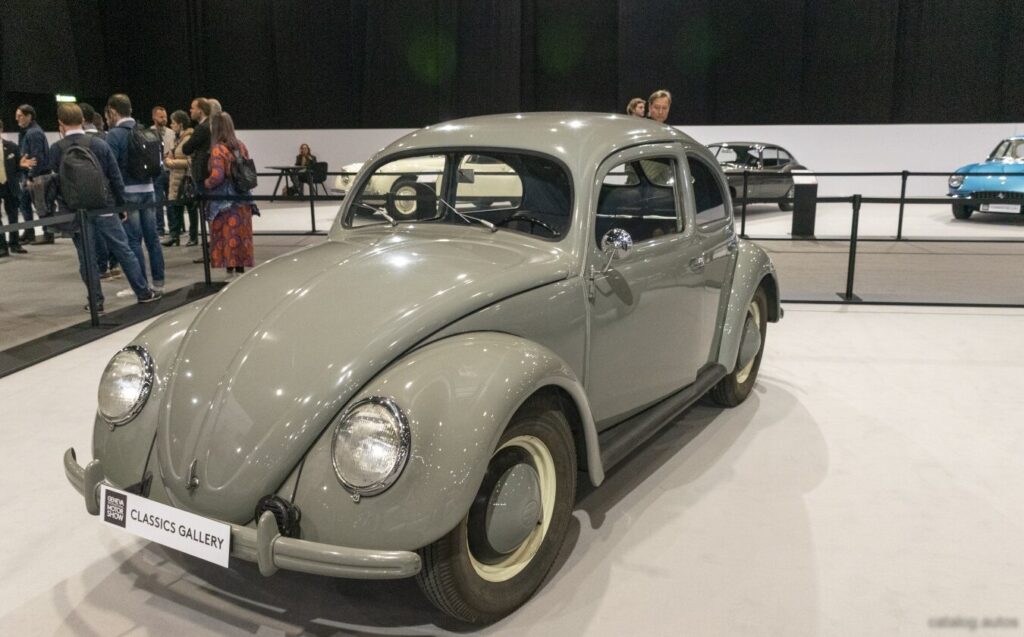
The Volkswagen Käfer 1302 1.3, producing 39 horsepower, was a variant of the iconic Volkswagen Beetle produced between 1970 and 1975. This model represented a continuation of the Beetle’s evolution, falling within the broader lineage of the original Käfer (Beetle) which began production in the 1930s. The 1302 designation refers to an internal Volkswagen model code indicating specific updates to the vehicle. It was positioned as a more affordable and economical option within the Käfer range, appealing to buyers prioritizing practicality and fuel efficiency over outright performance. The 1302 series, introduced in 1970, featured significant changes over earlier Beetles, including a larger rear window, a more steeply raked windshield, and an updated dashboard. This 1.3-liter version was a key part of the lineup during a period when emissions regulations were beginning to impact engine design and power output.
The 1.3-Liter Engine and its Role in the Käfer Lineup
The 1.3-liter engine in the Käfer 1302 was a naturally aspirated, air-cooled, flat-four engine. It was a downsized version of the larger 1.5 and 1.6-liter engines offered in other Käfer models of the time. This engine was introduced as Volkswagen sought to offer a more economical option, particularly in markets sensitive to fuel costs and taxation based on engine displacement. Compared to the 1.5 and 1.6-liter versions, the 1.3-liter engine provided less power and torque, resulting in a slower acceleration and lower top speed. However, it also offered improved fuel economy, making it a popular choice for everyday commuting and general transportation. The 39 hp output was considered adequate for city driving and moderate highway speeds, but it was noticeably less powerful than the higher-spec Käfer variants.
Powertrain & Engine Architecture
The engine, internally designated as a Type 1 engine, retained the fundamental air-cooled, horizontally opposed (flat-four) configuration that defined the Beetle for decades. The 1.3-liter displacement was achieved through a reduced bore and stroke compared to the larger engines. Fuel delivery was handled by a single Solex carburetor, a common setup for the time. The engine featured a simple overhead valve (OHV) valvetrain with pushrods operating two valves per cylinder. This design prioritized simplicity and reliability over high-performance breathing. The compression ratio was typically around 8.5:1. The engine’s cooling relied entirely on air flowing over the cooling fins cast into the cylinder heads and cylinders, making proper airflow crucial for preventing overheating, especially in hot climates or during prolonged periods of strenuous driving.
The Käfer 1302 1.3 was exclusively offered with a four-speed manual transmission. An automatic transmission was *not* available for this specific engine and model year combination. The transmission was fully synchronized, a feature that became standard on the Käfer in the 1960s, making gear changes smoother and easier. The transmission’s gear ratios were optimized for maximizing fuel efficiency and providing adequate acceleration for the engine’s power output. The final drive ratio was typically around 3.89:1, contributing to the car’s overall gearing for everyday driving. The drivetrain was rear-wheel drive, as with all Käfer models.
Driving Characteristics
The driving experience in a Käfer 1302 1.3 was characterized by its simplicity and predictable handling. The 39 hp engine provided modest acceleration, requiring drivers to plan ahead when overtaking or merging onto highways. The car’s light weight (approximately 1,800 lbs) helped to mitigate the effects of the low power output. The four-speed manual transmission allowed drivers to keep the engine in its optimal power band, but frequent gear changes were often necessary, especially when climbing hills or carrying a full load. The steering was non-power-assisted, providing a direct and communicative feel, but requiring more effort at low speeds. The suspension, consisting of torsion bars at the front and trailing arms at the rear, offered a comfortable ride on smooth roads, but could become bumpy on uneven surfaces. Compared to the 1.5 and 1.6-liter Käfer models, the 1.3-liter version felt noticeably slower and less refined, but it also offered a more economical and user-friendly driving experience.
Equipment & Trim Levels
The Käfer 1302 1.3 was generally offered with a relatively basic level of equipment, reflecting its position as an entry-level model. Standard features typically included cloth upholstery, vinyl floor covering, and a simple instrument panel with speedometer, fuel gauge, and warning lights. The steering wheel was typically made of plastic. Exterior features included chrome bumpers, hubcaps, and basic lighting. Optional extras included a radio, whitewall tires, and upgraded upholstery. The interior trim was typically monochromatic, with limited color options. The dashboard layout was functional and straightforward, prioritizing practicality over aesthetics. The 1302 series did introduce a larger, more modern-looking dashboard compared to earlier Käfer models, but the 1.3-liter version typically retained the more basic trim levels.
Chassis & Braking
The Käfer 1302 1.3 utilized a unibody construction, providing a relatively lightweight and rigid chassis. The front suspension consisted of torsion bars, providing a simple and effective suspension system. The rear suspension utilized trailing arms with transverse torsion springs. The braking system was hydraulic, with drum brakes on all four wheels. The drum brakes were adequate for the car’s weight and performance, but they lacked the stopping power of disc brakes. The car did not feature power-assisted brakes. Steering was accomplished through a worm-and-roller steering gear, providing a direct but somewhat heavy steering feel. The tires were typically 5.60-15 inch radial tires, providing a reasonable balance of grip and ride comfort.
Market Reception & Comparison
The Käfer 1302 1.3 was generally well-received by consumers looking for an affordable and reliable means of transportation. Critics acknowledged its modest performance but praised its fuel economy and ease of maintenance. Compared to the 1.5 and 1.6-liter Käfer models, the 1.3-liter version offered a lower purchase price and reduced running costs. However, it was also criticized for its lack of power and its inability to keep pace with faster traffic. In terms of reliability, the 1.3-liter engine proved to be quite durable, although it was more susceptible to overheating than the larger engines if not properly maintained. Fuel economy was a significant selling point, averaging around 30-35 mpg in typical driving conditions. The 1.3-liter Käfer was often compared to other small, economical cars of the era, such as the Fiat 850 and the Renault 4.
Technical Specifications
| Body Type | Coupe |
| Engine Type | Air-cooled, Flat-Four |
| Displacement | 1285 cc (78.5 cu in) |
| Power Output | 39 hp (29 kW) @ 4000 rpm |
| Torque | 68 lb-ft (92 Nm) @ 3000 rpm |
| Fuel System | Solex Carburetor |
| Transmission | 4-speed Manual |
| Drivetrain | Rear-Wheel Drive |
| Weight | 1,800 lbs (816 kg) approx. |
| Fuel Capacity | 40 liters (10.6 US gallons) |
| Top Speed | 85 mph (137 km/h) approx. |
| 0-60 mph | 16-18 seconds approx. |
Legacy
The Käfer 1302 1.3, while not the most powerful or desirable variant of the Beetle, remains a significant part of the Käfer’s history. Its affordability and fuel efficiency made it a popular choice for many buyers, and it helped to extend the Beetle’s lifespan. Today, these models are sought after by collectors and enthusiasts, particularly those looking for a classic Volkswagen at a relatively affordable price. The 1.3-liter engine is known for its simplicity and reliability, making it relatively easy to maintain and repair. However, finding original parts can sometimes be challenging. The Käfer 1302 1.3 represents a unique chapter in the Beetle’s story, embodying the spirit of practicality and affordability that defined this iconic vehicle for generations.
