
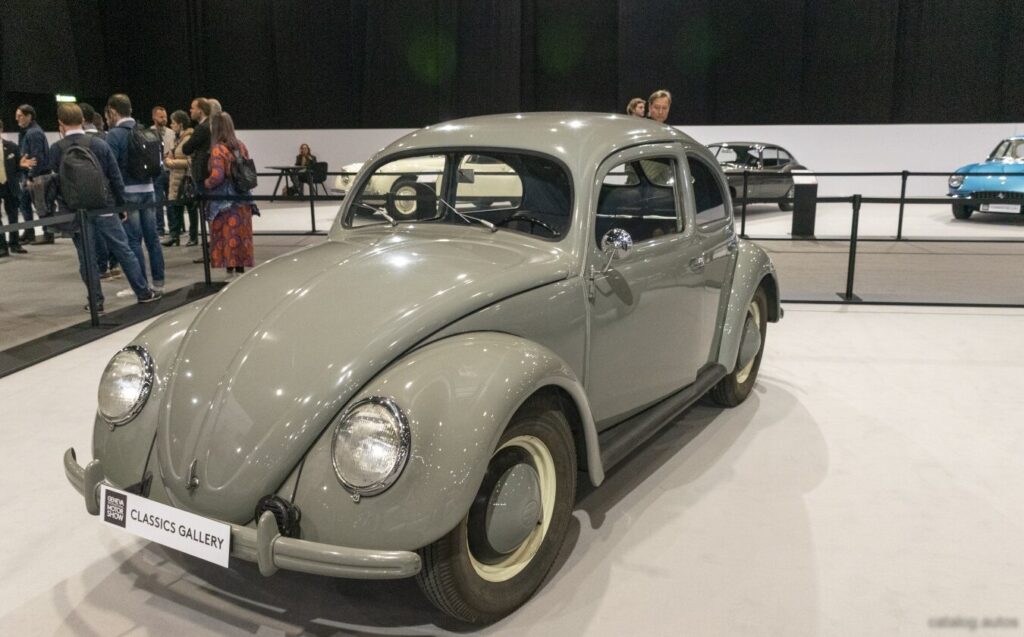
The Volkswagen Käfer 1302, often referred to as the Super Beetle, was produced from 1970 to 1979. The 1.6-liter (11) variant, producing 50 horsepower, was a specific configuration offered between 1975 and 1978. This model represented a continuation of the iconic Beetle, but with significant mechanical updates aimed at improving ride quality and handling. It occupied the entry-level position within the 1302 range, offering a more affordable option compared to higher-specification models.
Volkswagen Käfer 1302 1.6 (50 hp): An Overview
The 1302 Super Beetle was a pivotal evolution of the original Käfer. The key change was the introduction of a MacPherson strut front suspension, replacing the torsion beam setup of earlier Beetles. This dramatically improved handling and ride comfort. The 1.6-liter engine, while not the most powerful option available in the Super Beetle lineup, provided a balance of affordability and usability for everyday driving. This particular 50 hp version was primarily aimed at buyers seeking economical transportation, and was often chosen by families or those new to driving.
Powertrain & Engine Architecture
The 1302 1.6-liter engine, internally designated as a Type 1 engine, was an air-cooled, naturally aspirated, four-cylinder engine. It featured a displacement of 1584cc (96.6 cubic inches). The engine utilized a pushrod valvetrain operating two valves per cylinder. Fuel delivery was managed by a single Solex carburetor, a common setup for Volkswagen engines of this era. The compression ratio was typically around 8.5:1. The engine produced 50 horsepower (37 kW) at 4000 rpm and approximately 86 lb-ft (117 Nm) of torque at 3000 rpm.
Unlike later fuel-injected Beetles, the 1975-1978 1.6L models relied on the simplicity and relative ease of maintenance of the carburetor system. The engine was mounted in the rear of the vehicle, driving the rear wheels. The engine block and cylinder heads were constructed from aluminum alloy, contributing to a relatively lightweight powertrain. The engine oil capacity was 2.5 liters (2.64 US quarts / 2.2 UK quarts).
Driving Characteristics
The 1.6-liter, 50 hp engine in the 1302 provided adequate, but not exhilarating, performance. Acceleration was modest, with a 0-60 mph time estimated to be around 15-18 seconds. The car was best suited for city driving and cruising at moderate speeds. The four-speed manual transmission was the most common pairing, but a semi-automatic transmission (Autostick) was also available, though less popular. The Autostick was a fluid coupling transmission, not a fully automatic in the modern sense, and offered a degree of convenience without the full complexity of a traditional automatic. The gear ratios were optimized for fuel economy and low-speed torque, rather than outright speed. The rear-engine layout contributed to a distinctive driving feel, with noticeable rear weight bias. Handling was improved over earlier Beetles thanks to the MacPherson strut front suspension, but still required driver awareness due to the car’s inherent characteristics.
Equipment & Trim Levels
The 1302 1.6 (50 hp) was typically equipped with basic, functional interior appointments. Standard features included vinyl upholstery, rubber floor mats, and a simple dashboard layout. The steering wheel was a two-spoke design. Chrome trim was used sparingly, reflecting the car’s entry-level positioning. Optional extras included upgraded upholstery (cloth or leatherette), a radio, and whitewall tires. The 1302 also featured improved ventilation compared to earlier Beetles, with a more effective heater system. The exterior typically featured chrome bumpers and relatively simple steel wheels with hubcaps.
Chassis & Braking
The 1302’s chassis represented a significant upgrade over earlier Beetles. The MacPherson strut front suspension, combined with a rear torsion beam suspension, provided a more comfortable and controlled ride. The front track was widened compared to previous models, further enhancing stability. Braking was accomplished via drum brakes on all four wheels, a common setup for vehicles of this era and price point. The braking system was hydraulic, providing adequate stopping power for the car’s weight and performance. Steering was of the worm-and-roller type, offering a relatively direct feel. The car’s unladen weight was approximately 820 kg (1808 lbs).
1.6L (50 hp) Market Reception & Comparison
The 1302 1.6 (50 hp) was generally well-received as an affordable and reliable form of transportation. Critics praised the improved ride quality and handling compared to earlier Beetles, but noted that the 1.6-liter engine lacked the power of the larger 1.7 or 2.0-liter engines available in other 1302 variants. Compared to the more powerful models, the 1.6L offered better fuel economy. Fuel tank capacity was 40 liters (10.57 US gallons / 8.8 UK gallons). The 1.6L was often compared to other small, economical cars of the era, such as the Ford Fiesta and the Fiat 127. In terms of reliability, the 1302 1.6 was generally considered to be very dependable, benefiting from the simplicity of its air-cooled engine and robust construction. However, the air-cooled engine required regular maintenance, including oil changes and valve adjustments.
Technical Specifications
| Body Type | Coupe |
| Doors | 2 |
| Seats | 4 |
| Engine Type | Air-cooled, Naturally Aspirated Four-Cylinder |
| Engine Displacement | 1584 cc (96.6 cu in) |
| Power Output | 50 hp (37 kW) @ 4000 rpm |
| Torque Output | 86 lb-ft (117 Nm) @ 3000 rpm |
| Fuel System | Solex Carburetor |
| Transmission | 4-Speed Manual or Semi-Automatic (Autostick) |
| Length | 4060 mm (159.84 in) |
| Width | 1550 mm (61.02 in) |
| Height | 1500 mm (59.06 in) |
| Weight | 820 kg (1808 lbs) |
| Fuel Tank Capacity | 40 liters (10.57 US gal / 8.8 UK gal) |
| Engine Oil Capacity | 2.5 liters (2.64 US qt / 2.2 UK qt) |
Legacy
The Volkswagen Käfer 1302 1.6 (50 hp) remains a popular classic car today. Its simplicity, reliability, and affordability have made it a favorite among enthusiasts and collectors. While not the fastest or most luxurious Beetle variant, the 1.6L model offers a charming and authentic driving experience. The air-cooled engine requires regular maintenance, but is relatively easy to work on for those with mechanical skills. Parts availability is generally good, thanks to the Beetle’s enduring popularity. In the used car market, well-maintained examples of the 1302 1.6 can command reasonable prices, reflecting their status as a desirable and iconic vehicle. The 1302, and specifically this 1.6L variant, represents a significant step in the evolution of the Beetle, bridging the gap between the original air-cooled design and the more modern, fuel-injected models that followed.
