
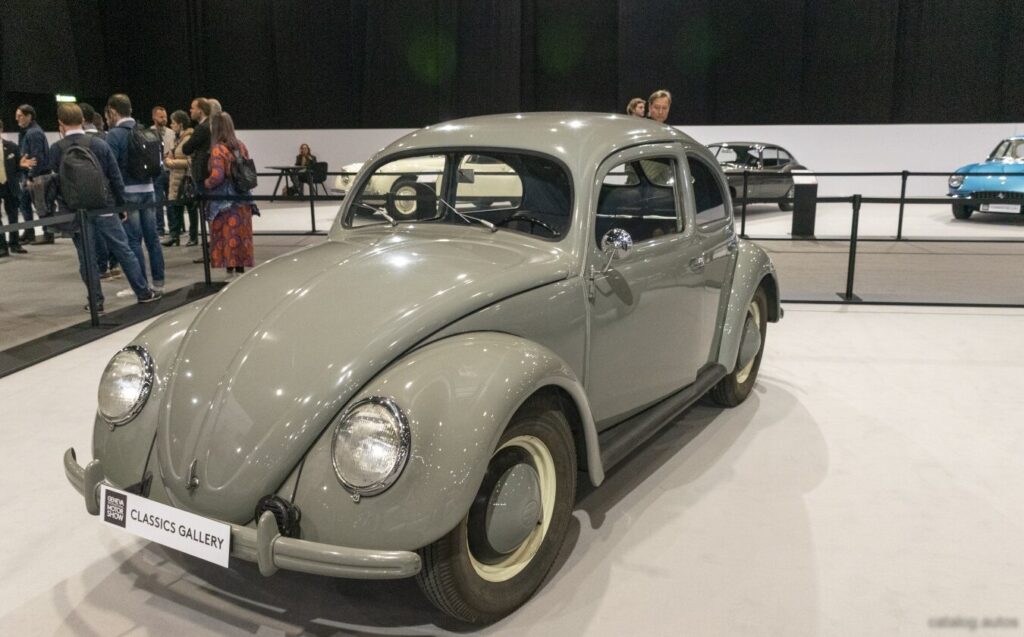
The Volkswagen Käfer 1302, specifically the 1.6-liter (48 hp) variant, represents a significant evolution in the iconic Beetle’s history. Produced between 1971 and 1974, the 1302 (also known as the Super Beetle) was designed to address criticisms of the earlier models, primarily concerning ride comfort and interior space. This iteration, powered by the 1.6-liter engine producing 48 horsepower, served as a mainstream offering within the Käfer lineup, positioned as a practical and economical transportation solution for families and everyday drivers. It built upon the foundation laid by previous Käfer models, incorporating improvements to suspension and body design while retaining the Beetle’s core characteristics of simplicity, reliability, and affordability. The 1302 was part of the larger Käfer family, which spanned decades of production and numerous variations, ultimately becoming one of the best-selling automobiles of all time.
The 1.6-Liter Käfer 1302: A Detailed Overview
The introduction of the 1302 marked a departure from the earlier, more spartan Käfer models. While retaining the rear-engine, rear-wheel-drive layout that defined the Beetle, the 1302 featured a larger engine, improved suspension, and a more refined interior. The 1.6-liter engine was a key upgrade, offering a modest increase in power and torque compared to the smaller engines previously offered. This variant was not the most powerful Käfer available – that distinction belonged to the later 1600 models – but it struck a balance between performance and fuel economy, making it a popular choice for buyers seeking a reliable and affordable vehicle.
Powertrain & Engine Architecture
The heart of the Käfer 1302 1.6 was the Type 113 air-cooled, naturally aspirated four-cylinder engine. This engine, displacing 1584cc (96.6 cubic inches), produced 48 horsepower at 4000 rpm and approximately 86 lb-ft of torque at 3000 rpm. The engine utilized a pushrod valvetrain with two valves per cylinder. Fuel delivery was managed by a single Solex carburetor, a common setup for the time. The engine’s simplicity was a hallmark of its design, contributing to its renowned reliability and ease of maintenance.
The engine was mounted in the rear of the vehicle, driving the rear wheels through a four-speed manual transmission. An automatic transmission was also available, though less common. The automatic transmission was a three-speed unit, offering a more convenient driving experience, particularly in urban environments. However, the automatic transmission did come with a slight performance penalty, reducing acceleration and increasing fuel consumption compared to the manual gearbox. The engine block was constructed from cast iron, while the cylinder head was made of aluminum, helping to dissipate heat. The engine’s cooling system relied entirely on air circulation, with cooling fins integrated into the cylinder head and engine case. Oil capacity was 2.5 liters (2.64 US quarts / 2.2 UK quarts).
Driving Characteristics
The driving experience in a Käfer 1302 1.6 was characterized by its simplicity and predictable handling. The 48 horsepower engine provided adequate power for everyday driving, but acceleration was not its strong suit. The 0-60 mph time was estimated to be around 14-16 seconds, depending on the transmission and vehicle load. The car felt nimble and responsive, particularly at lower speeds, thanks to its relatively light weight and rear-engine layout. However, the rear-engine configuration also contributed to a tendency for oversteer, especially when cornering aggressively.
The automatic transmission, while offering convenience, further diminished acceleration. Gear ratios were optimized for fuel economy and smooth cruising rather than outright performance. The manual transmission provided a more engaging driving experience, allowing the driver to better control the engine’s power output. The suspension, a significant upgrade from earlier Käfer models, featured MacPherson struts at the front and semi-trailing arms at the rear, providing a more comfortable ride and improved handling. However, the ride remained firm, and the car was susceptible to body roll in corners.
Equipment & Trim Levels
The Käfer 1302 1.6 was generally well-equipped for its time, offering a range of standard features. The interior featured cloth upholstery, a basic dashboard with a speedometer, fuel gauge, and ammeter, and a two-spoke steering wheel. Optional extras included a radio, heater, and upgraded upholstery. The 1302 also featured a larger rear window compared to earlier Käfer models, improving visibility. Chrome trim was used sparingly, giving the car a relatively understated appearance.
Trim levels were relatively limited. The 1302 was primarily offered in a single trim level, with optional extras available to customize the vehicle. Paint colors were varied, with a range of solid and metallic finishes available. The interior color schemes were typically coordinated with the exterior paint color. Later models saw the introduction of minor cosmetic changes, such as updated dashboard designs and revised trim pieces.
Chassis & Braking
The Käfer 1302 utilized a unibody construction, providing a rigid and durable chassis. The suspension system, as mentioned earlier, featured MacPherson struts at the front and semi-trailing arms at the rear. This setup represented a significant improvement over the torsion beam suspension used in earlier Käfer models, offering a more comfortable ride and improved handling. The car’s wheelbase was 98.4 inches, and its track width was 52.8 inches.
The braking system consisted of drum brakes on all four wheels. While adequate for the car’s weight and performance, the drum brakes lacked the stopping power and fade resistance of disc brakes. Later models offered optional front disc brakes as an upgrade. The steering system was a worm-and-roller setup, providing a relatively direct steering feel. The car’s overall weight was approximately 1,850 lbs (840 kg).
Market Reception & Comparison
The Käfer 1302 1.6 was generally well-received by critics and consumers alike. It was praised for its reliability, affordability, and improved ride comfort compared to earlier Käfer models. However, some critics noted its modest performance and somewhat dated design. Compared to other cars in its class, such as the Ford Escort and the Opel Kadett, the Käfer 1302 offered a unique driving experience and a distinctive style.
Fuel economy was a strong point for the 1302, averaging around 30-35 mpg. Reliability was also excellent, with the air-cooled engine proving to be remarkably durable. The 1302 was generally more expensive than the earlier Käfer models, but it offered a better overall package in terms of comfort and refinement. Compared to the more powerful 1600 models, the 1.6-liter version was less expensive and more fuel-efficient, making it a popular choice for budget-conscious buyers.
Technical Specifications
| Body Type | Coupe |
| Engine Type | Air-cooled, Naturally Aspirated Four-Cylinder |
| Engine Displacement | 1584cc (96.6 cu in) |
| Horsepower | 48 hp @ 4000 rpm |
| Torque | 86 lb-ft @ 3000 rpm |
| Fuel System | Solex Carburetor |
| Transmission | Four-Speed Manual or Three-Speed Automatic |
| Brakes | Drum Brakes (All Four Wheels) |
| Suspension (Front) | MacPherson Struts |
| Suspension (Rear) | Semi-Trailing Arms |
| Weight | 1,850 lbs (840 kg) |
| Fuel Economy | 30-35 mpg |
| Production Years | 1971-1974 |
Legacy
The Käfer 1302 1.6 remains a popular classic car today, prized for its simplicity, reliability, and iconic design. The 1.6-liter engine, while not the most powerful, is known for its durability and ease of maintenance. Parts availability is generally good, making it relatively easy to keep these cars on the road. The 1302’s improved suspension and interior make it a more comfortable and refined driving experience compared to earlier Käfer models. In the used car market, well-maintained 1302s command a premium, reflecting their growing popularity among collectors and enthusiasts. The Käfer 1302 1.6 stands as a testament to Volkswagen’s engineering prowess and the enduring appeal of the original Beetle.
