
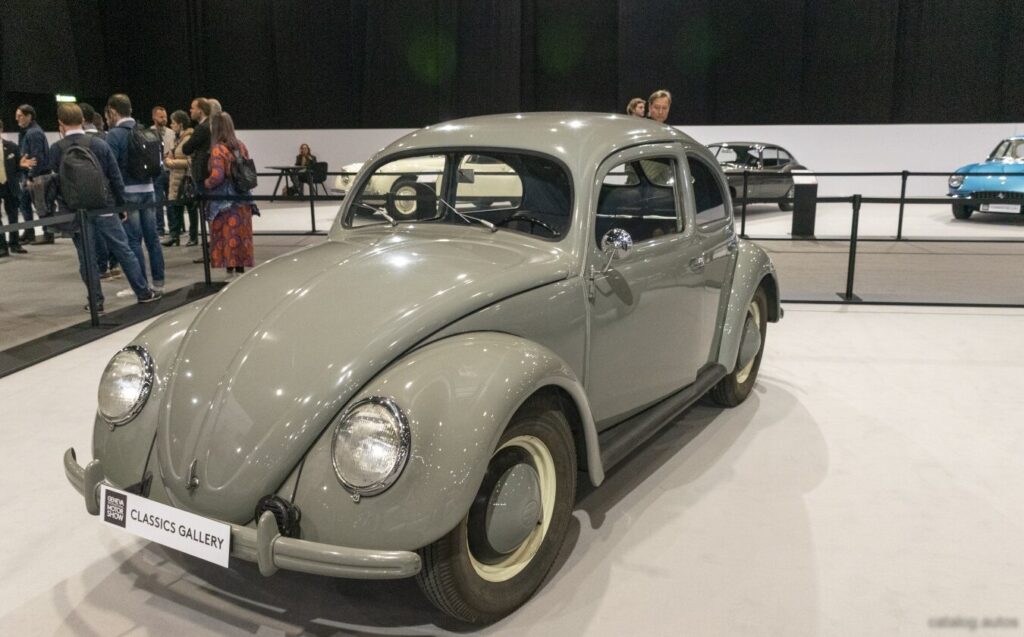
The Volkswagen Beetle 1600 (Mexico), often referred to as the “Vocho” in Mexico, represents the final, long-running production phase of the iconic Type 1 Beetle. Produced exclusively in Puebla, Mexico, from 1973 to 1992, this variant continued Beetle production long after it ceased in Germany and other global markets. The Mexican Beetle, particularly the 1600cc, 46 horsepower version, became a cultural icon in Mexico and a popular export to Central and South America. It represents a unique chapter in the Beetle’s history, adapting the original design to meet evolving emissions regulations and local market demands while retaining the core characteristics that made the Beetle so beloved.
The Mexican Beetle: A Continuation of a Legacy
Following the end of Beetle production in Germany in 1978, the Mexican plant continued manufacturing the vehicle, initially to serve the domestic market and then expanding to exports. The 1600cc engine became the standard powerplant in 1973, replacing the earlier 1300cc and 1500cc units. The 46 horsepower output, while modest by modern standards, was sufficient for the Beetle’s lightweight construction and intended use as affordable, reliable transportation. This specific configuration occupied the base trim level within the Mexican Beetle lineup throughout its production run, offering a cost-effective entry point to Beetle ownership. It was positioned below later, slightly more powerful iterations of the 1600 engine offered in subsequent years.
Powertrain & Engine Architecture
The heart of the Mexican Beetle 1600 is the air-cooled, horizontally opposed four-cylinder engine, designated as the Type 1 engine. This engine, with a displacement of 1584cc (approximately 1.6 liters), produces 46 horsepower at 4,000 rpm and 86 lb-ft of torque at 2,800 rpm. The engine utilizes a cast iron block and cylinder heads, with aluminum alloy pistons. Fuel delivery is managed by a single Solex or Zenith carburetor, a relatively simple system contributing to the engine’s ease of maintenance. The valvetrain consists of a single overhead camshaft operating pushrods to actuate the valves. The compression ratio is typically around 8.5:1.
The transmission is a four-speed manual gearbox, fully synchronized. While an automatic transmission was briefly offered in the Mexican Beetle during the 1970s, it was discontinued due to reliability concerns and low demand. The manual transmission is known for its robust construction and straightforward operation. The drivetrain is rear-wheel drive, with a swing axle suspension at the rear. This configuration, while providing a comfortable ride, is known for its tendency to exhibit oversteer under certain conditions.
Driving Characteristics
The 1600cc, 46 horsepower engine provides adequate, though not exhilarating, performance. Acceleration is leisurely, with a 0-60 mph time estimated to be around 15-18 seconds. Top speed is approximately 85-90 mph. The Beetle’s lightweight construction (around 1,850 lbs) helps to mitigate the effects of the relatively low horsepower output. The engine is characterized by its smooth, predictable power delivery, making it easy to drive in everyday traffic. The four-speed manual transmission offers a reasonable range of gear ratios, allowing the driver to keep the engine in its optimal power band. Compared to later Mexican Beetles with slightly more powerful engines, the 46 hp version feels noticeably slower, particularly when climbing hills or overtaking other vehicles. However, its simplicity and reliability are significant advantages.
Equipment & Trim Levels
The Mexican Beetle 1600, in its base trim, was relatively spartan in terms of equipment. Standard features typically included vinyl upholstery, basic instrumentation (speedometer, fuel gauge, and ammeter), a steering wheel, and manually operated windows and door locks. Chrome trim was minimal, and the exterior paint options were limited to a range of solid colors. Optional extras included a radio, whitewall tires, a sunroof, and upgraded upholstery. Later models saw the introduction of minor cosmetic changes, such as updated dashboard designs and improved seat materials. The interior remained largely unchanged throughout the production run, retaining the Beetle’s characteristic simplicity and functionality.
Chassis & Braking
The Mexican Beetle retains the original Beetle’s chassis design, featuring a monocoque construction with a separate body and chassis. The suspension consists of independent torsion bar front suspension and a swing axle rear suspension. The steering is a worm-and-roller type, providing relatively heavy but precise steering feel. The braking system is hydraulic, with drum brakes on all four wheels. Early models featured mechanically adjusted drum brakes, while later models received upgraded hydraulic brakes. The braking performance is adequate for the Beetle’s weight and intended use, but it lacks the stopping power of more modern vehicles. A stabilizer bar was not typically fitted to the base 1600 model, contributing to a slightly more pronounced body roll in corners.
Volkswagen Beetle 1600 (Mexico) Market Reception & Comparison
The Mexican Beetle 1600 enjoyed immense popularity in Mexico and throughout Latin America. Its affordability, reliability, and ease of maintenance made it an ideal vehicle for a wide range of users, from families to small business owners. Critics generally praised the Beetle’s simplicity and durability, but noted its lack of performance and limited safety features. Compared to other vehicles available in the Mexican market during the 1970s and 1980s, the Beetle offered a compelling value proposition. Its fuel economy, estimated at around 30-35 mpg, was also a significant advantage. Compared to later Mexican Beetles with more powerful engines, the 46 hp version was considered a more economical choice, sacrificing performance for fuel efficiency and lower maintenance costs. It also stood in contrast to the more modern, front-wheel-drive vehicles that were beginning to emerge in the market, offering a distinctly retro driving experience.
Technical Specifications
| Body Type | Coupe |
| Engine Type | Air-cooled, horizontally opposed four-cylinder |
| Displacement | 1584cc (1.6 liters) |
| Power Output | 46 hp @ 4,000 rpm |
| Torque | 86 lb-ft @ 2,800 rpm |
| Fuel System | Solex or Zenith Carburetor |
| Transmission | Four-speed manual |
| Drivetrain | Rear-wheel drive |
| Suspension (Front) | Independent torsion bar |
| Suspension (Rear) | Swing axle |
| Brakes | Drum brakes (all four wheels) |
| Weight | Approximately 1,850 lbs |
| Fuel Economy | 30-35 mpg (estimated) |
| Production Years | 1973-1992 |
Legacy
The Mexican Beetle 1600 holds a special place in automotive history as the last of the original Beetles. Its long production run and cultural significance in Mexico have cemented its status as a collector’s item. The 1600 engine, while not particularly powerful, is known for its reliability and ease of repair. Parts availability remains good, making it relatively easy to maintain and restore these vehicles. In the used car market today, Mexican Beetles in good condition command a premium price, particularly those with original features and low mileage. The 46 hp version, while not the most sought-after trim, remains a popular choice for enthusiasts who appreciate its simplicity and affordability. The Mexican Beetle represents a unique blend of classic design, enduring reliability, and cultural heritage, ensuring its continued appeal for generations to come.
