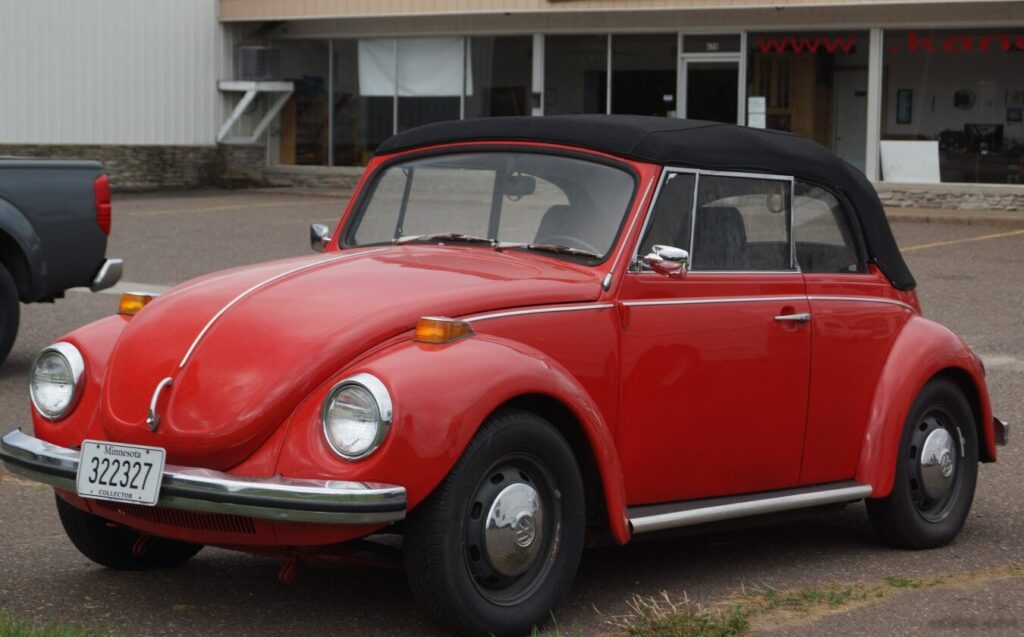
The Volkswagen Käfer Cabriolet (Type 15), produced between 1970 and 1973, represented the final iteration of the iconic Beetle convertible. This specific variant, utilizing the 1.6-liter engine producing 50 horsepower, was positioned as the entry-level offering within the 1302 and 1303 chassis series. It catered to buyers seeking the open-air Beetle experience at a more accessible price point, prioritizing affordability and simplicity over outright performance. The Type 15 Cabriolet continued the Beetle’s legacy of providing economical and reliable transportation, albeit in a more stylish and recreational form.
Volkswagen Käfer Cabriolet 1.6 (50 hp): An Overview
The Käfer Cabriolet, meaning “Beetle” in German, enjoyed a long production run, initially appearing in 1938 and continuing, with interruptions, until 1980. The Type 15, built from 1970-1973, benefited from the mechanical upgrades introduced with the 1302 and 1303 “Super Beetle” models, including a more comfortable interior and improved suspension. The 1.6-liter engine, while modest in output, provided adequate power for leisurely cruising, making it a popular choice for those prioritizing the convertible experience over spirited driving. This model year represents a transitional period for the Cabriolet, bridging the gap between the earlier, more spartan versions and the later, more refined iterations.
Powertrain & Engine Architecture
The heart of the 1970-1973 Käfer Cabriolet 1.6 (50 hp) is the air-cooled, naturally aspirated 1.6-liter flat-four engine, internally designated as the Type 113. This engine, while sharing the fundamental architecture of earlier Beetle engines, incorporated several improvements. It featured a single Solex 32 PDSIT carburetor, responsible for fuel delivery. The engine utilized a pushrod valvetrain operating two valves per cylinder. Compression ratio was approximately 8.5:1. The 50 horsepower peak was achieved at 4,000 rpm, with a maximum torque output of around 88 lb-ft at 3,000 rpm.
Unlike many contemporary vehicles, the Käfer Cabriolet did not employ a conventional transmission. Instead, it utilized a four-speed manual gearbox. An automatic transmission was *not* offered for this specific engine/chassis combination during these years. The transmission was fully synchronized, improving shift quality compared to earlier, non-synchronized versions. The drivetrain was rear-wheel drive, a characteristic of all classic Beetles. The engine’s simplicity and robust construction contributed to its reputation for reliability, although regular maintenance was crucial for optimal performance.
Driving Characteristics
The driving experience in the 1.6-liter Käfer Cabriolet was characterized by its relaxed and unhurried nature. With only 50 horsepower propelling a relatively heavy (for its size) vehicle, acceleration was modest. 0-60 mph times were typically in the 14-16 second range. Top speed was approximately 80.78 mph (130 km/h). The engine’s torque curve was relatively flat, providing usable power across a narrow rev range. The four-speed manual transmission required deliberate shifting, and downshifting was often necessary for maintaining speed on inclines.
Compared to the later 1.7-liter engines found in some Cabriolets, the 1.6-liter version felt noticeably less powerful. The absence of power steering and disc brakes (rear drums were standard) further emphasized the car’s simple, analog driving experience. However, the Cabriolet’s light weight and nimble handling made it enjoyable to drive on winding roads, despite its limited power. The convertible top, when lowered, enhanced the sense of freedom and connection to the environment.
Equipment & Trim Levels
The 1970-1973 Käfer Cabriolet 1.6 (50 hp) was relatively sparsely equipped by modern standards. Standard features included cloth upholstery, a basic instrument panel with speedometer, fuel gauge, and ammeter, and a two-spoke steering wheel. Chrome trim was used sparingly, primarily on the bumpers and window surrounds. The convertible top was manually operated and typically available in black.
Optional extras included upgraded upholstery materials, a radio, and whitewall tires. A heater was also available as an option, providing some comfort during colder months. The interior was functional and utilitarian, reflecting the Beetle’s overall design philosophy. Trim levels were minimal; the 1.6-liter model represented the base configuration, with limited opportunities for customization beyond the available options.
Chassis & Braking
The Käfer Cabriolet 1.6 (50 hp) utilized the chassis and suspension components of the 1302 and 1303 “Super Beetle” models. This included a McPherson strut front suspension with a stabilizer bar, and a semi-trailing arm rear suspension. The suspension provided a reasonably comfortable ride, although it was not particularly sophisticated. The steering was a worm-and-roller system, lacking power assistance.
Braking was accomplished via drum brakes on all four wheels. The brakes were mechanically operated and provided adequate stopping power for the car’s weight and performance. However, they lacked the stopping power and fade resistance of disc brakes. The car’s relatively light weight helped to mitigate the limitations of the drum brake system. Tire size was typically 165-80R15.
Market Reception & Comparison
The 1970-1973 Käfer Cabriolet 1.6 (50 hp) was generally well-received by the motoring press, although it was often criticized for its modest performance. Reviewers praised its affordability, reliability, and charming character. It was seen as a fun and practical car for those seeking an open-air driving experience without breaking the bank. Compared to other convertibles of the era, the Käfer Cabriolet was significantly more affordable and easier to maintain.
Within the Beetle lineup, the 1.6-liter Cabriolet occupied the entry-level position. The later 1.7-liter versions offered improved performance, while the more expensive Karmann Ghia convertible provided a more luxurious and stylish alternative. Fuel economy was reasonable for the time, typically around 28-32 mpg. Reliability was generally good, although regular maintenance was essential to prevent issues with the air-cooled engine.
Technical Specifications
| Brand | Volkswagen |
| Model | Käfer Cabriolet (Type 15) |
| Generation | Käfer Cabrio (15) |
| Type (Engine) | 1302,1303 1.6 (15) (50 Hp) |
| Start of production | 1970 |
| End of production | 1973 |
| Powertrain Architecture | Internal Combustion engine |
| Body type | Cabriolet |
| Doors | 2 |
| Fuel Type | Petrol (Gasoline) |
| Maximum speed | 130 km/h (80.78 mph) |
| Power | 50 Hp |
| Engine aspiration | Naturally aspirated engine |
| Engine oil capacity | 2.5 l (2.64 US qt | 2.2 UK qt) |
| Fuel tank capacity | 40 l (10.57 US gal | 8.8 UK gal) |
| Length | 4030 mm (158.66 in.) |
| Width | 1550 mm (61.02 in.) |
| Height | 1500 mm (59.06 in.) |
Legacy
The 1970-1973 Käfer Cabriolet 1.6 (50 hp) remains a popular classic car today, prized for its simplicity, reliability, and iconic design. The air-cooled engine, while requiring regular maintenance, is known for its durability. Parts availability is generally good, thanks to the Beetle’s widespread popularity and enduring legacy. Values have been steadily increasing in recent years, particularly for well-maintained examples.
While not the fastest or most luxurious convertible of its era, the Käfer Cabriolet 1.6 (50 hp) offers a unique and rewarding driving experience. It represents a simpler time in automotive history, when cars were built to be practical, reliable, and fun to drive. Its enduring appeal ensures that it will continue to be enjoyed by enthusiasts for generations to come. The 1.6L engine, while the least powerful offered in the Type 15, is often considered the most “authentic” Beetle experience by purists.