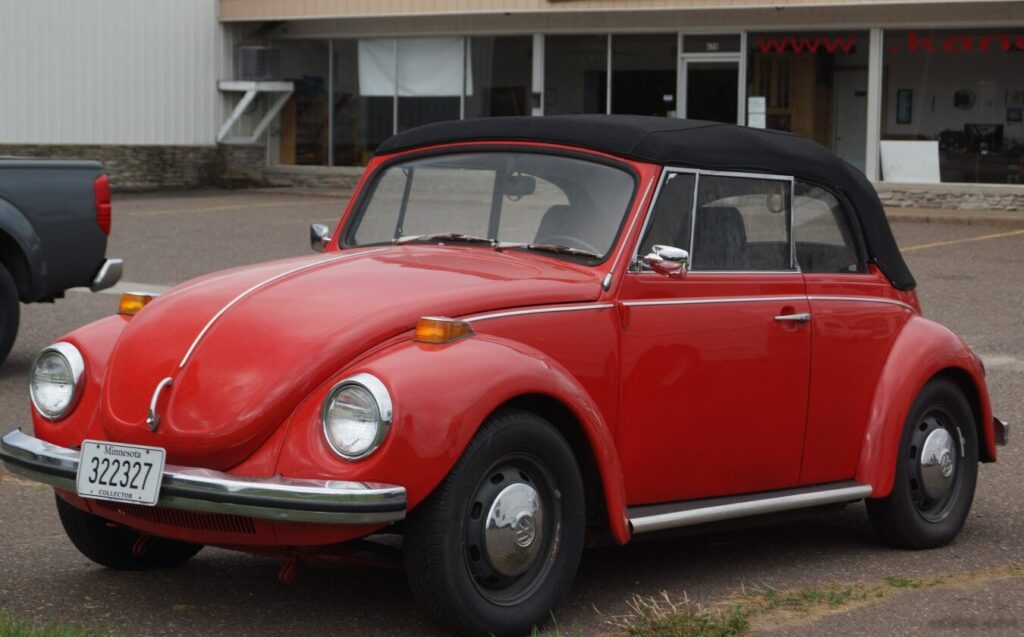
The Volkswagen Käfer Cabriolet (Type 15), produced between 1970 and 1974, represented the final iteration of the iconic Beetle convertible. This version, specifically equipped with the 1303 chassis and a 1.6-liter engine producing 48 horsepower, occupied a unique position within the Käfer Cabriolet lineage. It was positioned as the entry-level offering, appealing to buyers seeking the open-air Beetle experience at a more accessible price point. While offering the classic Beetle charm, it represented a slight detuning and simplification compared to earlier, more powerful Cabriolet models. The 1303 chassis brought with it improvements in suspension and overall refinement, but the 48 hp engine prioritized fuel economy and ease of use over outright performance.
The 1.6-Liter 48 hp Käfer Cabriolet: An Overview
The introduction of the 1303 chassis in 1970 marked a significant update for the Beetle, and by extension, the Cabriolet. This update included a redesigned dashboard, a more comfortable interior, and a larger rear window. The 1.6-liter engine, while not new to the Volkswagen range, was chosen for the base-level Cabriolet to keep costs down and maintain a balance between drivability and fuel efficiency. This variant was primarily sold in European markets, with limited numbers reaching North America, where larger-displacement engines were generally preferred. The 1970-1974 production run represents the last of the classic, air-cooled Beetle convertibles, making this 1.6-liter version a significant piece of automotive history.
Powertrain & Engine Architecture
The heart of the 1970-1974 Käfer Cabriolet 1.6 was the air-cooled, naturally aspirated flat-four engine, designated as the Type 128. This engine displaced 1584cc (approximately 96.6 cubic inches) and produced 48 horsepower at 4,000 rpm. Peak torque was approximately 86 lb-ft at 3,000 rpm. The engine utilized a single Solex C32 PB carburetor for fuel delivery, a relatively simple system known for its reliability but limited performance potential. The valvetrain consisted of a single overhead camshaft operating pushrods to actuate the valves. This configuration was a hallmark of the air-cooled Volkswagen engine, contributing to its distinctive sound and relatively straightforward maintenance.
The engine was mated to a four-speed manual transmission as standard. An optional automatic transmission, a semi-automatic two-speed unit manufactured by Volkswagen, was available, though less common. This automatic transmission, while offering convenience, significantly impacted performance and fuel economy. It operated using a torque converter and planetary gearset, providing smooth but slow gear changes. The transmission was designed to be robust and reliable, but its limited gear range meant the engine often operated outside its optimal power band. The engine’s compression ratio was 8.5:1, requiring leaded gasoline, which was readily available during the production years of this model. Later conversions to unleaded fuel often required valve seat inserts to prevent wear.
Driving Characteristics
The driving experience in the 1.6-liter Käfer Cabriolet was characterized by its simplicity and relaxed pace. With only 48 horsepower propelling a relatively heavy (for its size) vehicle, acceleration was modest. 0-60 mph times were estimated to be around 15-18 seconds. The car was best suited for leisurely cruising rather than spirited driving. The manual transmission allowed for better control and utilization of the engine’s limited power, while the automatic transmission further dulled performance. The suspension, while improved with the 1303 chassis, still retained the Beetle’s characteristic softness. This provided a comfortable ride on smooth roads but could become wallowy on uneven surfaces. Steering was precise but required effort, as power steering was not available. The open-top configuration enhanced the driving experience, providing a connection to the surroundings that was a key appeal of the Käfer Cabriolet.
Compared to earlier Cabriolet models equipped with the 1.6-liter engine in a higher state of tune (around 54 hp), the 48 hp version felt noticeably slower. The 1.5-liter engines found in earlier Beetles also offered a more responsive driving experience. The later 1.7-liter engines, while not available in the Cabriolet during this specific production run, provided a significant performance upgrade. The automatic transmission version was particularly sluggish, making hill starts and overtaking maneuvers challenging.
Equipment & Trim Levels
The 1970-1974 Käfer Cabriolet 1.6 was relatively sparsely equipped, reflecting its position as the entry-level model. Standard features included cloth upholstery, a basic instrument panel with speedometer and fuel gauge, and a folding fabric roof. The dashboard was redesigned with the 1303 chassis, offering a more modern appearance compared to earlier Beetles. Optional extras included upgraded upholstery materials, a radio, and whitewall tires. Chrome trim was used sparingly, contributing to the car’s understated aesthetic. The interior was functional and durable, prioritizing practicality over luxury. The convertible top was manually operated and featured a glass rear window, a significant improvement over the earlier plastic window. The standard color options were relatively limited, with a focus on solid colors and two-tone combinations.
Chassis & Braking
The 1303 chassis brought significant improvements to the Beetle’s suspension and handling. The front suspension utilized independent trailing arms with torsion bars, while the rear suspension employed a swing axle design with torsion bars. This setup provided a relatively comfortable ride, although it was prone to oversteer if pushed hard. The braking system consisted of drum brakes on all four wheels. The front brakes were larger than the rear brakes, providing slightly improved stopping power. The braking system was mechanically operated and lacked power assistance. While adequate for normal driving conditions, the brakes could fade under heavy use. Stabilizer bars were not standard equipment, although they could be added as an aftermarket upgrade. The car’s relatively light weight helped to offset the limitations of the braking system.
Market Reception & Comparison
The 1970-1974 Käfer Cabriolet 1.6 received mixed reviews. Critics praised its classic styling, comfortable ride, and affordability. However, the 48 horsepower engine was often criticized for its lack of power, particularly when paired with the optional automatic transmission. Compared to other convertibles of the era, the Käfer Cabriolet offered a unique and charming alternative, but its performance was significantly lower. Within the Volkswagen lineup, it was positioned as a more accessible alternative to the higher-performance models. Fuel economy was a strong point, with the 1.6-liter engine achieving around 30-35 mpg in real-world driving conditions. Reliability was generally good, as the air-cooled engine was known for its durability. However, maintenance required regular attention, including valve adjustments and carburetor tuning.
Technical Specifications
| Body Type | Cabriolet |
| Engine Type | Air-cooled Flat-Four |
| Displacement | 1584cc (96.6 cu in) |
| Power | 48 hp @ 4,000 rpm |
| Torque | 86 lb-ft @ 3,000 rpm |
| Fuel System | Solex C32 PB Carburetor |
| Transmission | 4-speed Manual (Standard), 2-speed Automatic (Optional) |
| Brakes | Drum Brakes (All Four Wheels) |
| Suspension (Front) | Independent Trailing Arms, Torsion Bars |
| Suspension (Rear) | Swing Axle, Torsion Bars |
| Weight | 1,853 lbs (approx.) |
| Fuel Capacity | 10.5 gallons |
| Production Years | 1970-1974 |
Legacy
The 1970-1974 Käfer Cabriolet 1.6, while not the most powerful or technologically advanced Beetle variant, holds a special place in automotive history. As the final iteration of the classic air-cooled Beetle convertible, it represents the culmination of decades of design and engineering. Today, these cars are highly sought after by collectors and enthusiasts. The 1.6-liter engine, while relatively simple, is known for its reliability and ease of maintenance. However, finding original parts can be challenging. The automatic transmission versions are generally less desirable due to their sluggish performance. Well-maintained examples command a premium in the used car market, reflecting the enduring appeal of the Käfer Cabriolet. The car’s simple design and robust construction ensure that many examples continue to provide enjoyment to their owners decades after they left the factory.