
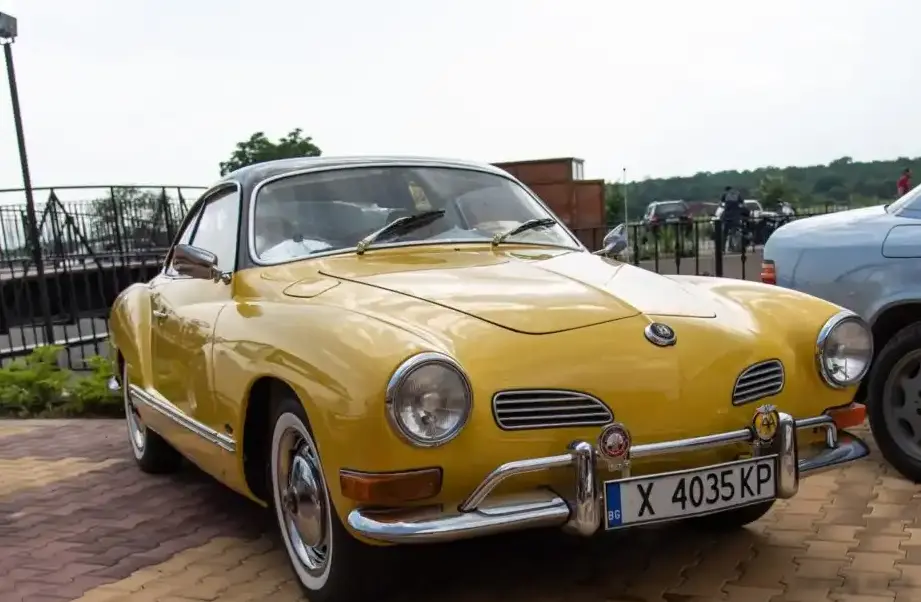
The Volkswagen Karmann Ghia Type 14, specifically the 1.2-liter (30 hp) variant, represents the entry point into the iconic styling and early production run of this classic coupe. Produced from August 1955 to March 1960, this model was instrumental in establishing the Karmann Ghia as a desirable, albeit relatively slow, grand tourer for the burgeoning post-war automotive market. It was the first iteration of a car designed to offer European style with Volkswagen practicality, and it laid the foundation for the more powerful versions that would follow. This initial 1.2L model served as a proof-of-concept, demonstrating the viability of the design and the partnership between Volkswagen and Karmann.
Technical Specifications
| Brand | Volkswagen |
| Model | Karmann Ghia |
| Generation | Karmann Ghia (Type 14) |
| Type (Engine) | 1.2 (30 Hp) |
| Start of production | August, 1955 |
| End of production | March, 1960 |
| Powertrain Architecture | Internal Combustion engine |
| Body type | Coupe |
| Seats | 4 |
| Doors | 2 |
| Fuel consumption (combined) | 7.3 l/100 km (32.2 US mpg, 38.7 UK mpg, 13.7 km/l) |
| Fuel Type | Petrol (Gasoline) |
| Weight-to-power ratio | 27 kg/Hp, 37 Hp/tonne |
| Power | 30 Hp @ 3400 rpm |
| Power per litre | 25.2 Hp/l |
| Engine displacement | 1192 cm3 (72.74 cu. in.) |
| Number of cylinders | 4 |
| Engine configuration | 180° flat V-engine |
| Cylinder Bore | 77 mm (3.03 in.) |
| Piston Stroke | 64 mm (2.52 in.) |
| Compression ratio | 6.6:1 |
| Number of valves per cylinder | 2 |
| Fuel injection system | Carburettor |
| Engine aspiration | Naturally aspirated engine |
| Valvetrain | OHV |
| Engine oil capacity | 2.5 l (2.64 US qt | 2.2 UK qt) |
| Kerb Weight | 810 kg (1785.74 lbs.) |
| Max. weight | 1110 kg (2447.13 lbs.) |
| Max load | 300 kg (661.39 lbs.) |
| Fuel tank capacity | 40 l (10.57 US gal | 8.8 UK gal) |
| Length | 4140 mm (162.99 in.) |
| Width | 1634 mm (64.33 in.) |
| Height | 1330 mm (52.36 in.) |
| Wheelbase | 2400 mm (94.49 in.) |
| Front track | 1305 mm (51.38 in.) |
| Rear (Back) track | 1250 mm (49.21 in.) |
| Minimum turning circle | 11 m (36.09 ft.) |
| Drivetrain Architecture | Rear wheel drive |
| Number of gears and type of gearbox | 4 gears, manual transmission |
| Front suspension | Transverse stabilizer, Torsion |
| Rear suspension | Torsion |
| Steering type | Worm-reduction unit |
Powertrain & Engine Architecture
The heart of the early Karmann Ghia was a 1192cc, air-cooled, 180-degree flat-four engine. This engine, derived from the Volkswagen Beetle, produced a modest 30 horsepower at 3400 rpm. It utilized a single Solex carburetor for fuel delivery and an overhead valve (OHV) valvetrain. The engine was longitudinally mounted in the rear of the vehicle, a characteristic of early Volkswagen designs. The 6.6:1 compression ratio was typical for the era, prioritizing reliability over outright performance. The engine’s flat configuration helped to lower the car’s center of gravity, improving handling somewhat, but the limited power output was a significant constraint. The four-speed manual transmission was the only option available for this initial variant, featuring synchromesh on the upper gears.
Driving Characteristics
The 1.2-liter Karmann Ghia was not a performance car. Acceleration was leisurely, and top speed was around 75 mph (120 km/h), if conditions allowed. The four-speed manual transmission required frequent shifting to maintain momentum, especially when encountering hills. The gear ratios were geared towards economy rather than rapid acceleration. Compared to later, more powerful Karmann Ghias (like those equipped with the 1.5 or 1.6-liter engines), the 1.2L felt significantly underpowered. However, the car’s light weight (approximately 1786 lbs) helped to mitigate the lack of horsepower to some extent. The rear-engine layout contributed to a distinctive driving feel, with noticeable rear-end weight transfer during cornering.
Equipment & Trim Levels
The 1.2-liter Karmann Ghia was relatively sparsely equipped, reflecting its position as the entry-level model. Standard features included basic instrumentation (speedometer, fuel gauge), a three-spoke steering wheel, and vinyl upholstery. Chrome trim was used sparingly, primarily on the bumpers and window surrounds. Optional extras included a sunroof, whitewall tires, and a radio. Interior trim was typically a simple, functional design, prioritizing durability over luxury. The dashboard was relatively uncluttered, with a focus on essential controls.
Chassis & Braking
The Karmann Ghia Type 14 utilized a chassis derived from the Volkswagen Beetle, featuring a torsion beam rear suspension and transverse torsion bars for the front suspension. This suspension setup provided a reasonably comfortable ride, although it was not particularly sophisticated. Braking was accomplished via drum brakes on all four wheels, which were adequate for the car’s weight and performance. Steering was via a worm-and-sector mechanism, which provided relatively heavy but precise steering feel. The car’s relatively narrow track width contributed to its nimble handling, but also made it susceptible to body roll.
Market Reception & Comparison
The 1.2-liter Karmann Ghia was generally well-received for its stylish design, but critics often noted its lack of power. It was seen as a fashionable alternative to the more utilitarian Volkswagen Beetle, appealing to buyers who prioritized aesthetics over performance. Fuel economy was a strong point, averaging around 32.2 US mpg. Compared to the later 1.5-liter and 1.6-liter versions, the 1.2L offered significantly less performance but at a lower price point. The 1.5L offered a noticeable power increase, making it a more practical choice for drivers who frequently traveled on highways or encountered hilly terrain. Reliability was generally good, as the engine was based on the proven Volkswagen Beetle powerplant.
Legacy
The 1.2-liter Karmann Ghia, while the least powerful variant, played a crucial role in establishing the model’s reputation for style and affordability. Today, these early models are highly sought after by collectors, particularly those seeking originality. The 1.2L engine, while not known for its robustness, is relatively simple to maintain, and parts are readily available. The car’s enduring appeal lies in its classic design and its connection to a pivotal moment in automotive history. While not a performance icon, the 1.2L Karmann Ghia remains a charming and historically significant vehicle, representing the dawn of a design classic.
