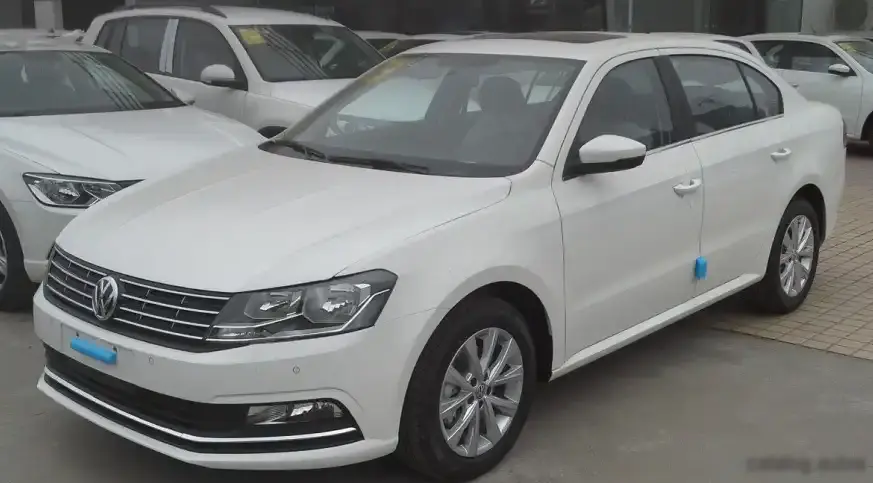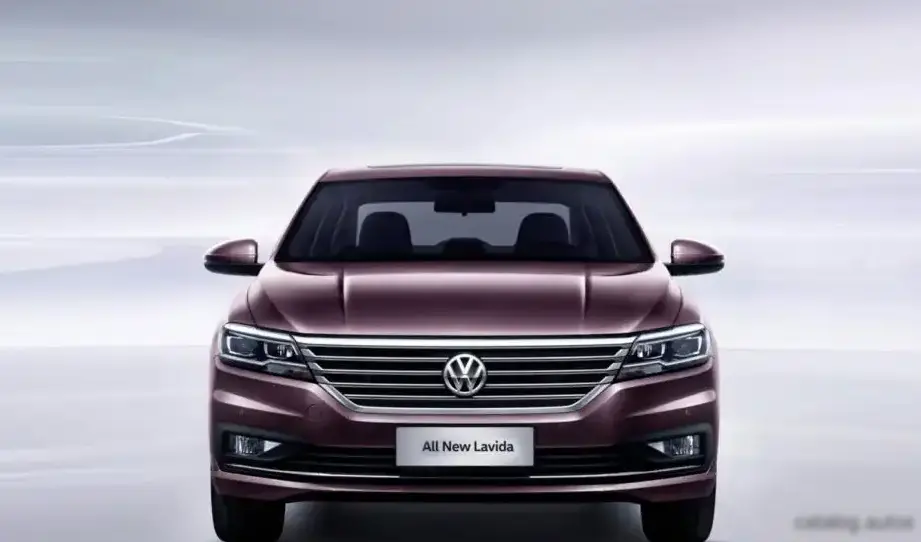
The Volkswagen Lavida III 1.5i (113 hp) was a compact sedan produced by Volkswagen for the Chinese market between 2019 and 2022. Positioned as an entry-level offering within the Lavida III range, it represented a significant volume seller for Volkswagen in China, catering to buyers seeking a practical, fuel-efficient, and affordable vehicle. The Lavida nameplate itself is exclusive to the Chinese market, representing Volkswagen’s commitment to localized production and tailoring vehicles to specific regional demands. This generation, the Lavida III, built upon the PQ25 platform, also known as the A05 platform, and shared components with other Volkswagen Group vehicles sold in China.
Technical Specifications
| Brand | Volkswagen |
| Model | Lavida |
| Generation | Lavida III |
| Type (Engine) | 1.5i (113 Hp) |
| Start of production | April, 2019 |
| End of production | 2022 |
| Powertrain Architecture | Internal Combustion engine |
| Body type | Sedan |
| Seats | 5 |
| Doors | 4 |
| Fuel consumption (combined) | 5.6 l/100 km (42 US mpg, 50.4 UK mpg, 17.9 km/l) |
| Fuel Type | Petrol (Gasoline) |
| Acceleration 0 – 100 km/h | 12.1 sec |
| Acceleration 0 – 62 mph | 12.1 sec |
| Acceleration 0 – 60 mph | 11.5 sec |
| Maximum speed | 190 km/h (118.06 mph) |
| Emission standard | China VI |
| Power | 113 Hp @ 6000 rpm |
| Power per litre | 75.4 Hp/l |
| Torque | 145 Nm @ 3900 rpm (106.95 lb.-ft. @ 3900 rpm) |
| Engine Model/Code | DMB |
| Engine displacement | 1498 cm3 (91.41 cu. in.) |
| Number of cylinders | 4 |
| Engine configuration | Inline |
| Fuel injection system | Multi-port manifold injection |
| Engine aspiration | Naturally aspirated engine |
| Trunk (boot) space – minimum | 510 l (18.01 cu. ft.) |
| Fuel tank capacity | 51 l (13.47 US gal | 11.22 UK gal) |
| Length | 4670 mm (183.86 in.) |
| Width | 1806 mm (71.1 in.) |
| Height | 1474 mm (58.03 in.) |
| Wheelbase | 2688 mm (105.83 in.) |
| Drivetrain Architecture | Front wheel drive, Internal Combustion Engine |
| Drive wheel | Front wheel drive |
| Number of gears and type of gearbox | 5 gears, manual transmission |
| Front suspension | Independent type McPherson |
| Rear suspension | Torsion |
| Front brakes | Ventilated discs |
| Rear brakes | Disc |
| Assisting systems | ABS (Anti-lock braking system) |
| Tires size | 195/65 R15 |
| Wheel rims size | 15 |
Powertrain & Engine Architecture
The Lavida III 1.5i was powered by the Volkswagen DMB engine, a 1.5-liter naturally aspirated inline-four cylinder gasoline engine. This engine utilized a multi-port fuel injection system, a relatively conventional setup for its time, prioritizing fuel efficiency and smooth operation over outright performance. The DMB engine featured a single overhead camshaft (SOHC) valvetrain, contributing to its simplicity and cost-effectiveness. The engine was designed to meet the stringent China VI emission standards, incorporating features like a particulate filter to reduce harmful emissions. Paired with the 1.5L engine was a 5-speed manual transmission, the sole transmission option for this specific variant. This transmission was chosen for its affordability and reliability, aligning with the target market’s priorities.
Driving Characteristics
The 113 hp and 145 Nm (106.95 lb-ft) of torque produced by the 1.5-liter engine resulted in modest, but adequate, performance. Acceleration from 0-100 km/h took approximately 12.1 seconds, making it suitable for urban commuting and highway cruising, but not particularly sporty. The 5-speed manual transmission offered a reasonable level of control, but the gear ratios were optimized for fuel economy rather than spirited driving. Compared to higher-trim Lavida III models equipped with larger engines (such as the 1.4T), the 1.5i felt noticeably less powerful, particularly when fully loaded or climbing hills. However, the lighter engine weight contributed to slightly improved handling and fuel efficiency. The power delivery was linear and predictable, making it easy for new drivers to operate.
Equipment & Trim Levels
The Lavida III 1.5i typically served as the base trim level, offering a functional and practical feature set. Standard equipment generally included air conditioning, power windows, power door locks, and a basic audio system with radio and USB connectivity. Safety features such as ABS (Anti-lock Braking System) were standard. Interior upholstery was typically cloth, and the dashboard featured a straightforward design with minimal embellishments. Optional extras, depending on the specific package selected, could include alloy wheels, a more advanced audio system with touchscreen display, rear parking sensors, and a rearview camera. The overall interior ambiance was designed to be durable and easy to maintain, reflecting the vehicle’s value-oriented positioning.
Chassis & Braking
The Lavida III utilized a front-wheel-drive configuration with an independent McPherson strut suspension at the front and a torsion beam suspension at the rear. This suspension setup provided a comfortable ride quality, well-suited for the often-rough road conditions found in many Chinese cities. The front brakes were ventilated discs, offering adequate stopping power, while the rear brakes were solid discs. The steering was typically hydraulic power steering, providing a reasonable level of assistance without feeling overly artificial. The 15-inch wheels were fitted with 195/65 R15 tires, balancing ride comfort with fuel efficiency.
Market Reception & Comparison
The Lavida III 1.5i was well-received in the Chinese market due to its affordability, fuel efficiency, and practicality. Critics generally praised its comfortable ride and spacious interior, but noted its lack of outright performance compared to competitors and higher-trim Lavida models. Compared to the 1.4T variants, the 1.5i offered significantly better fuel economy, but at the expense of acceleration and overall driving enjoyment. The 1.5i’s primary target audience was first-time car buyers, families seeking a reliable and economical vehicle, and those prioritizing practicality over performance. Its fuel consumption of 5.6 l/100 km (42 US mpg) was a key selling point in a market increasingly focused on fuel efficiency.
Legacy
The Volkswagen Lavida III 1.5i, while not a performance icon, played a crucial role in Volkswagen’s success in the Chinese market. The DMB engine proved to be relatively reliable, and the 5-speed manual transmission was known for its durability. In the used car market, these models are generally considered to be a good value, offering a dependable and economical transportation option. However, potential buyers should be aware of the importance of regular maintenance, particularly regarding the particulate filter, to ensure long-term reliability. The Lavida III 1.5i represents a significant example of Volkswagen’s strategy of adapting its vehicles to meet the specific needs and preferences of the Chinese automotive market.