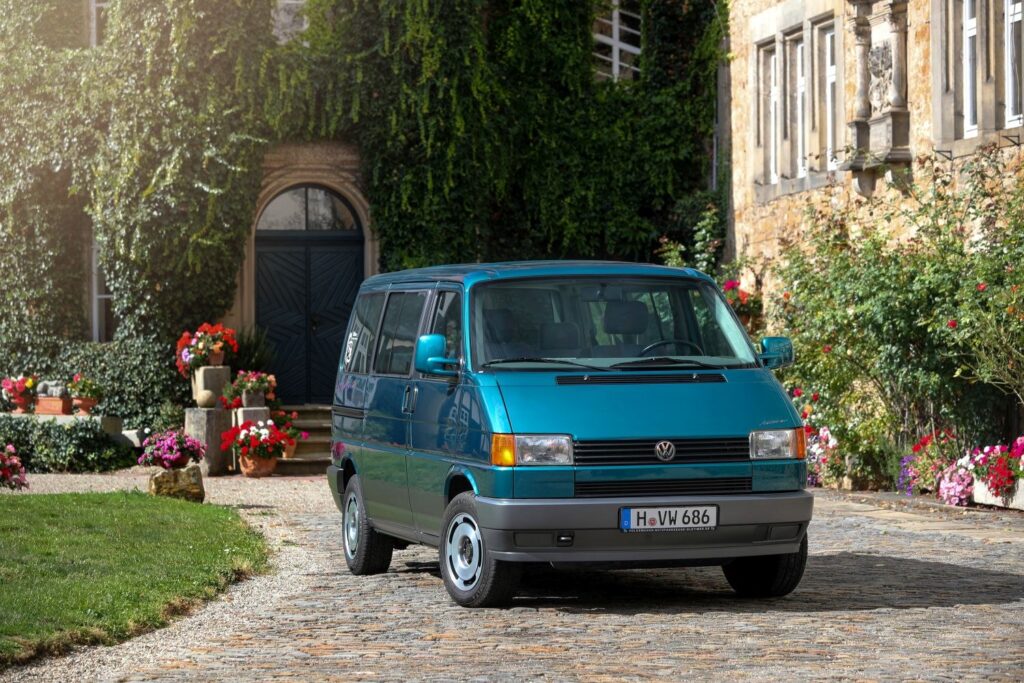
The Volkswagen Multivan (T4), produced from 1990 to 2003, represented a significant evolution in the van and people-mover segment. Within the T4 generation (internally designated as the 7D series), a variety of engine and trim options were offered to cater to diverse customer needs. This article focuses specifically on the 2.5 TDI variant, equipped with a 150 horsepower engine, a configuration that became a popular choice for those seeking a balance between fuel efficiency, practicality, and reasonable performance. The 2.5 TDI occupied a mid-range position within the T4 lineup, positioned above the lower-powered petrol engines and below the more expensive and performance-oriented options.
The 2.5 TDI: Positioning and Market Role
The 2.5 TDI 150 hp Multivan aimed to provide a versatile option for families, businesses, and recreational users. It was designed to offer sufficient power for fully-loaded passenger or cargo configurations, while maintaining acceptable fuel economy for long-distance travel. Compared to the earlier 1.9 TDI models, the 2.5 TDI offered a noticeable increase in torque and overall power, making it more capable of handling heavier loads and inclines. Conversely, it wasn’t intended to compete with the more powerful, albeit more expensive, VR6 petrol variants, which prioritized outright performance over fuel efficiency. The target audience for this trim level included those who needed a spacious and practical vehicle for regular use, but didn’t require the highest levels of performance or luxury.
Powertrain & Engine Architecture
The heart of the 2.5 TDI Multivan is the 2.5-liter inline five-cylinder diesel engine, identified by engine codes AHY and AXG. This engine represents a significant step forward in Volkswagen’s diesel technology of the time. It features direct injection, a turbocharger with an intercooler, and an overhead camshaft (OHC) valvetrain with two valves per cylinder. The direct injection system, utilizing high-pressure fuel delivery, optimizes combustion efficiency and reduces emissions. The turbocharger and intercooler work in tandem to increase air density, boosting power output. The engine’s displacement is 2461 cm³ (150.18 cubic inches), with a bore of 81 mm (3.19 inches) and a stroke of 95.5 mm (3.76 inches). A compression ratio of 19:1 contributes to the engine’s efficiency and power. The engine requires 5.5 liters (5.81 US quarts, 4.84 UK quarts) of engine oil, specified to Volkswagen standards.
Transmission
The 2.5 TDI Multivan was primarily offered with a five-speed manual transmission. While an automatic transmission was available as an option, it was less common due to its impact on fuel economy and performance. The manual transmission provided a direct connection between the engine and the wheels, allowing for precise control and efficient power delivery. The gear ratios were optimized for both highway cruising and low-speed maneuverability. The automatic transmission, when equipped, was a four-speed unit, designed to provide convenience but at the expense of some responsiveness.
Driving Characteristics
The 2.5 TDI 150 hp Multivan delivers a driving experience characterized by strong low-end torque. The engine produces 295 Nm (217.58 lb-ft) of torque at 1900 rpm, providing ample pulling power for accelerating from a standstill or overtaking on the highway. While not a particularly fast vehicle – acceleration from 0 to 100 km/h (0-62 mph) takes approximately 18.1 seconds – it offers a relaxed and comfortable driving experience, especially when cruising at highway speeds. The five-speed manual transmission allows the driver to keep the engine in its optimal power band, maximizing efficiency and responsiveness. The automatic transmission, while convenient, results in slightly slower acceleration and a less engaging driving experience. The vehicle’s weight (approximately 2001 kg or 4411.45 lbs) does impact its overall agility, but the well-tuned suspension helps to mitigate body roll and provide a stable ride.
Equipment & Trim Levels
The 2.5 TDI Multivan typically came standard with features such as power steering, anti-lock braking system (ABS), and a comfortable interior with seating for seven passengers. Interior upholstery was typically cloth, with options for upgraded materials like leatherette or full leather available at an additional cost. Standard dashboard configuration included a comprehensive instrument cluster displaying speed, engine RPM, fuel level, coolant temperature, and other vital information. Optional extras included air conditioning, a sunroof, upgraded audio systems, and various convenience features like power windows and central locking. Higher trim levels offered additional features such as alloy wheels, wood trim, and more luxurious interior appointments. The Multivan’s modular seating arrangement allowed for flexible configuration, enabling the vehicle to be adapted for passenger transport or cargo hauling.
Chassis & Braking
The T4 Multivan utilizes a front-engine, front-wheel-drive layout. The front suspension consists of wishbones, providing a comfortable and controlled ride. The rear suspension is an independent coil spring setup, further enhancing ride quality and handling. The braking system features disc brakes on all four wheels, providing ample stopping power. The ABS system helps to prevent wheel lockup during hard braking, improving stability and control. The vehicle’s curb weight of 2001 kg (4411.45 lbs) necessitates a robust braking system to ensure safe and reliable stopping performance. Tire size is typically 215/60 R16 H, mounted on 16-inch wheel rims.
Market Reception & Comparison
The 2.5 TDI Multivan was generally well-received by critics and consumers alike. It was praised for its spacious interior, practical design, and fuel-efficient diesel engine. While the performance wasn’t considered sporty, it was deemed adequate for most everyday driving situations. Compared to the 1.9 TDI models, the 2.5 TDI offered a noticeable improvement in power and torque, making it a more versatile option for those who frequently carried heavy loads or traveled long distances. Fuel economy was a strong point, with the 2.5 TDI achieving respectable mileage for a vehicle of its size and weight. Reliability was generally good, although some owners reported issues with the turbocharger and fuel injection system. Compared to the VR6 petrol variants, the 2.5 TDI offered significantly better fuel economy, but at the expense of performance and refinement.
Technical Specifications
| Brand | Volkswagen |
| Model | Multivan (T4) |
| Engine Type | 2.5 TDI |
| Horsepower | 150 hp @ 4000 rpm |
| Torque | 295 Nm @ 1900 rpm (217.58 lb-ft @ 1900 rpm) |
| Engine Displacement | 2461 cm³ (150.18 cu. in.) |
| Number of Cylinders | 5 (Inline) |
| Fuel Injection | Direct Injection |
| Aspiration | Turbocharged, Intercooled |
| Compression Ratio | 19:1 |
| Kerb Weight | 2001 kg (4411.45 lbs) |
| Max. Weight | 2660 kg (5864.3 lbs) |
| Fuel Tank Capacity | 80 l (21.13 US gal, 17.6 UK gal) |
| Length | 4789 mm (188.54 in) |
| Width | 1840 mm (72.44 in) |
| Height | 1900 mm (74.8 in) |
| Wheelbase | 2920 mm (114.96 in) |
| Transmission | 5-speed Manual (primarily), 4-speed Automatic (optional) |
Legacy
The 2.5 TDI engine, while no longer in production, has proven to be relatively durable and reliable, particularly when properly maintained. Many examples of the 2.5 TDI Multivan are still on the road today, testament to the engine’s longevity. However, age-related issues such as turbocharger wear, fuel injector problems, and corrosion can arise. In the used car market, the 2.5 TDI Multivan remains a popular choice for those seeking a spacious, practical, and fuel-efficient vehicle. Its versatility and reputation for reliability make it a desirable option for families, campers, and small businesses. While newer vans offer more advanced features and technology, the T4 2.5 TDI continues to hold its own as a capable and affordable people-mover.