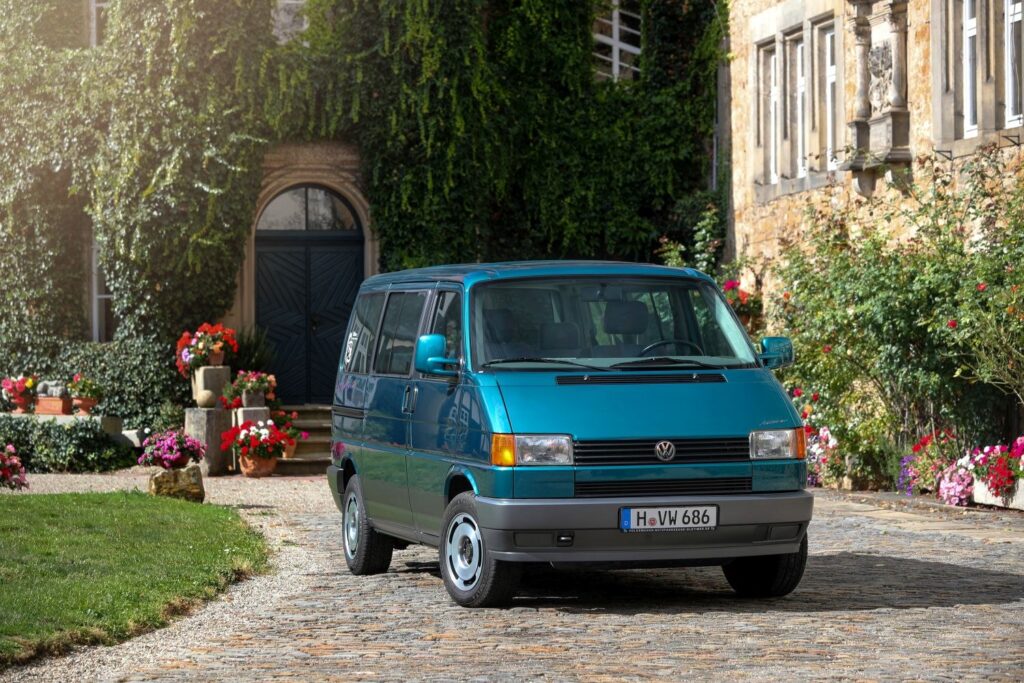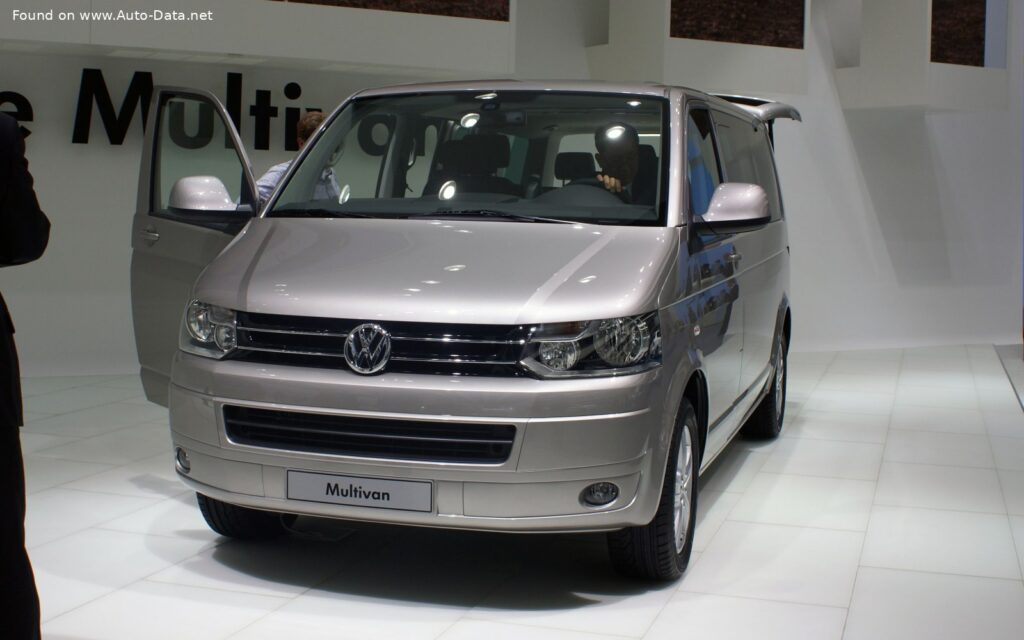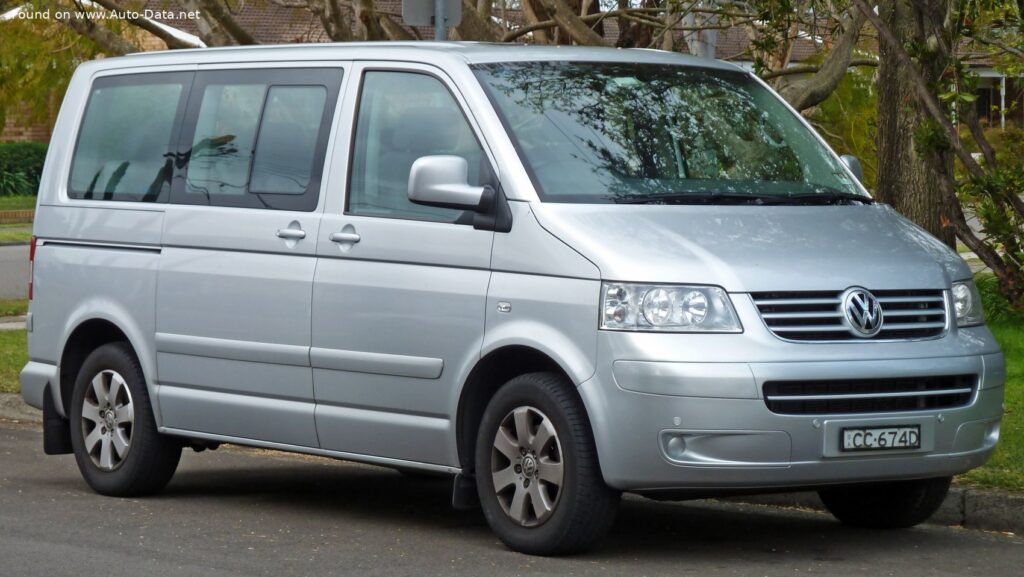
The Volkswagen Multivan (T5), produced from 2003 to 2009, represented a significant evolution in the popular Transporter line, shifting further towards a comfortable and versatile people-mover. Within the T5 generation (internally designated as the 7HM series), a 2.0-liter gasoline engine producing 115 horsepower was offered. This variant occupied the entry-level position in the gasoline-powered Multivan range, positioned below the more powerful 1.9 TDI diesel and the later 2.5-liter gasoline options. It was aimed at buyers prioritizing affordability and reasonable fuel economy over outright performance, primarily for family use and light commercial applications.
Volkswagen Multivan T5 2.0 (115 hp): An Overview
The T5 Multivan 2.0 (115 hp) was a five-door minivan typically configured with seven seats, though variations existed. It was built on the Volkswagen Group’s 1HX0/A3 platform, shared with other models like the Volkswagen Golf, Bora, and Audi A3. This platform provided a solid foundation for a vehicle designed to balance passenger comfort with practicality. The 2.0-liter engine, while not the most powerful option, offered a relatively lightweight and compact powerplant suitable for the Multivan’s intended purpose. This specific configuration was particularly popular in European markets.
Powertrain & Engine Architecture
The heart of the Multivan T5 2.0 (115 hp) is the EA113 engine family, specifically the AXA engine code. This is a 1.984-liter (121.07 cubic inches) inline-four cylinder gasoline engine. It features a single overhead camshaft (SOHC) valvetrain with two valves per cylinder. The engine utilizes multi-port fuel injection, a common system for its time, delivering fuel directly into the intake manifold. The compression ratio is 10.3:1, a moderate figure balancing efficiency and performance.
The engine is transversely mounted at the front of the vehicle, driving the front wheels. The 115 hp output is achieved at 5200 rpm, while peak torque of 170 Nm (125.39 lb-ft) is available between 2700 and 4700 rpm. The engine’s power-to-weight ratio is 52.7 hp per tonne, and the torque-to-weight ratio is 77.8 Nm per tonne.
Paired with the 2.0-liter engine was typically a five-speed automatic transmission. This transmission, while providing convenience, was not known for its sportiness or rapid shifting. It was geared towards smooth operation and fuel efficiency rather than aggressive acceleration. The automatic transmission’s gear ratios were optimized for everyday driving conditions, prioritizing usability over performance.
Driving Characteristics
The driving experience in the Multivan T5 2.0 (115 hp) is best described as comfortable and unhurried. Acceleration is modest, taking approximately 17.8 seconds to reach 100 km/h (62 mph) and around 16.9 seconds to reach 60 mph. The automatic transmission contributes to a relaxed driving style, but it can feel sluggish when attempting quick overtaking maneuvers or climbing steep hills. The engine’s torque curve provides adequate pulling power for everyday driving, but it requires downshifting to maintain speed when fully loaded.
Compared to the 1.9 TDI diesel version, the 2.0-liter gasoline engine offers a smoother and quieter driving experience, but at the cost of significantly lower fuel economy and torque. The TDI provided considerably more pulling power and better fuel efficiency, making it a more popular choice for those frequently towing or carrying heavy loads. Compared to higher-output gasoline engines (which were introduced later in the T5 lifecycle), the 115 hp version felt noticeably underpowered, especially when fully loaded with passengers and luggage.
Equipment & Trim Levels
The Multivan T5 2.0 (115 hp) typically came with a reasonable level of standard equipment, focusing on practicality and comfort. Standard features generally included power windows, central locking, air conditioning, and an adjustable steering wheel. Interior upholstery was typically cloth, with options for upgraded materials available. The dashboard layout was functional and straightforward, prioritizing ease of use.
Optional extras included features like alloy wheels, a CD stereo system, parking sensors, and upgraded seating configurations. Higher trim levels offered additional features such as climate control, leather upholstery, and a more sophisticated infotainment system. The Multivan’s modular seating system allowed for flexible configurations, with seats that could be folded, removed, or rotated to create different cabin layouts.
Chassis & Braking
The Multivan T5 2.0 (115 hp) utilizes an independent suspension system on both the front and rear axles. The front suspension employs a McPherson strut design with coil springs and an anti-roll bar, while the rear suspension features a trailing arm setup with coil springs and a transverse stabilizer. This suspension configuration provides a comfortable ride quality, absorbing bumps and irregularities in the road surface effectively.
The braking system consists of ventilated discs on all four wheels, providing adequate stopping power for the vehicle’s weight. The system is equipped with ABS (Anti-lock Braking System) to prevent wheel lockup during emergency braking. The front brakes measure 308×29.5 mm, while the rear brakes are 294×22 mm. The steering system is a hydraulic power steering rack and pinion, offering precise and responsive steering control.
Market Reception & Comparison
The Multivan T5 2.0 (115 hp) received mixed reviews from automotive critics. While praised for its practicality, spacious interior, and comfortable ride, it was often criticized for its lack of power and relatively high fuel consumption. Compared to the diesel versions, the gasoline engine was seen as less efficient and less suitable for long-distance driving or heavy loads. However, the gasoline engine’s smoother operation and quieter engine note were appreciated by some buyers.
Fuel economy figures averaged around 10.6 l/100 km (22.2 US mpg, 26.6 UK mpg), which was considerably higher than the diesel alternatives. Reliability was generally good, with the EA113 engine proving to be a durable and dependable unit. However, the automatic transmission was sometimes prone to issues, particularly if not properly maintained.
Technical Specifications
| Brand | Volkswagen |
| Model | Multivan |
| Generation | Multivan (T5) |
| Engine Type | 2.0 (115 Hp) |
| Start of Production | 2003 |
| End of Production | 2009 |
| Fuel Consumption (Urban) | 13.8 l/100 km (17 US mpg, 20.5 UK mpg) |
| Fuel Consumption (Extra Urban) | 8.6 l/100 km (27.4 US mpg, 32.8 UK mpg) |
| Fuel Consumption (Combined) | 10.6 l/100 km (22.2 US mpg, 26.6 UK mpg) |
| CO2 Emissions | 254 g/km |
| Fuel Type | Petrol (Gasoline) |
| Acceleration 0-100 km/h | 17.8 sec |
| Acceleration 0-62 mph | 17.8 sec |
| Maximum Speed | 163 km/h (101.28 mph) |
| Emission Standard | Euro 4 |
| Engine Code | EA113 / AXA |
| Engine Displacement | 1984 cm3 (121.07 cu. in.) |
| Number of Cylinders | 4 |
| Cylinder Bore | 82.5 mm (3.25 in.) |
| Piston Stroke | 92.8 mm (3.65 in.) |
| Compression Ratio | 10.3:1 |
| Engine Oil Capacity | 5 l (5.28 US qt | 4.4 UK qt) |
| Coolant Capacity | 7.1 l (7.5 US qt | 6.25 UK qt) |
| Kerb Weight | 2184 kg (4814.9 lbs.) |
| Max. Weight | 2850 kg (6283.17 lbs.) |
| Trunk (Boot) Space (Max) | 4525 l (159.8 cu. ft.) |
| Fuel Tank Capacity | 80 l (21.13 US gal | 17.6 UK gal) |
| Tire Size | 215/65 R16 |
Legacy
The Multivan T5 2.0 (115 hp) remains a relatively affordable and practical option in the used car market. While not the most desirable version due to its lower power output and higher fuel consumption, it offers a comfortable and spacious interior at a competitive price. The EA113 engine is generally considered reliable, but regular maintenance is crucial to prevent potential issues. The automatic transmission should be inspected carefully before purchase, as it can be prone to wear and tear. Overall, the T5 2.0 (115 hp) represents a solid and dependable choice for families or individuals seeking a versatile and practical people-mover.