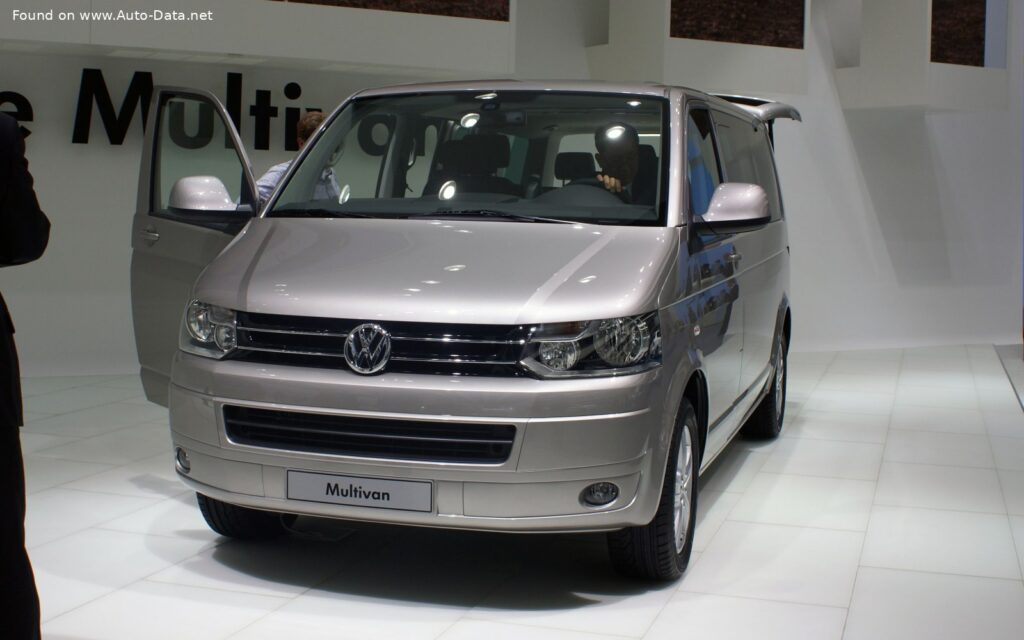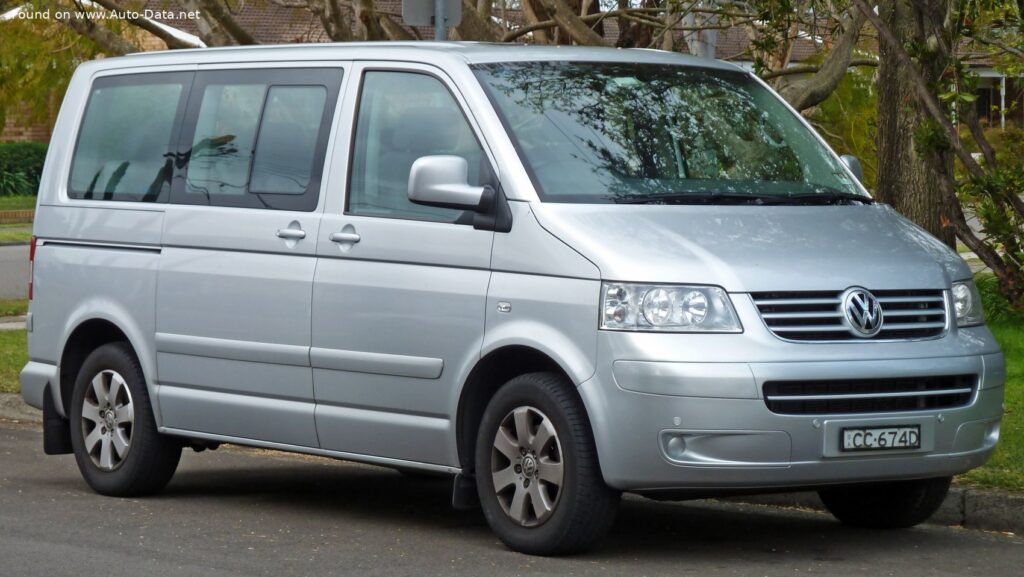
The Volkswagen Multivan (T5), produced from 2003 to 2015, represented a significant evolution of Volkswagen’s popular van lineage. Within the T5 generation (internally designated as the 7HM series), a variety of engine and trim options were offered to cater to diverse customer needs. This article focuses specifically on the 2.5 TDI variant, producing 130 horsepower, available primarily between 2003 and 2006. This configuration occupied a middle ground in the Multivan T5 lineup, offering a balance between fuel efficiency, practicality, and affordability, appealing to families and commercial users alike. It served as a step up from the lower-powered 1.9 TDI models, while remaining more accessible than the more expensive and performance-oriented 2.0 TDI and petrol options.
Volkswagen Multivan T5 2.5 TDI (130 hp): An Overview
The 2.5 TDI Multivan T5 was a mainstay of the range during its initial production years. It was designed to provide a comfortable and versatile passenger or cargo carrying solution. The T5 platform, based on the Volkswagen Group’s PL45 (also known as 1HX0 for passenger versions and A3 for commercial), offered improved handling, safety features, and interior space compared to its predecessor, the T4. The 2.5 TDI engine was chosen for its robust nature and relatively good fuel economy, making it a popular choice in Europe and other markets where diesel fuel was prevalent. The Multivan, in particular, was marketed towards those seeking a more refined and feature-rich van experience than the standard Transporter.
Powertrain & Engine Architecture
The heart of the 2.5 TDI Multivan is the EA153 engine family, specifically the AXD engine code. This is a 2.5-liter, inline five-cylinder diesel engine. It utilizes a pump-nozzle (unit injector) fuel injection system, a technology known for its precision and ability to deliver high injection pressures, contributing to efficient combustion and reduced emissions. The engine features a single overhead camshaft (SOHC) valvetrain operating two valves per cylinder. A turbocharger with an intercooler is employed to increase power output and improve torque delivery. The engine’s displacement is 2460 cm³ (150.12 cubic inches), and it produces 130 hp at 3500 rpm and 340 Nm (250.77 lb-ft) of torque between 2000-2300 rpm.
The 2.5 TDI was typically paired with a five-speed automatic transmission (often the 09G unit). This transmission was chosen to provide ease of use, particularly in urban environments and for drivers less comfortable with manual gearboxes. While the automatic transmission offered convenience, it did impact acceleration and fuel economy compared to the available six-speed manual transmission. The automatic transmission features electronic control for smoother shifting and adaptive learning to optimize performance based on driving style.
Driving Characteristics
The 2.5 TDI automatic Multivan T5 delivers a driving experience focused on practicality and comfort rather than outright performance. Acceleration from 0-100 km/h (0-62 mph) takes approximately 15.3 seconds, and 0-60 mph is achieved in around 14.5 seconds. The top speed is limited to 168 km/h (104.39 mph). The automatic transmission’s gear ratios are optimized for fuel efficiency and smooth cruising, but this comes at the expense of rapid acceleration. The engine’s torque peak, available at relatively low engine speeds, provides adequate pulling power for everyday driving and carrying a full load of passengers or cargo. Compared to the 1.9 TDI, the 2.5 TDI offers noticeably more power and a more relaxed driving experience, especially when fully loaded. However, it lacks the responsiveness and higher top speed of the more powerful 2.0 TDI variants.
Equipment & Trim Levels
The 2.5 TDI Multivan T5 was available in various trim levels, with standard equipment varying depending on the market. Generally, base models included features such as power windows, central locking, air conditioning, and an adjustable steering wheel. Higher trim levels added features like alloy wheels, upgraded audio systems, cruise control, and parking sensors. Interior upholstery typically consisted of cloth seats, with optional leather upholstery available as an upgrade. The Multivan’s interior is highly configurable, with seating arrangements accommodating up to seven passengers. The rear seats can be folded, removed, or even rotated to create different seating configurations. A key feature of the Multivan is its versatile interior space, offering ample room for passengers and luggage.
Chassis & Braking
The Multivan T5 utilizes an independent suspension system on both the front and rear axles. The front suspension employs a McPherson strut design with coil springs and an anti-roll bar, while the rear suspension features a trailing arm setup with coil springs and a transverse stabilizer. This suspension configuration provides a comfortable ride and good handling characteristics. Braking duties are handled by ventilated disc brakes on all four wheels, providing adequate stopping power. The Multivan T5 is equipped with an Anti-lock Braking System (ABS) as standard, enhancing safety during emergency braking situations. The curb weight of the 2.5 TDI Multivan T5 is approximately 2274 kg (5013.31 lbs), and the maximum permissible weight is 3000 kg (6613.87 lbs).
Market Reception & Comparison
The 2.5 TDI Multivan T5 received generally positive reviews from automotive critics. It was praised for its spacious interior, comfortable ride, and practical features. The 2.5 TDI engine was considered a good compromise between power and fuel economy, although some critics noted that the automatic transmission could feel sluggish at times. Compared to the 1.9 TDI, the 2.5 TDI offered a more refined driving experience and better performance, justifying the higher price tag for many buyers. Fuel economy figures averaged around 8.5 l/100 km (27.7 US mpg, 33.2 UK mpg), which was competitive for a vehicle of its size and weight. Reliability was generally good, although some owners reported issues with the automatic transmission and the pump-nozzle fuel injection system.
Technical Specifications
| Brand | Volkswagen |
| Model | Multivan |
| Generation | Multivan (T5) |
| Engine Type | 2.5 TDI (130 Hp) |
| Production Years | 2003-2006 |
| Engine Code | EA153 / AXD |
| Engine Displacement | 2460 cm³ (150.12 cu. in.) |
| Number of Cylinders | 5 (Inline) |
| Power | 130 Hp @ 3500 rpm |
| Torque | 340 Nm @ 2000-2300 rpm (250.77 lb.-ft.) |
| Fuel Injection | Pump-nozzle (Unit Injector) |
| Valvetrain | SOHC |
| Transmission | 5-speed Automatic (09G) |
| Drive Wheels | Front Wheel Drive |
| Curb Weight | 2274 kg (5013.31 lbs.) |
| Max. Weight | 3000 kg (6613.87 lbs.) |
| Fuel Consumption (Combined) | 8.5 l/100 km (27.7 US mpg, 33.2 UK mpg) |
| CO2 Emissions | 230 g/km |
| Fuel Tank Capacity | 80 l (21.13 US gal, 17.6 UK gal) |
| Acceleration 0-100 km/h | 15.3 sec |
| Maximum Speed | 168 km/h (104.39 mph) |
Legacy
The 2.5 TDI engine, while eventually superseded by more modern diesel technologies, proved to be a durable and reliable powerplant in the Multivan T5. Today, used examples of this variant are still relatively common, and well-maintained vehicles can offer years of continued service. However, potential buyers should be aware of the potential for issues with the pump-nozzle fuel injection system, which can be expensive to repair. The automatic transmission also requires careful maintenance to ensure smooth operation. Despite these potential concerns, the 2.5 TDI Multivan T5 remains a popular choice for those seeking a versatile and practical van with a comfortable driving experience. Its spacious interior, configurable seating, and relatively good fuel economy continue to make it a compelling option in the used vehicle market.