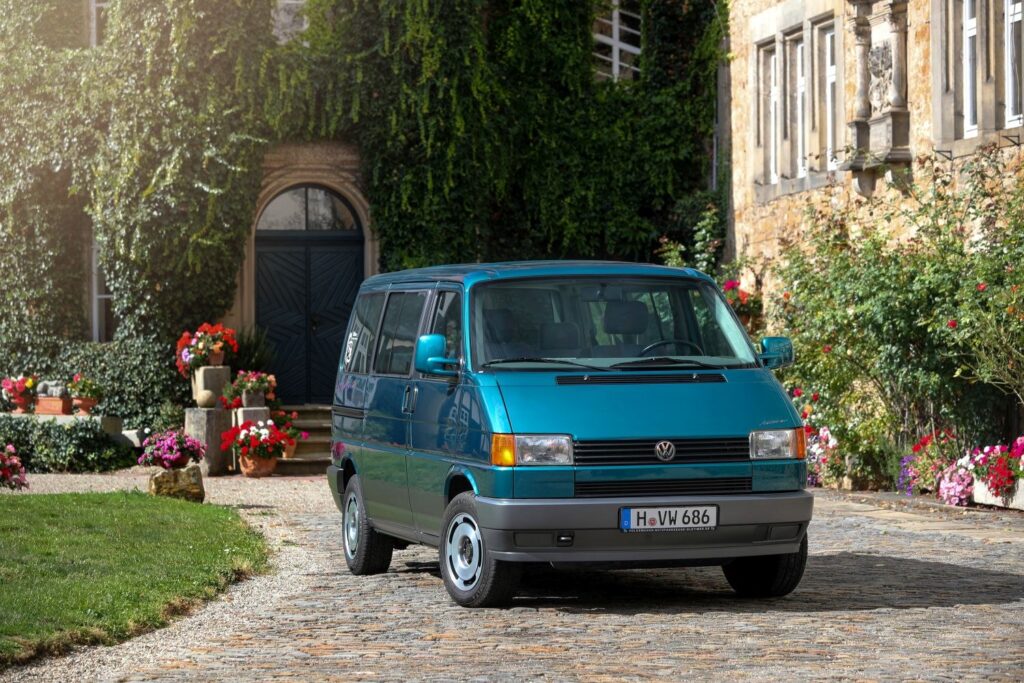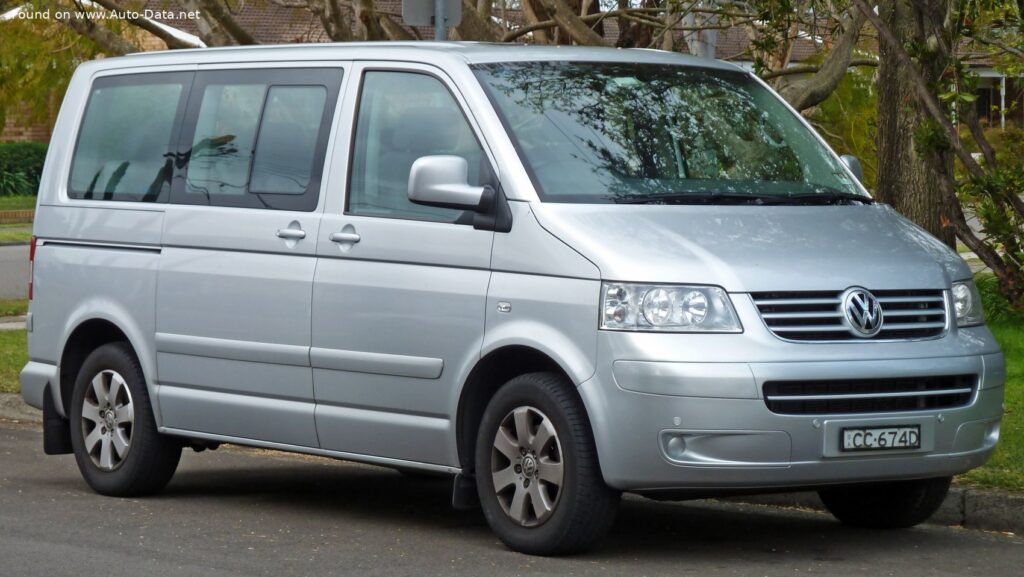
The Volkswagen Multivan (T5), produced from 2003 to 2015, represented a significant evolution in the popular Transporter line, shifting further towards a comfortable and versatile people-carrier. Within the T5 generation (internally designated BA6), a range of engine and trim options were offered to cater to diverse needs. This article focuses specifically on the 2.5 TDI variant, producing 174 horsepower, which was available from 2003 to 2006. This engine configuration occupied a middle ground in the T5 lineup, offering a balance between performance, fuel economy, and price, appealing to families and those requiring a spacious vehicle for both work and leisure.
Volkswagen Multivan T5 2.5 TDI (174 hp): An Overview
The 2.5 TDI Multivan T5 was positioned as a step up from the base engine options, offering considerably more power and torque for improved driving experience, particularly when fully loaded or towing. It wasn’t the top-of-the-line offering – that distinction belonged to the more powerful TDI variants and, later, petrol engines – but it provided a compelling package for buyers who didn’t require the ultimate in performance. The T5 platform itself, based on the Volkswagen Group’s PQ35 architecture, provided a solid foundation for a comfortable and practical minivan.
Powertrain & Engine Architecture
The heart of the 2.5 TDI Multivan T5 is the EA153 series inline-five cylinder diesel engine, specifically the AXE engine code. This engine displaced 2460 cc (150.12 cubic inches) and featured a robust cast iron block and aluminum cylinder head. A key feature of this engine was its pump-nozzle (unit injector) fuel injection system, a technology that allowed for precise fuel delivery and contributed to its relatively high torque output. The engine utilized a single overhead camshaft (SOHC) valvetrain operating two valves per cylinder. A turbocharger with an intercooler was employed to boost power and efficiency. The turbocharger increased air intake, while the intercooler cooled the compressed air, further enhancing combustion.
The 2.5 TDI engine produced 174 hp at 3500 rpm and a substantial 400 Nm (295.02 lb-ft) of torque between 2000-2300 rpm. This torque curve made the Multivan surprisingly capable for its size, providing strong acceleration even with a full passenger complement and luggage. The engine’s oil capacity was 7.4 liters (7.82 US quarts / 6.51 UK quarts), and it required a specific oil specification (refer to owner’s manual for details). The cooling system held 7.1 liters (7.5 US quarts / 6.25 UK quarts) of coolant.
Driving Characteristics
The 2.5 TDI Multivan T5 offered a noticeable improvement in driving experience compared to lower-powered engine options. While not a sports vehicle, the 174 hp and 400 Nm of torque provided ample power for highway cruising and overtaking. The engine felt responsive, particularly in the mid-range, making it easy to maintain speed on inclines. The front-wheel-drive configuration, standard for this variant, contributed to predictable handling, although it could exhibit some torque steer under hard acceleration. The engine was generally considered refined for a diesel, with relatively low levels of noise and vibration.
Compared to the later 1.9 TDI engines, the 2.5 TDI offered more power and torque, but at the expense of slightly higher fuel consumption. Against the petrol engines available in the T5 range, the 2.5 TDI provided significantly better fuel economy and a more relaxed driving experience, particularly on long journeys. The 6-speed manual transmission, standard on most 2.5 TDI models, allowed drivers to effectively utilize the engine’s powerband.
Equipment & Trim Levels
The 2.5 TDI Multivan T5 was typically well-equipped, reflecting its position as a mid-range offering. Standard features generally included air conditioning, power windows, central locking, and an audio system. Interior upholstery was typically cloth, although leather options were available. The dashboard layout was functional and ergonomic, with clear instrumentation and easy-to-reach controls.
Optional extras included features such as a sunroof, upgraded audio systems, navigation, parking sensors, and various interior trim upgrades. The Multivan’s modular seating arrangement was a key selling point, allowing for flexible configuration to accommodate passengers and cargo. Different seating configurations were available, ranging from seven to nine seats, depending on the specific trim level and options selected.
Chassis & Braking
The Multivan T5 utilized an independent suspension system on both the front and rear axles. The front suspension employed a McPherson strut design with coil springs and an anti-roll bar, while the rear suspension featured a trailing arm setup with coil springs and a transverse stabilizer. This suspension configuration provided a comfortable ride quality, even on uneven surfaces.
Braking duties were handled by ventilated discs on all four wheels, providing ample stopping power. The system was equipped with ABS (Anti-lock Braking System) as standard. The front brakes measured 308×29.5 mm, while the rear brakes were 294×22 mm. The steering system was a hydraulic power steering rack and pinion, offering precise and responsive steering feel. The standard tire size was 215/65 R16, mounted on 6.5J x 16 inch wheel rims.
Market Reception & Comparison
The 2.5 TDI Multivan T5 received generally positive reviews from automotive critics. It was praised for its spacious interior, comfortable ride, and strong diesel engine. Fuel economy was considered good for a vehicle of its size, averaging around 8.3 l/100 km (28.3 US mpg / 34 UK mpg) in combined driving conditions. However, some critics noted that the 2.5 TDI engine could be somewhat noisy compared to some of its competitors.
Compared to other trims in the T5 lineup, the 2.5 TDI offered a compelling balance of performance and economy. It was more affordable than the higher-powered TDI variants, while providing significantly more power than the base engine options. In terms of reliability, the 2.5 TDI engine proved to be generally robust, although regular maintenance was essential to prevent issues.
Technical Specifications
| Brand | Volkswagen |
| Model | Multivan |
| Generation | Multivan (T5) |
| Engine Type | 2.5 TDI (174 Hp) |
| Production Years | 2003-2006 |
| Engine Code | AXE |
| Engine Displacement | 2460 cm3 (150.12 cu. in.) |
| Number of Cylinders | 5 (Inline) |
| Power | 174 Hp @ 3500 rpm |
| Torque | 400 Nm @ 2000-2300 rpm (295.02 lb.-ft.) |
| Fuel Type | Diesel |
| Fuel Consumption (Urban) | 11 l/100 km (21.4 US mpg / 25.7 UK mpg) |
| Fuel Consumption (Extra Urban) | 6.8 l/100 km (34.6 US mpg / 41.5 UK mpg) |
| Fuel Consumption (Combined) | 8.3 l/100 km (28.3 US mpg / 34 UK mpg) |
| CO2 Emissions | 224 g/km |
| Acceleration 0-100 km/h | 12.2 sec |
| Maximum Speed | 188 km/h (116.82 mph) |
| Kerb Weight | 2274 kg (5013.31 lbs.) |
| Max. Weight | 3000 kg (6613.87 lbs.) |
| Fuel Tank Capacity | 80 l (21.13 US gal / 17.6 UK gal) |
| Transmission | 6-speed Manual |
Legacy
The 2.5 TDI engine in the Multivan T5 has proven to be a relatively durable powertrain, with many examples still on the road today. However, as with any diesel engine, regular maintenance is crucial to ensure longevity. Common issues can include injector problems, turbocharger wear, and issues with the fuel pump. On the used car market, the 2.5 TDI Multivan T5 remains a popular choice for those seeking a spacious and versatile vehicle. Its reputation for reliability and practicality, combined with its relatively affordable price point, makes it an attractive option for families, tradespeople, and anyone needing a vehicle capable of handling a variety of tasks. The 2.5 TDI represents a sweet spot in the T5 range, offering a good balance of performance, economy, and reliability.