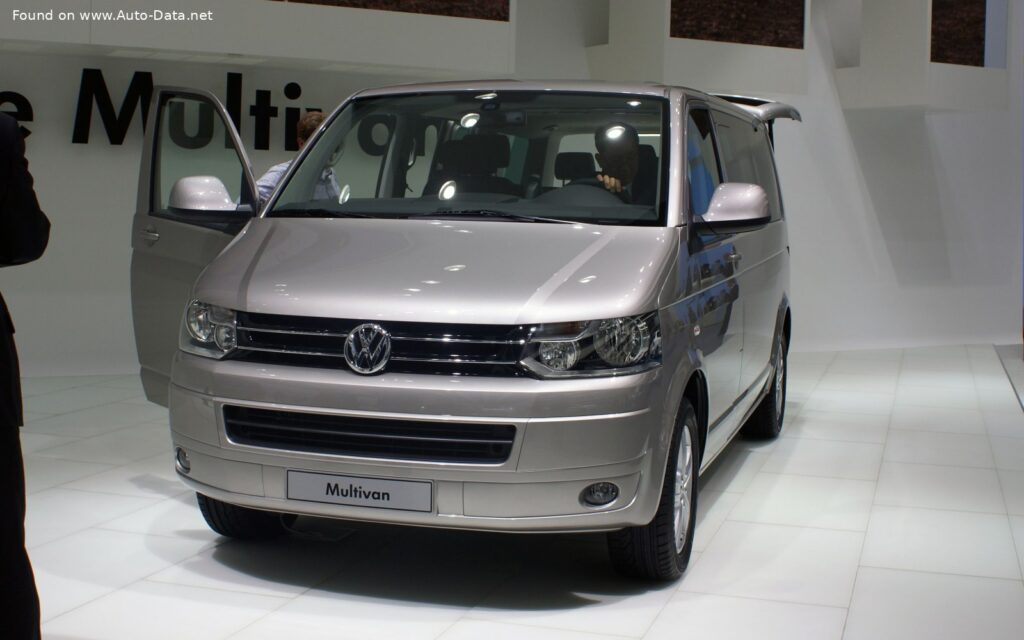
The Volkswagen Multivan (T5, facelift 2009) 2.0 TDI (140 hp) 4MOTION represents a significant iteration of Volkswagen’s popular commercial vehicle, blending passenger comfort with all-wheel-drive capability. Produced from 2009 to 2016, this variant occupied a middle ground within the T5 facelift range, positioned above the base engine options but below the more powerful TDI variants. It was designed to appeal to families and businesses requiring a versatile vehicle capable of handling diverse conditions, from urban commutes to weekend adventures. The T5 generation, built on the 1HX0/A3 platform, benefited from numerous refinements over its predecessor, focusing on improved safety, comfort, and efficiency.
2.0 TDI (140 hp) 4MOTION Powertrain & Engine Architecture
At the heart of the Multivan 2.0 TDI (140 hp) 4MOTION lies the CCHA engine code, a 1,968 cc inline four-cylinder diesel engine. This engine utilizes a common rail direct injection system, delivering fuel directly into the combustion chamber at extremely high pressure. This technology, coupled with a turbocharger and intercooler, optimizes combustion efficiency and power output. The engine produces 140 horsepower at 3,500 rpm and a substantial 340 Nm (250.77 lb-ft) of torque between 1,750 and 2,500 rpm. This torque curve provides strong low-end and mid-range acceleration, making it well-suited for carrying passengers and cargo. The engine also incorporates a diesel particulate filter (DPF) to reduce harmful emissions, meeting Euro 5 standards.
The 4MOTION all-wheel-drive system is a key feature of this variant. Volkswagen’s 4MOTION system employs a viscous coupling to distribute power between the front and rear axles as needed. Under normal driving conditions, the system operates primarily in front-wheel drive, enhancing fuel efficiency. However, when wheel slip is detected, the viscous coupling automatically transfers torque to the rear wheels, providing enhanced traction and stability. This system is fully automatic and requires no driver intervention. The transmission is a six-speed manual gearbox, chosen for its durability and driver engagement. While an automatic transmission was available on other T5 variants, it was not offered with this specific engine and 4MOTION combination.
Fuel Injection and Valvetrain
The 2.0 TDI engine utilizes a Bosch common rail system, capable of delivering up to 1,800 bar of fuel pressure. This high pressure atomizes the fuel into a fine mist, ensuring complete combustion and reducing emissions. The engine features four valves per cylinder (16 valves total), operated by a single overhead camshaft. This configuration optimizes gas flow and contributes to the engine’s overall efficiency and power output.
Driving Characteristics
The Multivan 2.0 TDI (140 hp) 4MOTION offers a balanced driving experience. While not a performance-oriented vehicle, the engine’s torque output provides ample power for everyday driving and hauling loads. Acceleration from 0 to 100 km/h (0 to 62 mph) takes approximately 15.3 seconds, and 0 to 60 mph is achieved in around 14.5 seconds. The top speed is limited to 170 km/h (105.63 mph). The six-speed manual transmission allows for precise gear selection, and the 4MOTION system provides confident handling in various weather conditions. Compared to the more powerful TDI variants, this 140 hp version offers a more economical driving experience, but with a noticeable difference in acceleration and overall performance. The manual transmission, while engaging, requires more driver involvement than the optional automatic transmissions found in other T5 models.
Equipment & Trim Levels
The Multivan 2.0 TDI (140 hp) 4MOTION typically came equipped with a respectable level of standard features. These included air conditioning, power windows, central locking, and an audio system. Interior upholstery was typically cloth, although leather options were available as upgrades. The dashboard layout was functional and straightforward, prioritizing practicality over luxury. Common optional extras included a navigation system, parking sensors, upgraded audio systems, and various interior trim options. The Multivan’s modular seating system allowed for flexible configurations, accommodating up to seven passengers. The vehicle’s spacious interior and numerous storage compartments further enhanced its practicality.
Chassis & Braking
The Multivan 2.0 TDI (140 hp) 4MOTION features a robust chassis designed to handle the vehicle’s weight and payload capacity. The front suspension utilizes independent MacPherson struts, while the rear suspension employs a semi-trailing arm setup. This configuration provides a comfortable ride and good handling characteristics. The braking system consists of ventilated discs on the front wheels and drum brakes on the rear wheels. Anti-lock Braking System (ABS) is standard, enhancing braking performance and stability. The steering system is a rack and pinion type, providing precise and responsive steering feel. Stabilizer bars are fitted to both the front and rear axles to reduce body roll during cornering.
Market Reception & Comparison
The Multivan 2.0 TDI (140 hp) 4MOTION was generally well-received by critics and consumers alike. It was praised for its versatility, practicality, and all-weather capability. Fuel economy was a strong point, with combined fuel consumption averaging around 8.3 l/100 km (28.3 US mpg). Compared to the more powerful TDI variants, this 140 hp version offered a more affordable entry point into the Multivan range. However, some critics noted that the engine could feel strained when fully loaded or driving uphill. Reliability was generally good, although diesel particulate filters (DPF) could require occasional maintenance, particularly with frequent short trips. Compared to competitors like the Mercedes-Benz Vito and Ford Transit, the Multivan offered a more refined interior and a more car-like driving experience.
Technical Specifications
| Brand | Volkswagen |
| Model | Multivan |
| Generation | Multivan (T5, facelift 2009) |
| Type (Engine) | 2.0 TDI (140 Hp) 4MOTION |
| Start of production | 2009 |
| End of production | 2016 |
| Fuel consumption (urban) | 10.4 l/100 km (22.6 US mpg) |
| Fuel consumption (extra urban) | 7.1 l/100 km (33.1 US mpg) |
| Fuel consumption (combined) | 8.3 l/100 km (28.3 US mpg) |
| CO2 emissions | 219 g/km |
| Fuel Type | Diesel |
| Acceleration 0-100 km/h | 15.3 sec |
| Acceleration 0-62 mph | 15.3 sec |
| Acceleration 0-60 mph | 14.5 sec |
| Maximum speed | 170 km/h (105.63 mph) |
| Emission standard | Euro 5 |
| Power | 140 Hp @ 3500 rpm |
| Torque | 340 Nm @ 1750-2500 rpm (250.77 lb.-ft.) |
| Engine layout | Front, Transverse |
| Engine Model/Code | CCHA |
| Engine displacement | 1968 cm3 (120.09 cu. in.) |
| Number of cylinders | 4 |
| Engine configuration | Inline |
| Fuel injection system | Diesel Commonrail |
| Engine oil capacity | 7 l (7.4 US qt | 6.16 UK qt) |
| Kerb Weight | 2187 kg (4821.51 lbs.) |
| Max. weight | 3080 kg (6790.24 lbs.) |
| Max load | 893 kg (1968.73 lbs.) |
| Length | 4892 mm (192.6 in.) |
| Width | 1904 mm (74.96 in.) |
| Height | 1970 mm (77.56 in.) |
| Wheelbase | 3000 mm (118.11 in.) |
| Number of gears and type of gearbox | 6 gears, manual transmission |
Legacy
The Volkswagen Multivan 2.0 TDI (140 hp) 4MOTION has proven to be a reliable and durable vehicle, with many examples still in service today. The CCHA engine, while not the most powerful in the T5 range, is known for its longevity and relatively straightforward maintenance. The 4MOTION system continues to provide excellent traction and stability, making these Multivans popular choices for those living in areas with challenging weather conditions. On the used car market, these vehicles command reasonable prices, reflecting their age and mileage. However, well-maintained examples with a full service history are highly sought after. The Multivan’s enduring popularity is a testament to its versatility, practicality, and overall build quality.