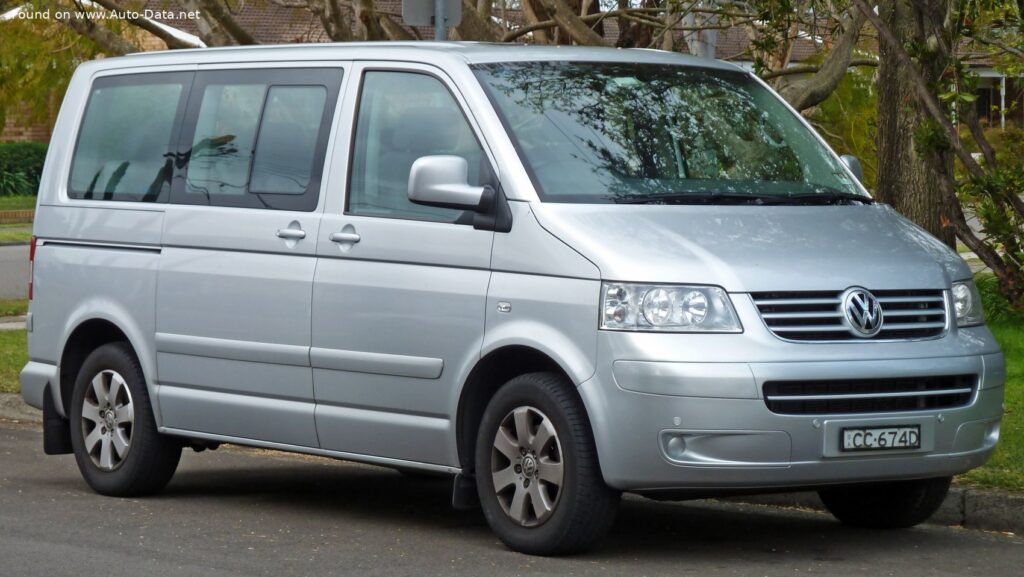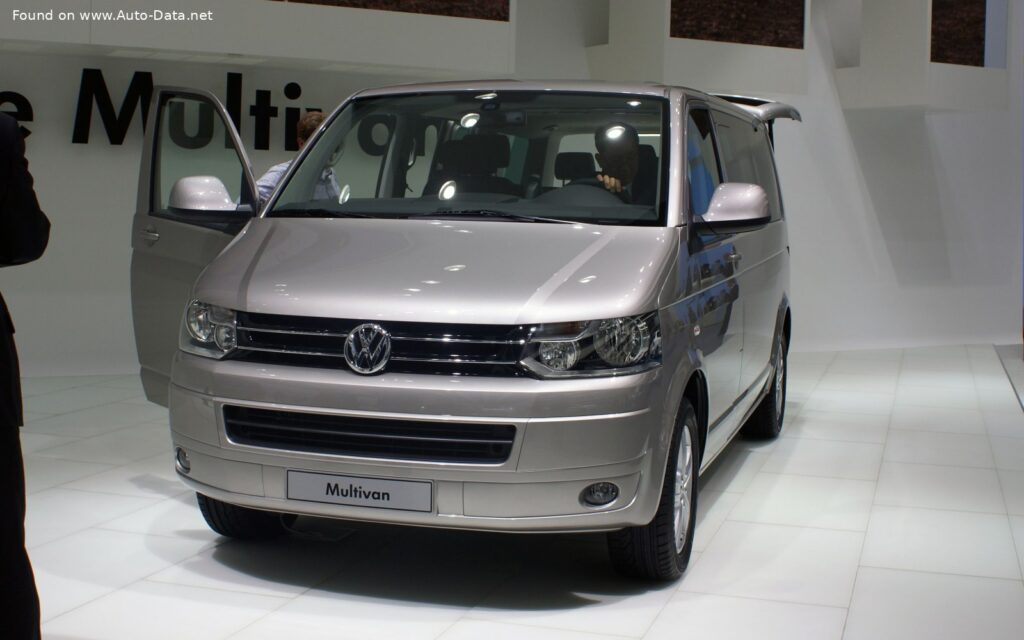
The Volkswagen Multivan (T5), particularly the facelifted version introduced in 2009, represented a significant evolution of Volkswagen’s popular van lineage. Produced from 2009 through 2016, the T5 Multivan offered a blend of practicality, comfort, and versatility, catering to families, businesses, and recreational users alike. Within the T5 range, the 2.0 TDI (140 hp) BMT variant occupied a middle ground, providing a balance between fuel efficiency, performance, and cost. This version was positioned as a sensible choice for those needing a spacious vehicle without the expense of the higher-powered engines or the complexity of all-wheel drive systems.
Volkswagen Multivan T5 (2009-2016) 2.0 TDI (140 hp) BMT: An Overview
The T5 facelift, launched in 2009, brought with it revised styling, improved interior materials, and updated engine options. The 2.0 TDI with 140 horsepower and BlueMotion Technology (BMT) became a key offering, appealing to buyers prioritizing economy and reasonable performance. The BMT package included modifications aimed at reducing fuel consumption and emissions, such as optimized aerodynamics and revised engine mapping. This variant was available with either a 6-speed manual transmission or, less commonly, a 7-speed DSG dual-clutch automatic. The Multivan T5, in general, served as a more refined and comfortable alternative to the Transporter panel van, offering features and trim levels geared towards passenger transport and leisure activities.
Powertrain & Engine Architecture
The heart of the 2.0 TDI (140 hp) BMT Multivan is the CCHA engine code, a 1968cc inline four-cylinder diesel engine. This engine belongs to the Volkswagen Group’s common rail diesel family, utilizing direct fuel injection and a turbocharger with an intercooler to enhance power and efficiency. The common rail system, operating at extremely high pressures, allows for precise control of fuel delivery, resulting in improved combustion and reduced emissions. The engine features four valves per cylinder (16 valves total) and a variable geometry turbocharger (VGT) which optimizes boost pressure across the engine’s operating range. The BMT designation indicates the inclusion of specific technologies to further enhance fuel economy. These include start/stop functionality, regenerative braking, and aerodynamic improvements. The engine produces 140 horsepower at 3500 rpm and 340 Nm (250.77 lb-ft) of torque between 1750 and 2500 rpm. This torque curve provides good low-end grunt, making the Multivan relatively easy to drive even when fully loaded.
Driving Characteristics
The 2.0 TDI (140 hp) BMT Multivan delivers adequate, though not exhilarating, performance. Acceleration from 0 to 100 km/h (0-62 mph) takes approximately 14.2 seconds, and top speed is limited to 173 km/h (107.5 mph). While these figures aren’t particularly impressive, the engine’s strong low-end torque makes it well-suited for everyday driving and hauling loads. The 6-speed manual transmission offers precise shifts and allows the driver to maintain optimal engine speed for efficiency or power. Compared to the more powerful 180 hp TDI variant, the 140 hp engine feels noticeably less responsive, especially when overtaking or climbing hills. However, the difference in fuel economy is significant, making the 140 hp version a more economical choice for those who don’t require maximum performance. The front-wheel-drive configuration provides predictable handling, but it can suffer from torque steer under hard acceleration. The suspension is tuned for comfort, providing a relatively smooth ride even on uneven surfaces.
Equipment & Trim Levels
The Multivan T5 2.0 TDI (140 hp) BMT was available in a range of trim levels, each offering a different level of equipment and luxury. Standard features typically included air conditioning, power windows, central locking, and an audio system. Higher trim levels added features such as alloy wheels, parking sensors, a multi-function steering wheel, and upgraded interior trim. Interior upholstery ranged from cloth to leather, and optional extras included a navigation system, a sunroof, and auxiliary heating. The Multivan’s flexible seating configuration was a key selling point, with options for five to seven seats, and the ability to remove or rotate seats to create different layouts. The rear seats could often be folded or stowed completely, maximizing cargo space. The dashboard layout was functional and well-designed, with clear instrumentation and easy-to-use controls.
Chassis & Braking
The Multivan T5 utilizes a front-wheel-drive platform with an independent suspension system at the front and a semi-independent suspension at the rear. The front suspension consists of MacPherson struts with stabilizer bar, while the rear suspension employs a twist-beam axle. This setup provides a good balance between ride comfort and handling. Braking duties are handled by ventilated disc brakes at the front and drum brakes at the rear. Anti-lock Braking System (ABS) is standard, enhancing safety and stability during emergency braking. The steering system is a rack-and-pinion type, providing precise and responsive steering feel. The weight distribution is biased towards the front, which can contribute to understeer in certain situations. The curb weight of the 2.0 TDI BMT Multivan is approximately 2067 kg (4556.95 lbs).
Market Reception & Comparison
The Volkswagen Multivan T5 2.0 TDI (140 hp) BMT was generally well-received by critics and buyers alike. It was praised for its practicality, comfort, and fuel efficiency. However, some reviewers noted that the engine lacked the power of the higher-output TDI variants. Compared to the 180 hp TDI, the 140 hp version offered significantly better fuel economy, with combined fuel consumption figures of around 7.0 l/100 km (33.6 US mpg). In terms of reliability, the 2.0 TDI engine proved to be generally robust, although some owners have reported issues with the diesel particulate filter (DPF) and the dual-mass flywheel. The Multivan T5 faced competition from other large MPVs such as the Ford Galaxy, Renault Espace, and Citroën C8. However, the Multivan’s reputation for quality, versatility, and refined driving experience gave it a competitive edge.
Technical Specifications
| Brand | Volkswagen |
| Model | Multivan (T5, facelift 2009) |
| Type (Engine) | 2.0 TDI (140 Hp) BMT |
| Start of production | 2009 |
| End of production | 2016 |
| Fuel consumption (urban) | 8.9 l/100 km (26.4 US mpg) |
| Fuel consumption (extra urban) | 5.9 l/100 km (39.9 US mpg) |
| Fuel consumption (combined) | 7 l/100 km (33.6 US mpg) |
| CO2 emissions | 184 g/km |
| Fuel Type | Diesel |
| Acceleration 0 – 100 km/h | 14.2 sec |
| Acceleration 0 – 62 mph | 14.2 sec |
| Maximum speed | 173 km/h (107.5 mph) |
| Engine Model/Code | CCHA |
| Engine displacement | 1968 cm3 (120.09 cu. in.) |
| Number of cylinders | 4 |
| Engine configuration | Inline |
| Fuel injection system | Diesel Commonrail |
| Engine oil capacity | 7 l (7.4 US qt | 6.16 UK qt) |
| Kerb Weight | 2067 kg (4556.95 lbs.) |
| Max. weight | 3000 kg (6613.87 lbs.) |
| Length | 4892 mm (192.6 in.) |
| Width | 1904 mm (74.96 in.) |
| Height | 1970 mm (77.56 in.) |
| Number of gears | 6 |
| Gearbox type | Manual transmission |
Legacy
The Volkswagen Multivan T5 2.0 TDI (140 hp) BMT remains a popular choice in the used car market. Its reputation for reliability, practicality, and fuel efficiency continues to attract buyers. While the engine may not be the most powerful available, it offers a good balance between performance and economy. Common maintenance items include regular oil changes, filter replacements, and inspection of the DPF and dual-mass flywheel. Properly maintained examples of this variant can provide many years of reliable service. The T5 Multivan, in general, has established itself as a versatile and well-regarded vehicle, and the 2.0 TDI (140 hp) BMT variant represents a sensible and economical option for those seeking a spacious and comfortable MPV.