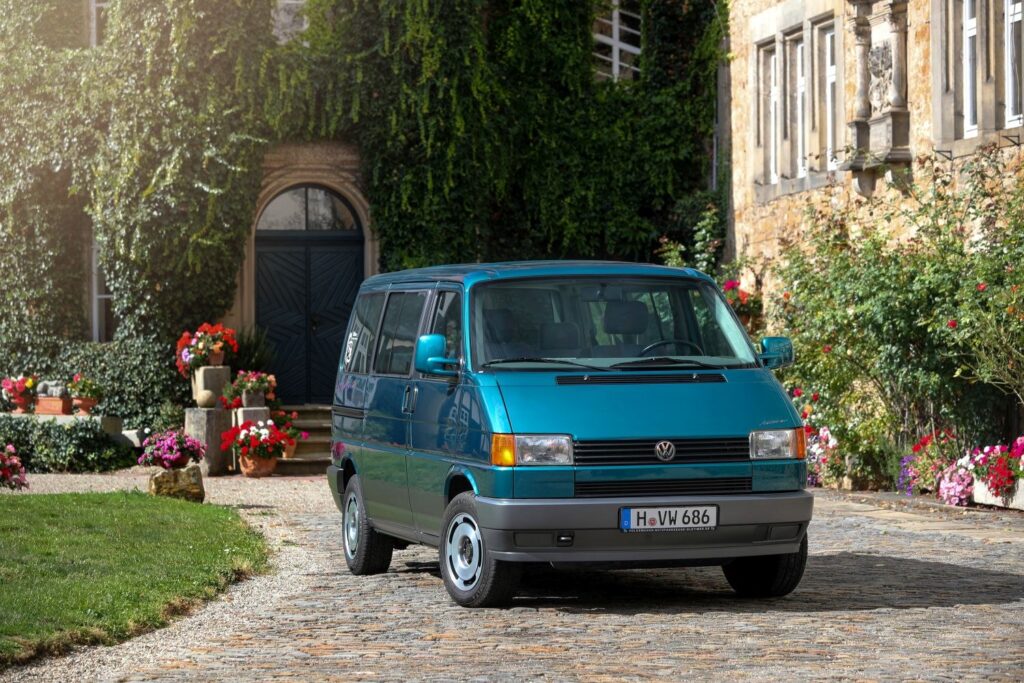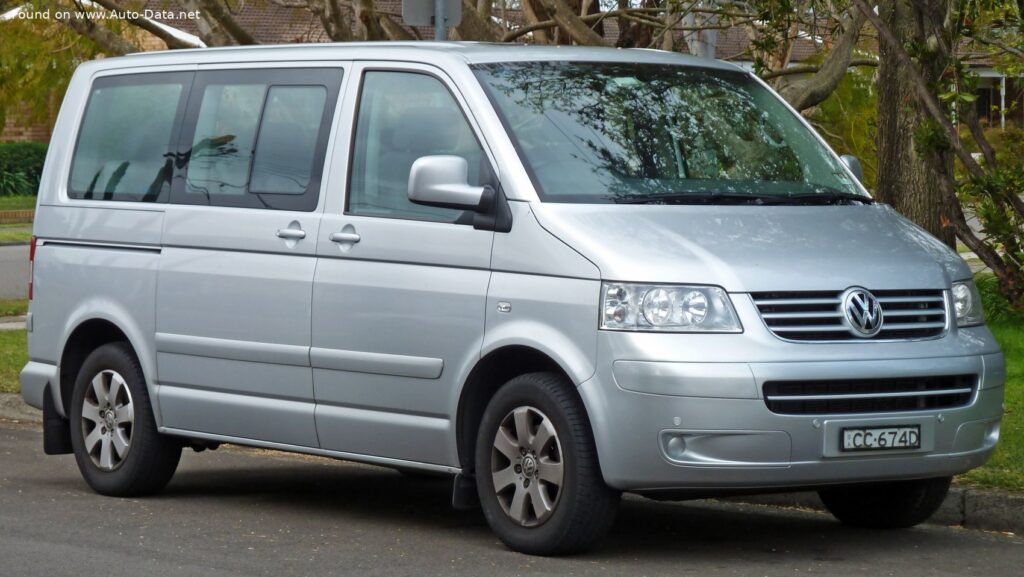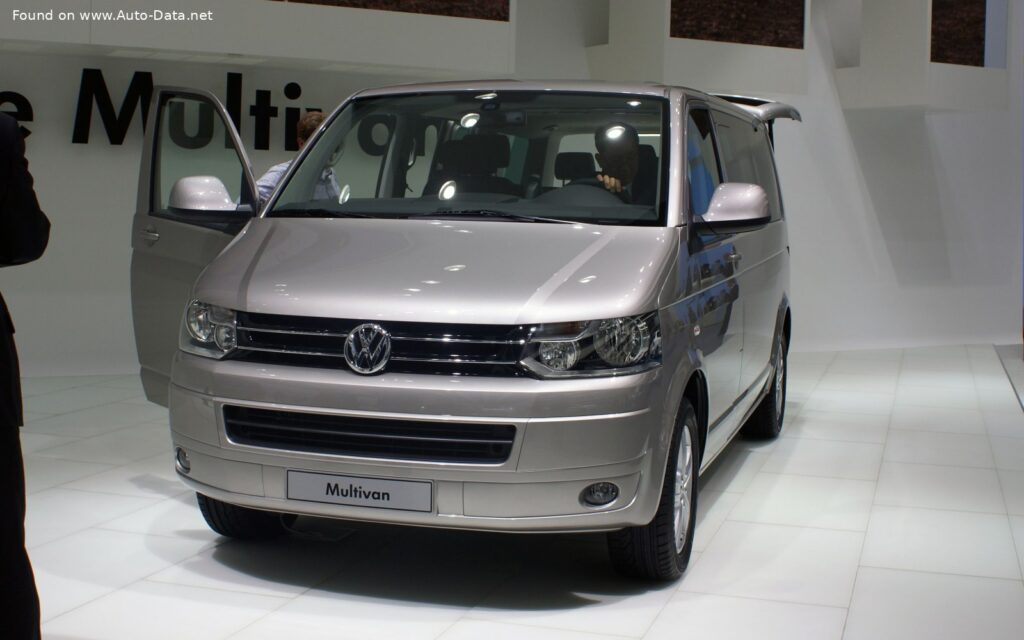
The Volkswagen Multivan (T5, facelifted in 2009) 2.0 TDI 140 hp with the Direct-Shift Gearbox (DSG) represents a significant iteration of Volkswagen’s popular commercial and passenger vehicle. Produced from 2009 to 2016, this variant occupied a middle ground within the T5 Multivan range, offering a balance between fuel efficiency, practicality, and a more refined driving experience compared to lower-powered or purely commercial-focused models. It was positioned as a versatile option for families, businesses, and individuals requiring a spacious and adaptable vehicle. The T5 generation, built on the 1HX0/A3 platform, benefited from the 2009 facelift which included revised styling, improved interior materials, and updated engine options, including this 2.0 TDI variant.
Powertrain & Engine Architecture
At the heart of the Multivan 2.0 TDI 140 hp lies the CCHA engine code, a 1968 cc (120.09 cu. in.) inline four-cylinder diesel engine. This engine is a turbocharged common rail diesel, utilizing direct fuel injection to optimize combustion and efficiency. The turbocharger, coupled with an intercooler, provides increased air density for improved power output. The engine produces 140 horsepower (hp) at 3500 rpm and 340 Newton-meters (250.77 lb-ft) of torque between 1750 and 2500 rpm. This torque curve provides strong low-end and mid-range acceleration, crucial for a vehicle of this size and intended use.
The engine features four valves per cylinder and is designed to meet Euro 5 emission standards, incorporating a diesel particulate filter (DPF) to reduce harmful emissions. The 2.0 TDI engine is transversely mounted in the front of the vehicle. The engine oil capacity is 7 liters (7.4 US qt / 6.16 UK qt). The engine’s design prioritizes durability and reliability, although the DPF system requires periodic maintenance to ensure optimal performance.
Paired with the 2.0 TDI engine is Volkswagen’s 7-speed DSG (Direct-Shift Gearbox) automatic transmission. This dual-clutch transmission offers quick and smooth gear changes, contributing to a more engaging driving experience than a traditional torque-converter automatic. The DSG’s programming is tuned for both fuel efficiency and responsiveness, adapting to driving conditions and driver input. The transmission’s seven forward gears help to keep the engine operating within its optimal power band, maximizing both performance and economy.
Driving Characteristics
The 140 hp 2.0 TDI engine, coupled with the DSG transmission, delivers a respectable, though not particularly sporty, driving experience in the Multivan. Acceleration from 0 to 100 km/h (0-62 mph) takes approximately 14.7 seconds, and 0 to 60 mph is achieved in around 14 seconds. The maximum speed is 172 km/h (106.88 mph). While these figures aren’t groundbreaking, the engine’s strong torque output provides ample power for everyday driving, including highway cruising and carrying a full load of passengers or cargo.
The DSG transmission contributes to a more refined driving experience, offering seamless gear changes and eliminating the need for manual clutch operation. Compared to the lower-powered 1.9 TDI variants, the 2.0 TDI provides noticeably more power and responsiveness. However, it falls short of the performance offered by the more expensive and less fuel-efficient gasoline engines, such as the 2.0 TSI. The Multivan’s weight (2075 kg / 4574.59 lbs) does impact acceleration and overall agility, but the engine and transmission work well together to provide a comfortable and capable driving experience.
Equipment & Trim Levels
The 2.0 TDI 140 hp Multivan typically came equipped with a solid base level of features. Standard equipment generally included air conditioning, power windows, power mirrors, a CD/radio system, and basic safety features like ABS (Anti-lock Braking System) and driver/passenger airbags. Interior upholstery was typically cloth, though leather options were available as upgrades. The dashboard layout was functional and straightforward, prioritizing practicality over luxury.
Optional extras varied depending on the market and specific trim level, but commonly included features such as a navigation system, upgraded audio systems, parking sensors, alloy wheels, heated seats, and a multi-function steering wheel. Higher trim levels offered more luxurious interior appointments, including leather upholstery, wood trim, and additional comfort features. The Multivan’s modular seating arrangement allowed for flexible configuration, accommodating between 5 and 7 passengers depending on the chosen layout. The rear seats could be folded, removed, or even rotated to create different seating arrangements.
Chassis & Braking
The Multivan 2.0 TDI 140 hp utilizes a front-wheel-drive configuration. The suspension system consists of independent suspension at the front, typically utilizing MacPherson struts, and a semi-independent torsion beam suspension at the rear. This setup provides a reasonable balance between ride comfort and handling. The front brakes are ventilated discs, providing adequate stopping power, while the rear brakes are typically drum brakes, a cost-saving measure for this weight class. Stabilizer bars are fitted to both the front and rear axles to reduce body roll during cornering. The steering system is a rack and pinion type, offering precise and responsive steering feel.
Market Reception & Comparison
The Volkswagen Multivan 2.0 TDI 140 hp was generally well-received by critics and consumers alike. It was praised for its versatility, practicality, and fuel efficiency. Fuel consumption figures are rated at 10.2 l/100 km (23.1 US mpg / 27.7 UK mpg) in urban conditions, 6.7 l/100 km (35.1 US mpg / 42.2 UK mpg) extra-urban, and 8 l/100 km (29.4 US mpg / 35.3 UK mpg) combined, with CO2 emissions of 211 g/km. Compared to the 1.9 TDI models, the 2.0 TDI offered improved performance and refinement, while maintaining good fuel economy. However, it was more expensive to purchase and maintain than the 1.9 TDI. Compared to the gasoline-powered variants, the 2.0 TDI offered significantly better fuel economy, but at the expense of outright performance. The Multivan’s main competitors included the Mercedes-Benz Vito and the Ford Transit, both of which offered similar levels of practicality and versatility.
Technical Specifications
| Brand | Volkswagen |
| Model | Multivan |
| Generation | Multivan (T5, facelift 2009) |
| Type (Engine) | 2.0 TDI (140 Hp) DSG |
| Start of production | 2009 |
| End of production | 2016 |
| Powertrain Architecture | Internal Combustion engine |
| Body type | Minivan |
| Seats | 5-7 |
| Doors | 5 |
| Fuel consumption (urban) | 10.2 l/100 km (23.1 US mpg) |
| Fuel consumption (extra urban) | 6.7 l/100 km (35.1 US mpg) |
| Fuel consumption (combined) | 8 l/100 km (29.4 US mpg) |
| CO2 emissions | 211 g/km |
| Fuel Type | Diesel |
| Acceleration 0 – 100 km/h | 14.7 sec |
| Acceleration 0 – 62 mph | 14.7 sec |
| Maximum speed | 172 km/h (106.88 mph) |
| Emission standard | Euro 5 |
| Weight-to-power ratio | 14.8 kg/Hp |
| Power | 140 Hp @ 3500 rpm |
| Torque | 340 Nm @ 1750-2500 rpm (250.77 lb.-ft.) |
| Engine layout | Front, Transverse |
| Engine Model/Code | CCHA |
| Engine displacement | 1968 cm3 (120.09 cu. in.) |
| Number of cylinders | 4 |
| Engine configuration | Inline |
| Fuel injection system | Diesel Commonrail |
| Engine aspiration | Turbocharger, Intercooler |
| Engine oil capacity | 7 l (7.4 US qt / 6.16 UK qt) |
| Kerb Weight | 2075 kg (4574.59 lbs.) |
| Max. weight | 3000 kg (6613.87 lbs.) |
| Max load | 925 kg (2039.28 lbs.) |
| Length | 4892 mm (192.6 in.) |
| Width | 1904 mm (74.96 in.) |
| Height | 1970 mm (77.56 in.) |
| Wheelbase | 3000 mm (118.11 in.) |
| Number of gears and type of gearbox | 7 gears, automatic transmission DSG |
Legacy
The 2.0 TDI 140 hp engine, when paired with the DSG transmission in the T5 Multivan, has proven to be a relatively reliable powertrain. While the DPF system can be prone to clogging if not properly maintained, the engine itself is generally robust. Today, these Multivans are readily available on the used car market and represent a good value for those seeking a spacious and versatile vehicle. However, potential buyers should be aware of the potential maintenance costs associated with the DPF and DSG transmission. Regular servicing and preventative maintenance are crucial to ensure the long-term reliability of this powertrain. The 2.0 TDI 140 hp Multivan remains a popular choice for families, businesses, and individuals who prioritize practicality, fuel efficiency, and a comfortable driving experience.