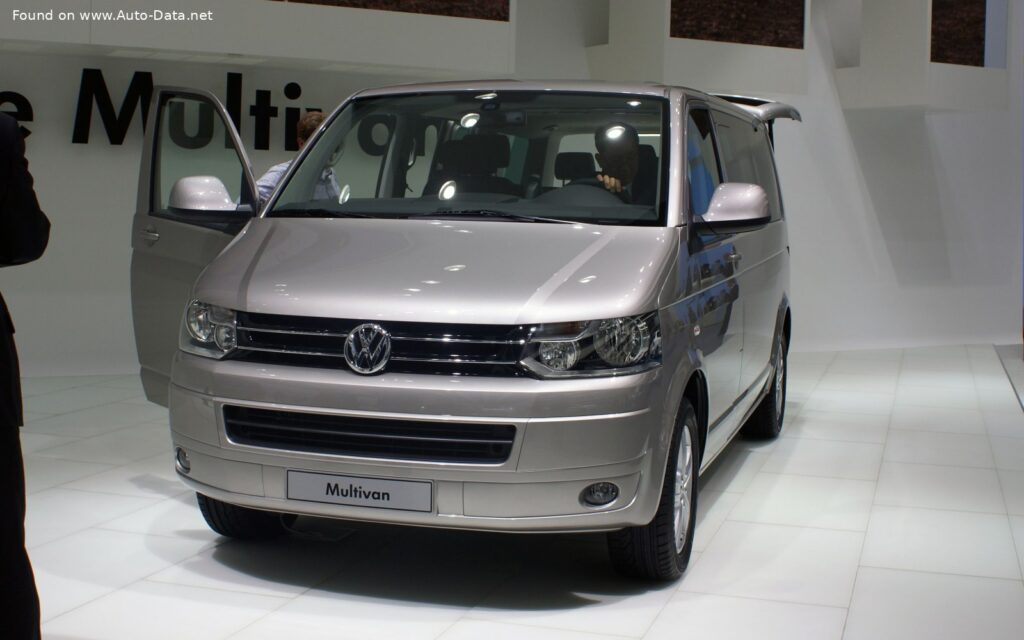
The Volkswagen Multivan (T5, facelift 2009) 2.0 TSI (204 hp) with the Direct-Shift Gearbox (DSG) represents a significant iteration of Volkswagen’s popular people-carrier, produced from 2011 to 2015. This variant occupied a mid-to-premium position within the T5 facelift range, offering a blend of performance, practicality, and technology aimed at families and individuals requiring a versatile and comfortable vehicle. It built upon the foundation of the T5 platform (1HX0/A3), known for its robust construction and adaptable interior space, while introducing a more powerful and efficient engine option compared to the base models.
Powertrain & Engine Architecture
At the heart of the Multivan 2.0 TSI DSG lies the CJKA engine code, a 1.984-liter (121.07 cubic inches) inline-four cylinder gasoline engine. This engine is characterized by its direct fuel injection system and a single turbocharger with an intercooler. Direct injection allows for precise fuel delivery, optimizing combustion efficiency and power output. The turbocharger forces more air into the cylinders, boosting horsepower and torque. The engine produces 204 hp at 4200-6000 rpm and 350 Nm (258.15 lb-ft) of torque between 1500-4000 rpm. This broad torque curve provides strong acceleration and effortless cruising, particularly beneficial for a vehicle of the Multivan’s size and weight.
The engine’s valvetrain features four valves per cylinder, contributing to improved breathing and overall engine efficiency. The 2.0 TSI engine is known for its responsiveness and relatively smooth operation. The engine oil capacity is 5.7 liters (6.02 US quarts / 5.02 UK quarts). The engine meets Euro 5 emission standards.
Paired with the engine is Volkswagen’s renowned 7-speed DSG (Direct-Shift Gearbox) automatic transmission. The DSG utilizes two separate clutches, allowing for incredibly fast and seamless gear changes. This results in improved acceleration and a more engaging driving experience compared to traditional automatic transmissions. The DSG also contributes to better fuel economy by keeping the engine operating in its optimal power band.
Transmission Details & Gear Ratios
The 7-speed DSG transmission in the Multivan 2.0 TSI offers a wide range of gear ratios designed to balance performance and fuel efficiency. First gear is relatively short for quick acceleration from a standstill, while the higher gears are geared for comfortable highway cruising. The transmission’s electronic control unit (ECU) adapts shift points based on driving style and conditions, further optimizing performance and efficiency. Specific gear ratios are as follows (approximate): 1st: 4.38, 2nd: 2.86, 3rd: 1.98, 4th: 1.47, 5th: 1.19, 6th: 0.93, 7th: 0.79. Reverse gear is 3.69.
Driving Characteristics
The 204 hp 2.0 TSI engine and DSG transmission combination delivers a noticeable performance upgrade compared to lower-powered Multivan variants. Acceleration from 0 to 100 km/h (0-62 mph) takes approximately 9.5 seconds, and 0 to 60 mph is achieved in around 9 seconds. While not a sports car, the Multivan 2.0 TSI offers ample power for overtaking maneuvers and maintaining comfortable speeds on the highway, even when fully loaded with passengers and luggage. The DSG transmission contributes to a smooth and responsive driving experience, with minimal hesitation during acceleration. Compared to the diesel-powered Multivans, the 2.0 TSI offers a more linear power delivery and a slightly more refined engine note. However, it generally consumes more fuel than its diesel counterparts.
The front-wheel-drive configuration provides predictable handling, and the Multivan’s relatively long wheelbase contributes to a stable ride. The steering is light and precise, making it easy to maneuver in urban environments. The suspension is tuned for comfort, absorbing bumps and imperfections in the road surface effectively.
Equipment & Trim Levels
The Multivan 2.0 TSI DSG typically came well-equipped, reflecting its mid-to-premium positioning. Standard features often included air conditioning, power windows and mirrors, central locking, an audio system with CD player, and alloy wheels. Interior upholstery was typically cloth, with optional leather upgrades available. The dashboard layout was functional and ergonomic, with clear instrumentation and intuitive controls. Higher trim levels offered additional features such as a touchscreen infotainment system, navigation, parking sensors, and a panoramic sunroof.
Optional extras included features like a multi-function steering wheel, heated seats, and a rear parking camera. The Multivan’s modular seating system allowed for flexible configuration, with options for individual seats, benches, and folding tables. The interior could be configured to accommodate between 5 and 7 passengers, depending on the chosen layout.
Chassis & Braking
The Multivan 2.0 TSI utilizes a front-wheel-drive chassis with independent suspension at the front and a semi-independent torsion beam suspension at the rear. The front suspension features MacPherson struts and stabilizer bar, while the rear suspension utilizes leaf springs and dampers. The braking system consists of ventilated discs at the front and drum brakes at the rear. Anti-lock Braking System (ABS) is standard, enhancing braking performance and stability. The steering system employs a rack and pinion setup, providing precise and responsive steering feel.
The curb weight of the Multivan 2.0 TSI DSG is approximately 2161 kg (4764.19 lbs), with a maximum permissible weight of 3000 kg (6613.87 lbs). The maximum load capacity is 839 kg (1849.68 lbs).
Market Reception & Comparison
The Volkswagen Multivan 2.0 TSI DSG was generally well-received by automotive critics. It was praised for its powerful and refined engine, smooth-shifting DSG transmission, and versatile interior. However, some critics noted that the fuel economy was relatively high compared to the diesel-powered models. Compared to the 1.9 TDI variant, the 2.0 TSI offered more power and a more engaging driving experience, but at the cost of increased fuel consumption and potentially higher maintenance costs. The 2.0 TSI also positioned itself above the base 1.4 TSI engine in terms of performance and refinement.
In terms of reliability, the 2.0 TSI engine has proven to be generally robust, although some owners have reported issues with the turbocharger and direct injection system. The DSG transmission is known for its durability, but requires regular maintenance, including fluid changes, to ensure optimal performance and longevity.
Technical Specifications
| Brand | Volkswagen |
| Model | Multivan |
| Generation | Multivan (T5, facelift 2009) |
| Type (Engine) | 2.0 TSI (204 Hp) DSG |
| Start of production | 2011 year |
| End of production | 2015 year |
| Powertrain Architecture | Internal Combustion engine |
| Body type | Minivan |
| Seats | 5-7 |
| Doors | 5 |
| Fuel consumption (urban) | 13.5 l/100 km (17.4 US mpg, 20.9 UK mpg) |
| Fuel consumption (extra urban) | 8.1 l/100 km (29 US mpg, 34.9 UK mpg) |
| Fuel consumption (combined) | 10.1 l/100 km (23.3 US mpg, 28 UK mpg) |
| CO2 emissions | 236 g/km |
| Fuel Type | Petrol (Gasoline) |
| Acceleration 0 – 100 km/h | 9.5 sec |
| Acceleration 0 – 62 mph | 9.5 sec |
| Acceleration 0 – 60 mph | 9 sec (Calculated) |
| Maximum speed | 200 km/h (124.27 mph) |
| Emission standard | Euro 5 |
| Weight-to-power ratio | 10.6 kg/Hp |
| Power | 204 Hp @ 4200-6000 rpm |
| Torque | 350 Nm @ 1500-4000 rpm (258.15 lb.-ft.) |
| Engine layout | Front, Transverse |
| Engine Model/Code | CJKA |
| Engine displacement | 1984 cm3 (121.07 cu. in.) |
| Number of cylinders | 4 |
| Engine configuration | Inline |
| Fuel injection system | Direct injection |
| Engine oil capacity | 5.7 l (6.02 US qt | 5.02 UK qt) |
| Kerb Weight | 2161 kg (4764.19 lbs.) |
| Max. weight | 3000 kg (6613.87 lbs.) |
| Max load | 839 kg (1849.68 lbs.) |
| Length | 4892 mm (192.6 in.) |
| Width | 1904 mm (74.96 in.) |
| Height | 1970 mm (77.56 in.) |
| Wheelbase | 3000 mm (118.11 in.) |
| Number of gears and type of gearbox | 7 gears, automatic transmission DSG |
Legacy
The Volkswagen Multivan 2.0 TSI DSG remains a popular choice in the used car market, particularly for those seeking a spacious, comfortable, and well-equipped people-carrier. The 2.0 TSI engine has proven to be relatively reliable, although regular maintenance is essential to prevent potential issues. The DSG transmission, while generally durable, requires periodic servicing to ensure smooth operation. Overall, the Multivan 2.0 TSI DSG offers a compelling combination of performance, practicality, and refinement, making it a desirable option for families and individuals who require a versatile and capable vehicle.