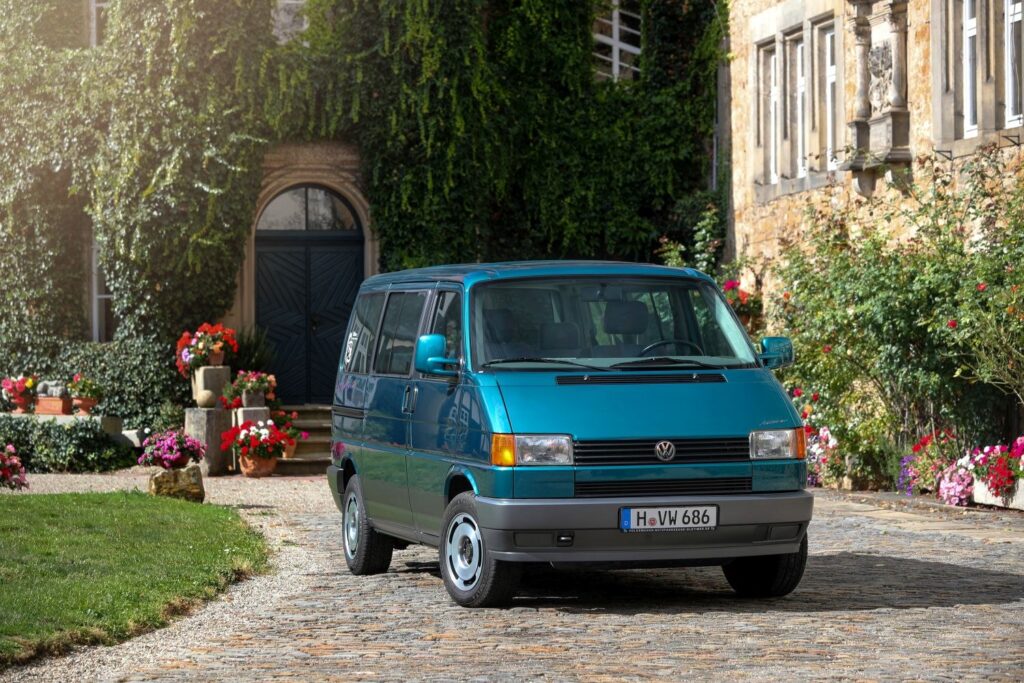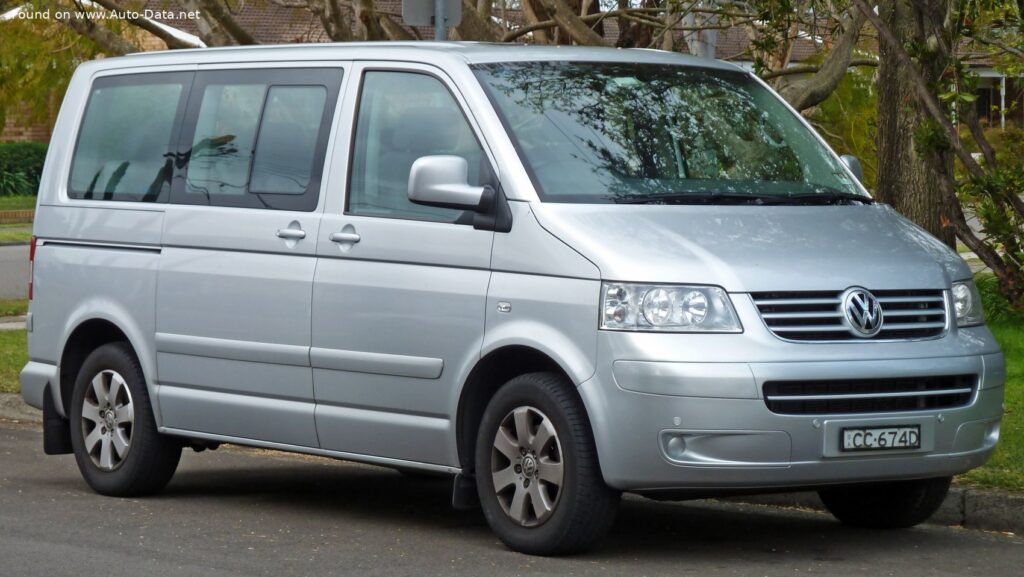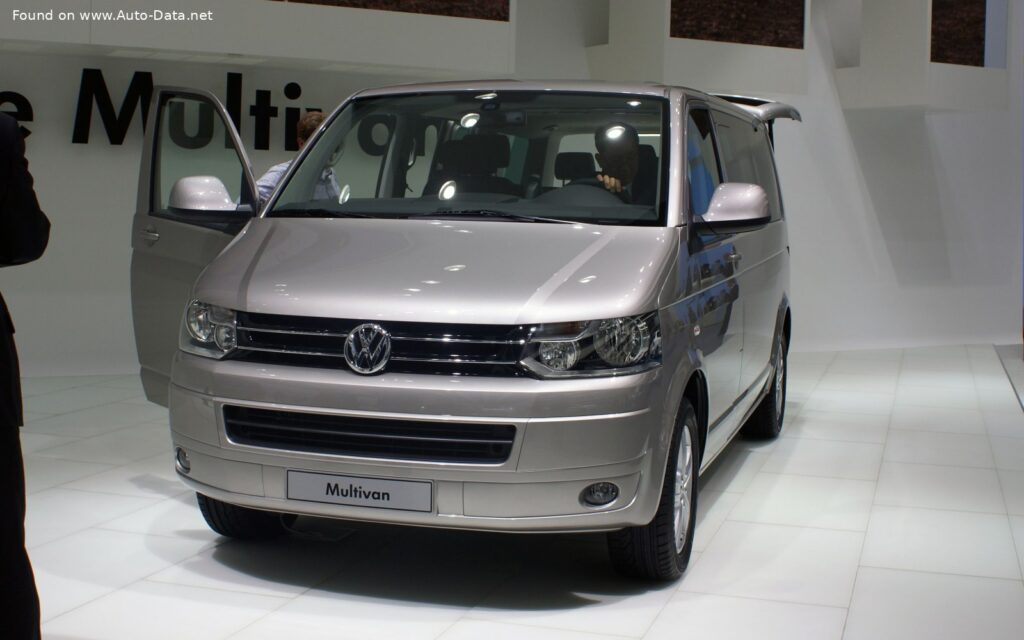
The Volkswagen Multivan (T5, facelift 2009) Long 2.0 TDI (102 hp) represents a specific configuration within the broader T5 Multivan range produced from 2009 to 2015. This variant, characterized by its 2.0-liter turbocharged diesel engine producing 102 horsepower, occupied a middle ground in the Multivan lineup, offering a balance between fuel efficiency, practicality, and affordability. The T5 generation, built on the 1HX0/A3 platform, was a popular choice for families and commercial users seeking a versatile and spacious vehicle. The “Long” designation indicates an extended wheelbase, providing increased interior space compared to the standard-length T5.
Powertrain & Engine Architecture
At the heart of the Multivan Long 2.0 TDI (102 hp) lies the Volkswagen Group’s 2.0-liter inline four-cylinder diesel engine. Engine codes commonly associated with this output are CAAB and CXGB, though variations existed depending on specific market regulations. This engine utilizes a common rail direct injection system, delivering fuel directly into the combustion chamber at extremely high pressure. This technology, coupled with a turbocharger and intercooler, optimizes combustion efficiency and power output. The engine features four valves per cylinder (DOHC) and is transversely mounted in the front of the vehicle.
The 2.0 TDI engine’s turbocharger is typically a variable geometry turbo (VGT), allowing for optimized boost pressure across a wider range of engine speeds. This helps to mitigate turbo lag and improve low-end torque. The engine also incorporates exhaust gas recirculation (EGR) to reduce nitrogen oxide (NOx) emissions. The Multivan Long 2.0 TDI (102 hp) was exclusively offered with a 5-speed manual transmission, designed to efficiently transfer power to the front wheels. While automatic transmissions were available on other T5 Multivan variants, they were not paired with this specific engine output.
Fuel Injection and Emissions
The common rail diesel injection system operates at pressures up to 1,600 bar, atomizing the fuel into a fine mist for more complete combustion. This contributes to improved fuel economy and reduced particulate matter emissions. The engine was designed to meet Euro 4 emission standards at the time of its production, utilizing a diesel particulate filter (DPF) to trap soot particles. The DPF required periodic regeneration, either passively during normal driving or actively through a forced regeneration cycle initiated by the vehicle’s engine control unit (ECU).
Driving Characteristics
The 102 hp 2.0 TDI engine in the Multivan Long provided adequate, but not exhilarating, performance. Acceleration from 0 to 62 mph (0-100 km/h) took approximately 17.9 seconds, and the top speed was limited to around 97.56 mph (157 km/h). The engine’s 250 Nm (184.39 lb-ft) of torque, available from 2500 rpm, provided sufficient pulling power for everyday driving and carrying a full load of passengers or cargo. The 5-speed manual transmission offered a relatively wide range of gear ratios, allowing the driver to optimize engine speed for fuel efficiency or performance.
Compared to the more powerful 140 hp or 180 hp versions of the 2.0 TDI, the 102 hp variant felt noticeably slower, particularly when fully loaded or climbing hills. However, it offered superior fuel economy and a more relaxed driving experience. The manual transmission, while requiring more driver involvement than an automatic, provided greater control and allowed for precise gear selection. The front-wheel-drive configuration contributed to a relatively low center of gravity, enhancing stability and handling, although it could exhibit torque steer under hard acceleration.
Equipment & Trim Levels
The Multivan Long 2.0 TDI (102 hp) typically came equipped with a reasonable level of standard features, focusing on practicality and comfort. Standard equipment generally included power windows, central locking, air conditioning, and a basic audio system. Interior upholstery was typically cloth, with options for upgraded materials like leatherette or full leather available at an extra cost. The Multivan’s interior was highly configurable, with individual seats that could be rotated, folded, or even removed to create a flexible cargo space.
Optional extras included features such as a navigation system, parking sensors, alloy wheels, and upgraded audio systems. Higher trim levels offered additional features like cruise control, automatic climate control, and more luxurious interior appointments. The Multivan’s dashboard layout was functional and straightforward, with clearly labeled controls and a comprehensive instrument cluster. The “Long” wheelbase version provided ample headroom and legroom for all passengers, making it an ideal choice for long journeys.
Chassis & Braking
The Multivan Long 2.0 TDI (102 hp) utilized an independent McPherson strut suspension at the front and a double wishbone suspension at the rear. This suspension setup provided a comfortable ride quality, even on uneven road surfaces. Stabilizer bars were fitted to both the front and rear axles to reduce body roll during cornering. The braking system consisted of disc brakes on all four wheels, providing adequate stopping power for the vehicle’s weight. Anti-lock braking system (ABS) was standard, enhancing braking performance and stability in emergency situations.
The vehicle’s weight-to-power ratio was 21.1 kg/hp, reflecting the engine’s modest output relative to the vehicle’s substantial weight. The curb weight of approximately 2150 kg (4739.94 lbs) contributed to the Multivan’s solid and stable feel on the road. Tire size was typically 235/55 R17, mounted on 7J x 17 inch alloy wheels.
Market Reception & Comparison
The Volkswagen Multivan Long 2.0 TDI (102 hp) was generally well-received by critics as a practical and versatile vehicle. It was praised for its spacious interior, comfortable ride, and fuel efficiency. However, some reviewers noted that the engine’s performance was somewhat underwhelming, particularly when fully loaded. Compared to the higher-output 2.0 TDI variants, the 102 hp version offered a more affordable entry point into the Multivan range, but at the expense of performance.
Fuel economy was a strong point, with combined fuel consumption figures of around 7.3 l/100 km (32.2 US mpg). Reliability was generally good, although the diesel particulate filter (DPF) could be prone to clogging if the vehicle was primarily used for short trips. Compared to competitors like the Mercedes-Benz Vito and Ford Transit, the Multivan offered a more refined interior and a more car-like driving experience.
Technical Specifications
| Brand | Volkswagen |
| Model | Multivan (T5, facelift 2009) Long |
| Type (Engine) | 2.0 TDI (102 Hp) |
| Start of production | 2009 |
| End of production | 2015 |
| Fuel consumption (urban) | 9.5 l/100 km (24.8 US mpg) |
| Fuel consumption (extra urban) | 6.1 l/100 km (38.6 US mpg) |
| Fuel consumption (combined) | 7.3 l/100 km (32.2 US mpg) |
| CO2 emissions | 193 g/km |
| Fuel Type | Diesel |
| Acceleration 0 – 100 km/h | 17.9 sec |
| Acceleration 0 – 62 mph | 17.9 sec |
| Maximum speed | 157 km/h (97.56 mph) |
| Engine Power | 102 Hp @ 3500 rpm |
| Engine Torque | 250 Nm @ 2500 rpm (184.39 lb.-ft. @ 2500 rpm) |
| Engine Displacement | 1968 cm3 (120.09 cu. in.) |
| Number of cylinders | 4 |
| Fuel injection system | Diesel Commonrail |
| Kerb Weight | 2150 kg (4739.94 lbs.) |
| Max. weight | 3080 kg (6790.24 lbs.) |
| Fuel tank capacity | 80 l (21.13 US gal) |
| Length | 5292 mm (208.35 in.) |
| Width | 1904 mm (74.96 in.) |
| Height | 1990 mm (78.35 in.) |
| Wheelbase | 3400 mm (133.86 in.) |
| Number of gears | 5 |
| Gearbox type | Manual transmission |
Legacy
The Volkswagen Multivan Long 2.0 TDI (102 hp) powertrain has proven to be relatively reliable over the long term, provided that regular maintenance is performed. The 2.0 TDI engine is known for its durability, and the 5-speed manual transmission is generally robust. However, the diesel particulate filter (DPF) can be a potential weak point, particularly if the vehicle is frequently used for short journeys.
In the used car market today, this variant represents an affordable entry point into Multivan ownership. It is often sought after by buyers who prioritize fuel efficiency and practicality over outright performance. While it may not be the fastest or most luxurious version of the T5 Multivan, it remains a capable and versatile vehicle that is well-suited to a variety of tasks. Its enduring popularity is a testament to the T5’s overall design and engineering, and its continued presence on roads around the world.