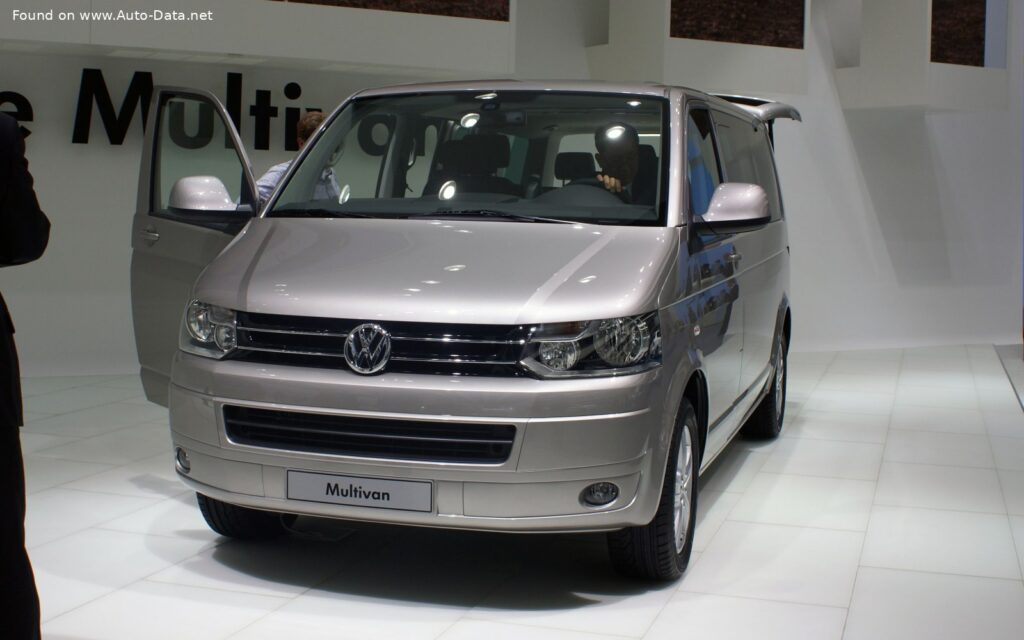
The Volkswagen Multivan (T5, facelift 2009) Long 2.0 TDI (140 hp) represents a significant iteration of Volkswagen’s popular commercial vehicle, bridging the gap between a traditional van and a comfortable people carrier. Produced from 2009 to 2015, this long-wheelbase version of the T5 Multivan offered increased interior space and versatility, catering to families and businesses alike. It was positioned as a mid-range offering within the T5 lineup, slotting between the more basic panel van configurations and the higher-specification models equipped with more powerful engines and luxury features. The facelift introduced in 2009 brought updated styling, improved safety features, and refinements to the interior, solidifying the Multivan’s appeal in the European market.
Powertrain & Engine Architecture
At the heart of the Multivan Long 2.0 TDI (140 hp) lies the CCHA engine code, a 1,968 cc inline four-cylinder diesel engine. This engine is a member of Volkswagen’s common rail direct injection (CRDI) diesel family, utilizing piezo injectors for precise fuel delivery. The CRDI system, operating at extremely high pressures, optimizes combustion efficiency and reduces emissions. The engine features a turbocharger with an intercooler, boosting power output and improving torque across a wider rev range. Valve actuation is managed by a dual overhead camshaft (DOHC) configuration with four valves per cylinder, contributing to improved breathing and overall engine performance.
While a six-speed manual transmission was standard, an optional seven-speed dual-clutch gearbox (DSG) was available, offering smoother shifts and enhanced fuel efficiency. The front-wheel-drive configuration was standard for this variant, prioritizing fuel economy and reducing mechanical complexity. The engine’s layout – transverse mounting at the front of the vehicle – is typical for Volkswagen’s front-wheel-drive platforms.
Fuel Injection and Turbocharging
The CCHA engine’s common rail system operates at a pressure of 1,600 bar, enabling extremely fine atomization of the fuel. This results in a more complete combustion process, maximizing energy extraction and minimizing particulate matter emissions. The turbocharger, a variable geometry turbo (VGT), adjusts its vanes to optimize airflow based on engine speed and load. This allows for a broad torque curve and responsive acceleration. The intercooler cools the compressed air from the turbocharger, increasing its density and further enhancing performance.
Driving Characteristics
The 140 hp 2.0 TDI engine in the Multivan Long provides adequate, though not exhilarating, performance. Acceleration from 0 to 62 mph (0-100 km/h) takes approximately 14.2 seconds, and the top speed is around 107.5 mph (173 km/h). The engine’s strength lies in its mid-range torque of 340 Nm (250.77 lb-ft) available from 2500 rpm. This makes it well-suited for carrying passengers or cargo, providing sufficient pulling power for highway cruising and moderate inclines. Compared to the more powerful 180 hp TDI variants, the 140 hp engine offers a more relaxed driving experience, prioritizing fuel economy over outright speed. The manual transmission provides precise control, while the optional DSG offers convenience and efficiency. The long wheelbase contributes to a stable ride, but can also make the vehicle feel somewhat cumbersome in tight maneuvering situations.
The gear ratios in the six-speed manual transmission are well-spaced, allowing the engine to operate efficiently at highway speeds. The first gear is relatively short, providing good acceleration from a standstill, while the higher gears are geared for fuel economy. The DSG transmission offers quicker and smoother gear changes, enhancing the overall driving experience.
Equipment & Trim Levels
The Multivan Long 2.0 TDI (140 hp) typically came equipped with a respectable level of standard features. These included air conditioning, power windows, central locking, and an audio system with CD player. Safety features such as ABS (Anti-lock Braking System) and driver and passenger airbags were also standard. The interior typically featured cloth upholstery, with optional upgrades to leather available. The Multivan’s modular seating arrangement allowed for flexible configuration, with individual seats that could be rotated, folded, or removed entirely.
Optional extras included features such as a navigation system, parking sensors, a sunroof, and upgraded audio systems. Higher trim levels offered additional features such as climate control, leather upholstery, and alloy wheels. The Multivan’s interior was designed with practicality in mind, featuring numerous storage compartments and cupholders. The long wheelbase provided ample space for passengers and luggage, making it ideal for long journeys.
Chassis & Braking
The Multivan Long 2.0 TDI (140 hp) utilizes an independent McPherson strut suspension at the front, providing a comfortable ride and good handling characteristics. The rear suspension employs a double wishbone setup, further enhancing ride quality and stability. Disc brakes are fitted to all four wheels, providing ample stopping power. The steering system is a rack and pinion type, offering precise and responsive steering feel. The standard tire size is 235/55 R17, mounted on 7J x 17 alloy wheels. The vehicle’s curb weight of 2194 kg (4836.94 lbs) is relatively high, but the suspension is tuned to handle the load effectively. A stabilizer bar is fitted to both the front and rear axles to reduce body roll during cornering.
Market Reception & Comparison
The Volkswagen Multivan Long 2.0 TDI (140 hp) was generally well-received by critics and consumers alike. It was praised for its spacious interior, comfortable ride, and fuel efficiency. However, some critics noted that the 140 hp engine could feel underpowered when fully loaded or driving uphill. Compared to the more powerful TDI variants, the 140 hp model offered a more affordable entry point into the Multivan range. Fuel economy figures of around 31.4 US mpg (37.7 UK mpg) combined were competitive for its class. Reliability was generally good, although some owners reported issues with the DSG transmission. The Multivan’s versatility and practicality made it a popular choice for families, businesses, and individuals seeking a multi-purpose vehicle.
Technical Specifications
| Brand | Volkswagen |
| Model | Multivan |
| Generation | Multivan (T5, facelift 2009) Long |
| Type (Engine) | 2.0 TDI (140 Hp) |
| Start of production | 2009 |
| End of production | 2015 |
| Fuel consumption (urban) | 9.6 l/100 km (24.5 US mpg) |
| Fuel consumption (extra urban) | 6.3 l/100 km (37.3 US mpg) |
| Fuel consumption (combined) | 7.5 l/100 km (31.4 US mpg) |
| CO2 emissions | 198 g/km |
| Fuel Type | Diesel |
| Acceleration 0 – 100 km/h | 14.2 sec |
| Acceleration 0 – 62 mph | 14.2 sec |
| Acceleration 0 – 60 mph | 13.5 sec |
| Maximum speed | 173 km/h (107.5 mph) |
| Emission standard | Euro 4 |
| Power | 140 Hp @ 3500 rpm |
| Torque | 340 Nm @ 2500 rpm (250.77 lb.-ft. @ 2500 rpm) |
| Engine layout | Front, Transverse |
| Engine Model/Code | CCHA |
| Engine displacement | 1968 cm3 (120.09 cu. in.) |
| Number of cylinders | 4 |
| Engine configuration | Inline |
| Fuel injection system | Diesel Commonrail |
| Kerb Weight | 2194 kg (4836.94 lbs.) |
| Max. weight | 3080 kg (6790.24 lbs.) |
| Fuel tank capacity | 80 l (21.13 US gal) |
| Length | 5292 mm (208.35 in.) |
| Width | 1904 mm (74.96 in.) |
| Height | 1990 mm (78.35 in.) |
| Wheelbase | 3400 mm (133.86 in.) |
| Number of gears | 6 |
| Type of gearbox | Manual transmission |
Legacy
The Volkswagen Multivan Long 2.0 TDI (140 hp) remains a popular choice in the used car market, prized for its practicality, reliability, and spacious interior. The CCHA engine, while not the most powerful in the T5 range, has proven to be relatively durable with proper maintenance. Common issues include wear and tear on the turbocharger and potential problems with the DSG transmission. However, these issues are generally well-documented and can be addressed with preventative maintenance. The Multivan’s enduring appeal lies in its ability to seamlessly blend the functionality of a commercial vehicle with the comfort and convenience of a passenger car, making it a versatile and enduring option for a wide range of buyers.