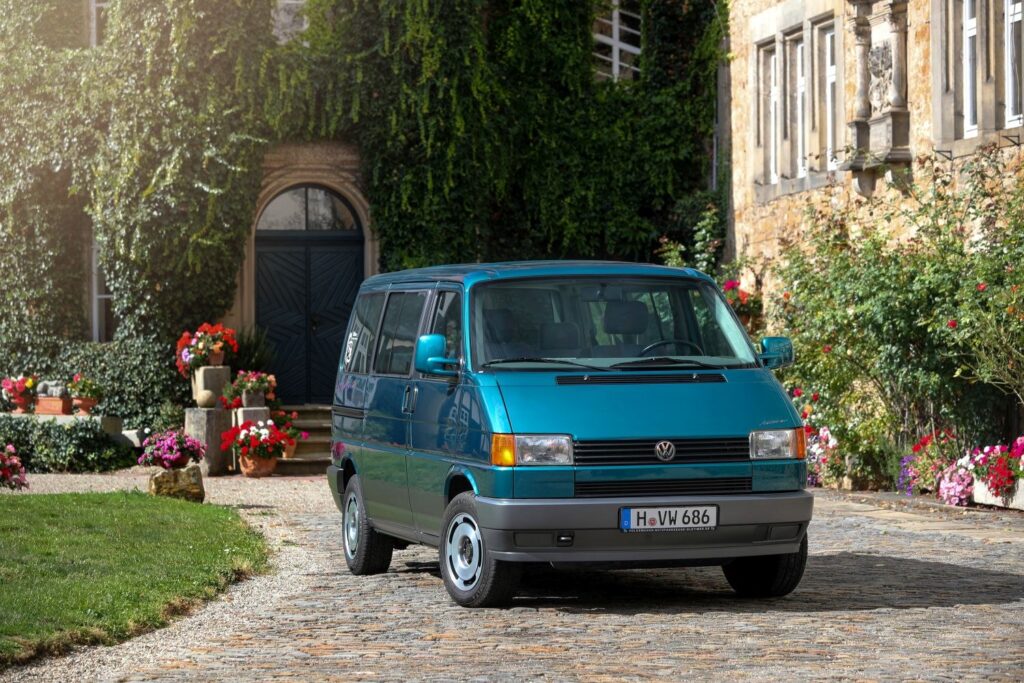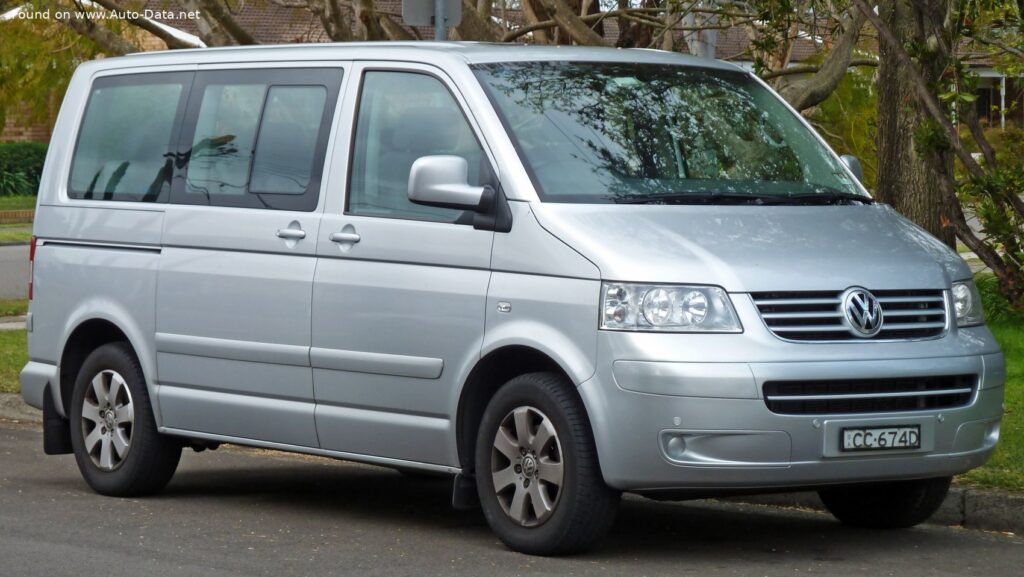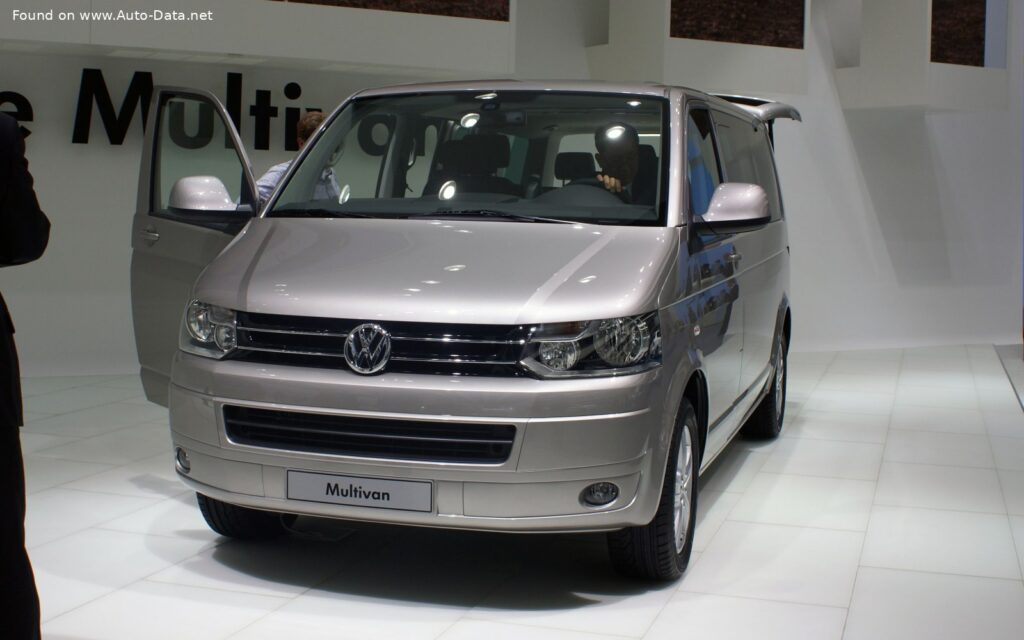
The Volkswagen Multivan (T5, facelift 2009) Long 2.0 TDI (140 Hp) DSG represents a significant iteration of Volkswagen’s popular commercial vehicle, positioned as a premium multi-purpose vehicle (MPV) in the European market. Production of the T5 generation spanned from 2003 to 2015, with the 2009 facelift introducing substantial updates to the exterior, interior, and powertrain options. This specific long-wheelbase variant, equipped with the 2.0-liter TDI diesel engine producing 140 horsepower and a 7-speed DSG dual-clutch transmission, served as a mid-range offering within the Multivan lineup, balancing practicality, comfort, and fuel efficiency. While never officially offered for sale in the United States, the T5 Multivan gained a strong following internationally for its versatility and build quality.
The T5 Generation and the 2009 Facelift
The T5 generation of the Volkswagen Transporter family – encompassing the Multivan, California, and Caravelle – debuted in 2003, replacing the T4. The T5 represented a move towards more car-like comfort and refinement compared to its more utilitarian predecessors. In 2009, Volkswagen implemented a comprehensive facelift to address evolving market demands and maintain competitiveness. This update included revised front-end styling with new headlights, a redesigned grille, and a more prominent bumper. Interior improvements focused on enhanced materials, updated dashboard layouts, and the integration of more modern infotainment systems. Crucially, the facelift also coincided with the introduction of a new generation of common-rail TDI diesel engines, offering improved performance, fuel economy, and reduced emissions.
Powertrain & Engine Architecture: The 2.0 TDI (140 Hp) and DSG Transmission
The Volkswagen Multivan (T5, facelift 2009) Long 2.0 TDI (140 Hp) DSG is powered by a 2.0-liter four-cylinder turbocharged diesel engine. This engine, typically identified by engine codes such as CCHA or CJCA depending on specific production dates and regional variations, utilizes common-rail direct injection technology. This system allows for precise control of fuel delivery, resulting in improved combustion efficiency, reduced noise, and lower emissions compared to earlier pump-nozzle TDI designs. The engine features a variable geometry turbocharger (VGT) and an intercooler to optimize performance across the rev range. It produces 140 horsepower (103 kW) at 3,500 rpm and 250.77 lb-ft (340 Nm) of torque between 1,750 and 2,500 rpm. This torque curve is particularly well-suited to the Multivan’s role as a people carrier, providing strong pulling power for effortless acceleration and comfortable cruising, even when fully loaded.
The engine’s power is transmitted to the front wheels via Volkswagen’s 7-speed DSG (Direct-Shift Gearbox) automatic transmission. The DSG is a dual-clutch transmission that offers the efficiency of a manual gearbox with the convenience of an automatic. It utilizes two separate clutches, one for odd-numbered gears and one for even-numbered gears, allowing for incredibly fast and smooth gear changes. This minimizes power interruption during shifts, resulting in a more responsive and engaging driving experience. The DSG also features a manual shift mode, allowing the driver to take greater control over gear selection.
Driving Characteristics
The 140 hp 2.0 TDI engine paired with the 7-speed DSG transmission delivers a balanced driving experience in the Multivan. While not overtly sporty, the powertrain provides sufficient power for everyday driving and long-distance journeys. Acceleration from 0 to 62 mph (0-100 km/h) typically takes around 11.5-12.5 seconds, depending on load and road conditions. The readily available torque ensures brisk acceleration in typical driving situations, such as overtaking or merging onto highways. Compared to the more powerful 180 hp TDI variant, the 140 hp version offers a slightly more relaxed driving experience, prioritizing fuel economy over outright performance. The DSG transmission contributes to smooth and seamless gear changes, enhancing comfort and reducing driver fatigue. The long wheelbase of the Multivan provides a stable and comfortable ride, although it can make maneuvering in tight spaces slightly more challenging.
Equipment & Trim Levels
The Multivan (T5, facelift 2009) Long 2.0 TDI (140 Hp) DSG typically came equipped with a generous level of standard features. These included air conditioning, power windows and mirrors, central locking, an adjustable steering wheel, and a basic audio system. Interior upholstery was typically cloth, although leather options were available as upgrades. The long wheelbase configuration provided ample space for up to seven passengers, with flexible seating arrangements allowing for various configurations to maximize cargo capacity. Common optional extras included a more advanced infotainment system with navigation, parking sensors, heated seats, a sunroof, and upgraded alloy wheels. Higher trim levels, such as the Highline, offered even more luxurious features and appointments.
Chassis & Braking
The Multivan (T5) utilizes a front-wheel-drive layout with an independent suspension system at the front, typically employing MacPherson struts and stabilizer bars. The rear suspension varies depending on the specific model and load rating, but often features a semi-independent trailing arm setup with coil springs. The braking system typically consists of ventilated disc brakes at the front and either disc or drum brakes at the rear, depending on the vehicle’s weight and specification. Anti-lock Braking System (ABS) and Electronic Stability Program (ESP) were standard features, enhancing safety and control. The steering is typically power-assisted, providing a comfortable and responsive driving experience.
Market Reception & Comparison
The Volkswagen Multivan (T5, facelift 2009) Long 2.0 TDI (140 Hp) DSG was generally well-received by automotive critics for its versatility, practicality, and comfortable ride. It was often praised for its spacious interior, flexible seating arrangements, and efficient diesel engine. Compared to other MPVs in its class, such as the Ford Galaxy or Renault Espace, the Multivan was often seen as a more premium offering, with a higher level of build quality and refinement. The 140 hp TDI engine offered a good balance between performance and fuel economy, achieving around 31-37 mpg (7.6-6.4 l/100km) in mixed driving conditions. The DSG transmission was also a popular feature, praised for its smooth and efficient operation. However, some critics noted that the Multivan could be relatively expensive compared to its competitors.
Technical Specifications
| Engine Type | 2.0-liter Inline-4 Turbo Diesel |
| Engine Code | CCHA/CJCA (varies by production date/region) |
| Maximum Power | 140 hp (103 kW) @ 3,500 rpm |
| Maximum Torque | 250.77 lb-ft (340 Nm) @ 1,750-2,500 rpm |
| Transmission | 7-speed DSG Dual-Clutch Automatic |
| Drive Layout | Front-Wheel Drive |
| Curb Weight | 4,863.4 lbs (2,206 kg) |
| Fuel Economy (Combined) | 31-37 mpg (7.6-6.4 l/100km) |
| 0-62 mph (0-100 km/h) | 11.5-12.5 seconds (approx.) |
| Fuel Tank Capacity | 21.1 gallons (80 liters) |
Legacy
The Volkswagen Multivan (T5) remains a popular choice in the used car market, particularly in Europe. The 2.0 TDI engine with the DSG transmission is generally considered to be a reliable powertrain, although regular maintenance is essential. Common issues can include DSG transmission servicing (fluid and filter changes) and potential problems with the diesel particulate filter (DPF) if the vehicle is primarily used for short journeys. Overall, the T5 Multivan is known for its durability and longevity, making it a practical and dependable option for families and businesses. Its versatility and spacious interior continue to appeal to buyers seeking a multi-purpose vehicle that can handle a variety of tasks.