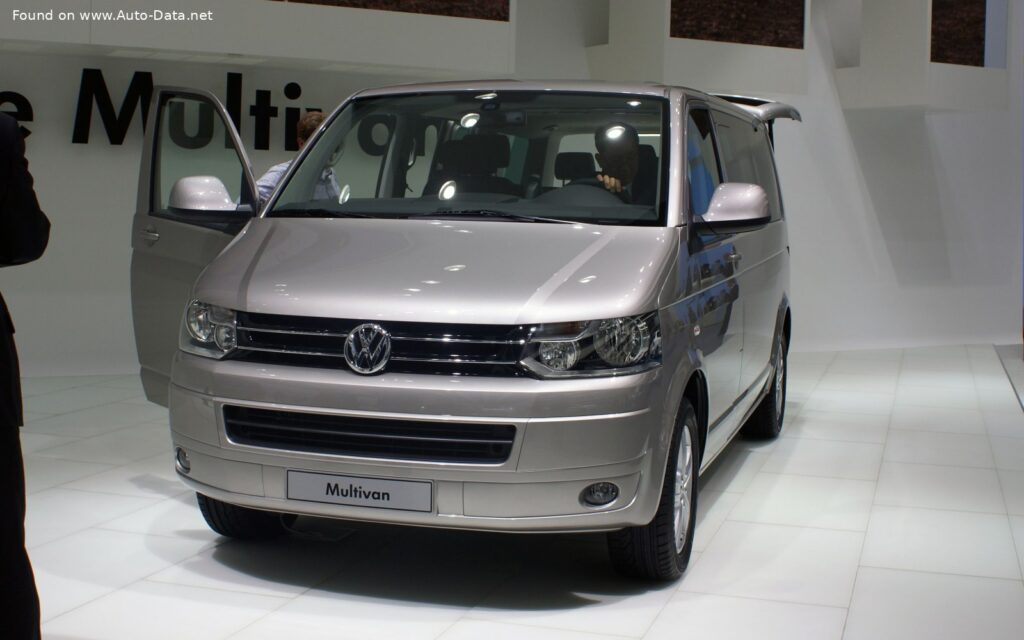
The Volkswagen Multivan (T5, facelift 2009) Long 2.0 TDI (180 Hp) represents a significant evolution in Volkswagen’s storied lineage of versatile passenger vans, a heritage stretching back to the iconic Type 2 “Bus.” Introduced as part of the T5 generation’s mid-cycle refresh in 2009, this particular variant, with its extended wheelbase and potent diesel engine, solidified its position as a premium multi-purpose vehicle (MPV) in markets outside of North America, particularly across Europe and Asia. While never officially sold in the United States, the Multivan is a testament to Volkswagen’s engineering prowess in creating highly adaptable and efficient family and business transport solutions. This facelifted T5 model combined enhanced aesthetics, improved interior ergonomics, and a new generation of more efficient engines, including the powerful 2.0-liter BiTurbo TDI diesel, making it a compelling choice for those requiring ample space, comfort, and robust performance.
Powertrain & Engine Architecture
At the heart of the 2009 facelifted Volkswagen Multivan Long was the advanced 2.0 TDI engine, specifically the 180 horsepower variant (engine code CFCA). This powertrain marked a significant departure from the previous generation’s larger displacement engines, showcasing Volkswagen’s commitment to downsizing and turbocharging for improved efficiency and performance. This inline four-cylinder diesel engine, displacing 1968 cubic centimeters (120.09 cu. in.), utilized a sophisticated common rail fuel injection system, ensuring precise fuel delivery and cleaner combustion.
A key characteristic of this engine was its BiTurbo setup, featuring two turbochargers working in sequence to provide a broad and linear power band. This allowed the engine to produce a robust 180 horsepower at 4000 rpm, translating to confident acceleration and effortless cruising, even when fully loaded. More impressively, the engine delivered a substantial 400 Newton meters (295.02 lb.-ft.) of torque at a low 2000 rpm. This ample torque was crucial for a vehicle of the Multivan’s size and intended use, providing strong pulling power and reducing the need for frequent gear changes. The fuel injection system employed piezo injectors for enhanced atomization and control, contributing to both performance and reduced emissions.
The engine featured a four-valve-per-cylinder design with a single overhead camshaft (SOHC). The cylinder head was constructed from aluminum alloy, contributing to weight reduction. The engine block was cast iron, providing durability and rigidity. The 6-speed manual transmission, a common pairing with this engine, was chosen for its efficiency and driver engagement. While a 7-speed DSG (Direct-Shift Gearbox) dual-clutch automatic transmission was available on other Multivan variants, the 6-speed manual was frequently specified with the 180 hp TDI, particularly in markets where manual transmissions remained popular.
Driving Characteristics
The Multivan Long 2.0 TDI (180 Hp) with the 6-speed manual transmission offered a surprisingly engaging driving experience for a vehicle of its size. The ample low-end torque from the BiTurbo diesel meant that frequent downshifts were rarely necessary, even when navigating hilly terrain or carrying a full load of passengers and luggage. The gear ratios were well-matched to the engine’s power band, providing smooth and effortless acceleration. Compared to the higher-output 140 hp TDI versions, the 180 hp variant offered a noticeable improvement in responsiveness and overall performance. While not a sports van, it provided sufficient power for confident overtaking maneuvers and highway cruising.
Compared to the more expensive and complex 2.5-liter five-cylinder gasoline engine offered in some markets, the 2.0 TDI prioritized fuel efficiency and torque delivery. The gasoline engine offered a more refined sound and potentially slightly quicker acceleration, but at the cost of significantly higher fuel consumption. The 2.0 TDI also contrasted with the 1.9 TDI engines found in earlier T5 models; the newer engine benefited from advancements in turbocharging and fuel injection technology, resulting in increased power and reduced emissions. The front-wheel-drive configuration contributed to a lower overall weight and improved fuel economy compared to the available 4MOTION all-wheel-drive system.
Equipment & Trim Levels
The Volkswagen Multivan (T5, facelift 2009) Long 2.0 TDI (180 Hp) typically occupied a mid-range position within the Multivan lineup. Standard equipment included features like air conditioning, power windows, central locking, and an integrated audio system. The interior upholstery was typically a durable cloth material, although leather upholstery was available as an optional extra. The dashboard featured a functional and ergonomic design, with clearly labeled controls and ample storage compartments.
Optional extras included features like a navigation system, rear parking sensors, heated seats, a sunroof, and upgraded audio systems. The modular seating system was a key selling point, allowing for various configurations to suit different needs. Swiveling second-row seats were a popular option, creating a more social and versatile interior space. Additional options included auxiliary heating systems, upgraded lighting packages, and various exterior styling enhancements. The Multivan Comfortline trim level generally included more standard features than the base Trendline trim, while the Highline trim offered the most luxurious appointments.
Chassis & Braking
The Multivan Long was built on a robust chassis designed for both passenger comfort and commercial vehicle durability. It featured an independent McPherson strut front suspension and a double wishbone rear suspension, providing a car-like ride quality while still being capable of handling heavy loads. The suspension was tuned to prioritize comfort and stability, rather than sporty handling. The steering system utilized a rack and pinion setup, offering precise control for a vehicle of its size.
Braking performance was handled by disc brakes on both the front and rear axles, complemented by an Anti-lock Braking System (ABS) for enhanced safety during emergency stops. Electronic Stability Control (ESC) was also often included, further enhancing safety and stability. The vehicle rode on 235/55 R17 tires mounted on 7J x 17-inch wheel rims, providing a good balance of grip, comfort, and load-carrying capacity. With a ground clearance of 7.91 inches (201 mm), it was well-suited for varied road conditions. Rear drum brakes were sometimes fitted on lower trim levels or earlier production models, but disc brakes were more common on the 180 hp variant.
Market Reception & Comparison
Critics generally praised the Volkswagen Multivan (T5, facelift 2009) Long 2.0 TDI (180 Hp) for its versatility, comfort, and fuel efficiency. The 2.0 TDI engine was lauded for its strong torque delivery and refined performance. The spacious interior and modular seating system were also highly regarded. However, some critics noted that the Multivan could be expensive compared to other MPVs in its class.
In terms of fuel economy, the 2.0 TDI variant consistently outperformed the gasoline-powered models, achieving around 30.2 US miles per gallon in combined driving. Reliability was generally good, although some owners reported issues with the dual-mass flywheel in the manual transmission. Compared to the 140 hp TDI version, the 180 hp variant offered a noticeable improvement in performance, making it a more appealing option for those who frequently carried a full load or drove on highways. The Multivan’s build quality and resale value were consistently higher than many of its competitors, such as the Ford Transit and Renault Trafic.
Technical Specifications
| Specification | Value |
| General Information | |
| Brand | Volkswagen |
| Model | Multivan |
| Generation | Multivan (T5, facelift 2009) Long |
| Type (Engine) | 2.0 TDI (180 Hp) |
| Start of production | 2009 year |
| End of production | 2015 year |
| Powertrain Architecture | Internal Combustion engine |
| Body type | Minivan |
| Seats | 7 |
| Doors | 5 |
| Performance Specs | |
| Fuel consumption (economy) – urban | 9.8 l/100 km (24 US mpg) |
| Fuel consumption (economy) – extra urban | 6.7 l/100 km (35.1 US mpg) |
| Fuel consumption (economy) – combined | 7.8 l/100 km (30.2 US mpg) |
| CO2 emissions | 205 g/km |
| Fuel Type | Diesel |
| Acceleration 0 – 60 mph | 10.8 sec |
| Acceleration 0 – 100 km/h | 11.4 sec |
| Maximum speed | 191 km/h (118.68 mph) |
| Emission standard | Euro 4 |
| Weight-to-power ratio | 12.3 kg/Hp, 81.1 Hp/tonne |
| Weight-to-torque ratio | 5.5 kg/Nm, 180.3 Nm/tonne |
| Engine Specs | |
| Power | 180 Hp @ 4000 rpm. |
| Power per liter | 91.5 Hp/l |
| Torque | 400 Nm (295.02 lb.-ft.) @ 2000 rpm. |
| Engine layout | Front, Transverse |
| Engine Model/Code | CFCA |
| Engine displacement | 1968 cm3 (120.09 cu. in.) |
| Number of cylinders | 4 |
| Engine configuration | Inline |
| Number of valves per cylinder | 4 |
| Fuel injection system | Diesel Commonrail |
| Engine aspiration | BiTurbo, Intercooler |
| Engine oil capacity | 7 l (7.4 US qt) |
| Space, Volume and Weights | |
| Kerb Weight | 2219 kg (4892.06 lbs.) |
| Max. weight | 3080 kg (6790.24 lbs.) |
| Max load | 861 kg (1898.18 lbs.) |
| Fuel tank capacity | 80 l (21.13 US gal) |
| Dimensions | |
| Length | 5292 mm (208.35 in.) |
| Width | 1904 mm (74.96 in.) |
| Height | 1990 mm (78.35 in.) |
| Wheelbase | 3400 mm (133.86 in.) |
| Front track | 1628 mm (64.09 in.) |
| Rear (Back) track | 1628 mm (64.09 in.) |
| Ride height (ground clearance) | 201 mm (7.91 in.) |
| Drivetrain, Brakes and Suspension Specs | |
| Drivetrain Architecture | Front wheel drive (ICE drives front wheels) |
| Drive wheel | Front wheel drive |
| Number of gears and type of gearbox | 6 gears, manual transmission |
| Front suspension | Independent type McPherson |
| Rear suspension | Double wishbone |
| Front brakes | Disc |
| Rear brakes | Disc |
| Assisting systems | ABS (Anti-lock braking system) |
| Steering type | Steering rack and pinion |
| Tires size | 235/55 R17 |
| Wheel rims size | 7J x 17 |
Legacy
The Volkswagen Multivan (T5, facelift 2009) Long 2.0 TDI (180 Hp) continues to hold a strong position in the used car market, particularly in Europe. The CFCA engine is generally considered to be a durable and reliable unit, provided it has been properly maintained. Regular servicing, including oil changes and timing belt replacements, is crucial for long-term reliability. The dual-mass flywheel, as mentioned previously, is a potential weak point and may require replacement at some point.
The T5 Multivan, in general, is known for its robust build quality and relatively low running costs, making it an attractive option for buyers seeking a versatile and practical vehicle. Its spacious interior, modular seating system, and comfortable ride continue to appeal to families, businesses, and recreational users. While the T6 and T7 generations have since been introduced, the T5 remains a popular choice for those seeking a well-engineered and capable MPV at a more affordable price point. Its enduring appeal is a testament to Volkswagen’s successful formula of combining practicality, comfort, and a touch of premium refinement in a versatile package.