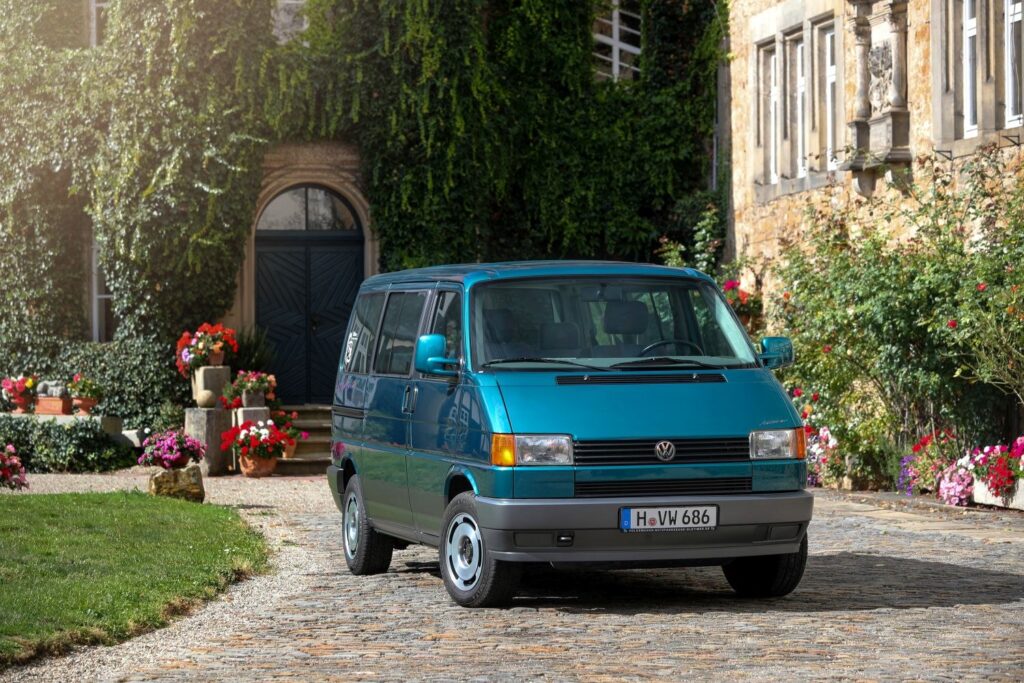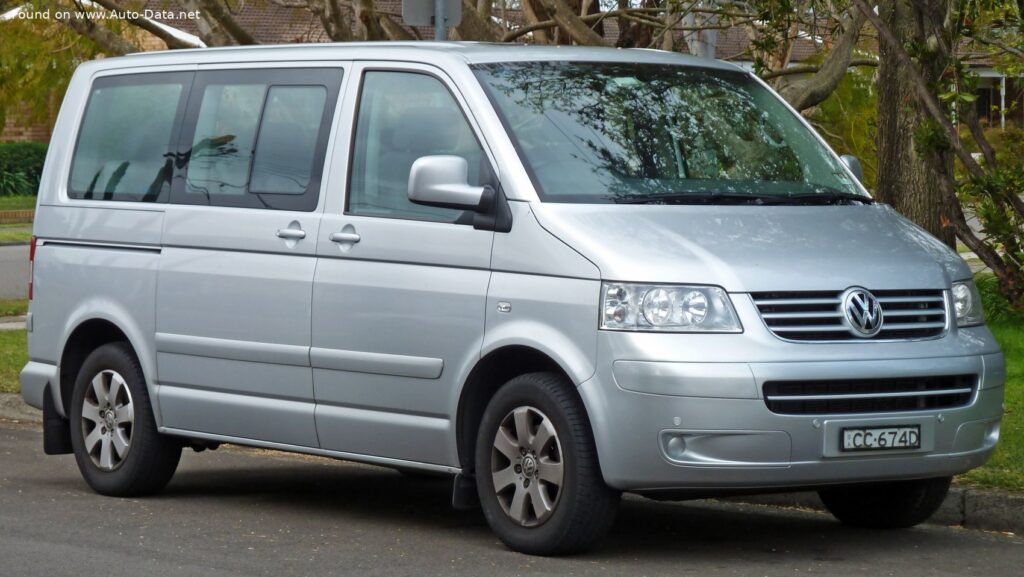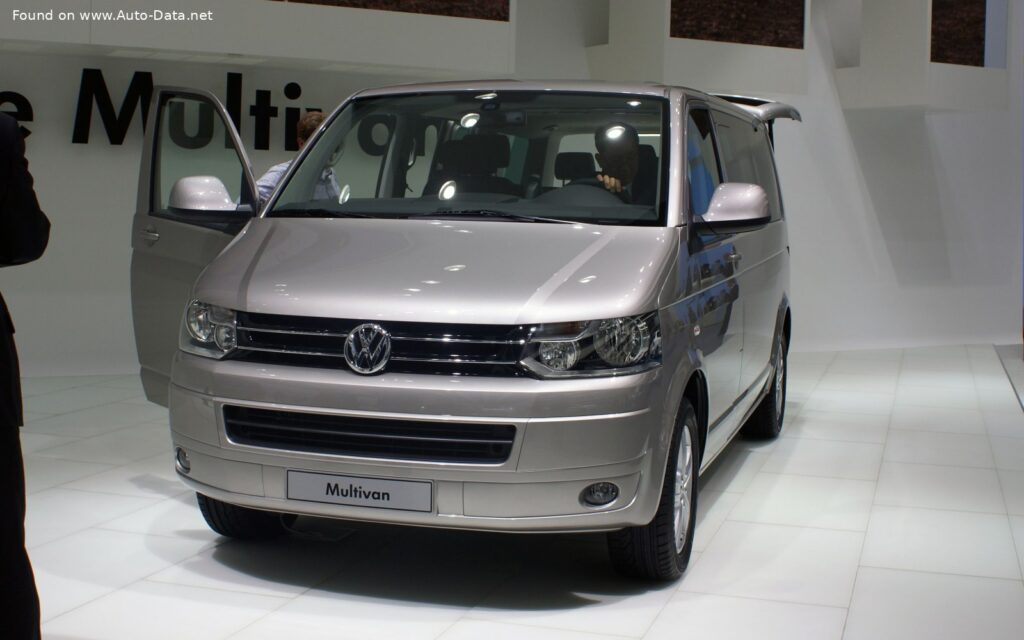
The Volkswagen Multivan, specifically the T5 generation that received a significant facelift in 2009, represents the pinnacle of Volkswagen’s long-standing tradition in the European people mover segment. While not officially sold in the United States, the Multivan is a highly regarded and iconic vehicle across Europe, Asia, and other international markets, serving as a versatile and premium alternative to traditional minivans or larger SUVs. The T5 generation, produced from 2003 to 2015, built upon the legendary heritage of the Volkswagen Transporter (Bus/Kombi) series, evolving it into a sophisticated and comfortable family hauler or executive shuttle.
Volkswagen Multivan (T5, facelift 2009) Long 2.0 TSI (204 Hp): An Overview
The particular variant under review, the Volkswagen Multivan (T5, facelift 2009) Long 2.0 TSI (204 Hp), signifies a crucial update that brought enhanced aesthetics, improved powertrains, and refined interior appointments. The “Long” designation indicates an extended wheelbase model, offering superior interior space and cargo capacity, making it exceptionally practical for large families, adventure enthusiasts, or commercial passenger transport. Equipped with the potent 2.0-liter TSI turbocharged gasoline engine, delivering 204 horsepower, this Multivan combined robust performance with a focus on efficiency for its class, setting a benchmark for premium minivans in its primary markets during its production run from 2009 to 2015. This trim level occupied a mid-to-premium position within the T5 Multivan lineup, offering a significant step up in performance and features compared to the base diesel models, but remaining below the more luxurious and fully-equipped Highline trims.
Powertrain & Engine Architecture
At the heart of the Volkswagen Multivan (T5, facelift 2009) Long 2.0 TSI (204 Hp) lies a thoroughly modern and efficient powertrain. The engine, designated CJKA, is a 1984 cm3 (121.07 cu. in.) inline four-cylinder unit, featuring direct fuel injection and a turbocharger with an intercooler. This configuration allowed for a healthy 204 horsepower at 6000 rpm, providing ample thrust for highway cruising and confident overtaking maneuvers, even when fully loaded. Torque output was equally impressive, with 258.15 lb.-ft. (350 Nm) available at a relatively accessible 4000 rpm, ensuring strong low-end and mid-range pulling power.
The CJKA engine utilizes a Bosch MED17.5.24 engine control unit (ECU) and features a variable valve timing system on both the intake and exhaust camshafts, optimizing performance and fuel efficiency across the rev range. The fuel injection system employs direct injection, delivering fuel directly into the combustion chamber for precise control and improved combustion efficiency. The turbocharger is a twin-scroll design, minimizing turbo lag and enhancing responsiveness. Power is delivered to the front wheels via a precise 6-speed manual transmission, offering engaging driver control and optimizing fuel efficiency. A 7-speed DSG (Direct-Shift Gearbox) dual-clutch automatic transmission was also available as an option, providing even faster and smoother gear changes.
Driving Characteristics
The Multivan 2.0 TSI demonstrated respectable performance figures despite its considerable size and curb weight of 4850.17 lbs. (2200 kg). It could accelerate from 0 to 60 mph in approximately 9 seconds, reaching a maximum speed of 124.27 mph (200 km/h). These figures were notable for a vehicle in its class, underscoring the effectiveness of the TSI engine technology. Compared to the diesel-powered Multivans, the 2.0 TSI offered a more responsive and refined driving experience, with a broader powerband and a willingness to rev. However, the diesel variants generally provided superior fuel economy and torque at lower engine speeds, making them more suitable for heavy-duty applications or frequent towing. The 6-speed manual transmission provided a direct and engaging driving experience, while the optional 7-speed DSG offered seamless gear changes and enhanced convenience.
The gear ratios were tuned to balance acceleration and fuel efficiency. First gear was relatively short for quick off-the-line acceleration, while fifth and sixth gears were geared for comfortable highway cruising. The steering was light and precise, making it easy to maneuver in urban environments. The suspension, consisting of independent McPherson struts at the front and a double wishbone setup at the rear, provided a comfortable and controlled ride, even when fully loaded.
Equipment & Trim Levels
The Multivan (T5, facelift 2009) Long 2.0 TSI (204 Hp) typically came equipped with a generous array of standard features. These included air conditioning, power windows and mirrors, central locking, an audio system with CD player, and ABS brakes. The interior upholstery was typically cloth, but leather upholstery was available as an option. The dashboard configuration featured a clean and functional design, with easy-to-read gauges and intuitive controls. Optional extras included a navigation system, a sunroof, parking sensors, and a rear entertainment system. The “Long” wheelbase provided ample space for seven passengers, with comfortable seating and generous legroom in all three rows. The versatile rail system allowed for easy adjustment or removal of seats, transforming the cabin from a comfortable people mover to a spacious cargo van in minutes.
Chassis & Braking
The Multivan’s chassis was designed to provide a comfortable and stable ride, even when fully loaded. The front suspension utilized independent McPherson struts, while the rear suspension employed a double wishbone setup. This configuration provided excellent ride quality and handling characteristics. The braking system featured disc brakes on all four wheels, complemented by an Anti-lock Braking System (ABS) for enhanced safety. The steering system utilized a rack and pinion setup, providing direct and responsive feedback. The Multivan rode on 235/55 R17 tires mounted on 7J x 17-inch wheel rims, contributing to both its stable handling and comfortable ride quality. Stabilizer bars were fitted to both the front and rear axles to reduce body roll during cornering.
Market Reception & Comparison
Critics generally praised the Volkswagen Multivan (T5, facelift 2009) Long 2.0 TSI (204 Hp) for its robust build quality, comfortable ride, and versatile interior. The 2.0 TSI engine was lauded for its performance and refinement, offering a significant improvement over the base diesel engines. However, some critics noted that the fuel economy was not as competitive as the diesel variants. Compared to other trims in the lineup, the 2.0 TSI offered a compelling balance of performance and efficiency, making it a popular choice for families and individuals who prioritized driving enjoyment. Its fuel economy was rated at 24 US mpg (9.8 l/100 km) combined, with extra-urban driving achieving 29.4 US mpg (8 l/100 km) and urban driving at 18.1 US mpg (13 l/100 km). CO2 emissions stood at 228 g/km, adhering to the Euro 4 emission standard.
Technical Specifications
| Category | Specification |
| General Information | |
| Brand | Volkswagen |
| Model | Multivan |
| Generation | Multivan (T5, facelift 2009) Long |
| Type (Engine) | 2.0 TSI (204 Hp) |
| Start of production | 2009 year |
| End of production | 2015 year |
| Powertrain Architecture | Internal Combustion engine |
| Body type | Minivan |
| Seats | 7 |
| Doors | 5 |
| Performance Specs | |
| Fuel consumption (economy) – urban | 18.1 US mpg (13 l/100 km) |
| Fuel consumption (economy) – extra urban | 29.4 US mpg (8 l/100 km) |
| Fuel consumption (economy) – combined | 24 US mpg (9.8 l/100 km) |
| CO2 emissions | 228 g/km |
| Fuel Type | Petrol (Gasoline) |
| Acceleration 0 – 60 mph | 9 sec |
| Acceleration 0 – 100 km/h | 9.5 sec |
| Maximum speed | 124.27 mph (200 km/h) |
| Emission standard | Euro 4 |
| Weight-to-power ratio | 10.8 kg/Hp (92.7 Hp/tonne) |
| Weight-to-torque ratio | 6.3 kg/Nm (159.1 Nm/tonne) |
| Engine Specs | |
| Power | 204 Hp @ 6000 rpm |
| Power per liter | 102.8 Hp/l |
| Torque | 258.15 lb.-ft. (350 Nm) @ 4000 rpm |
| Engine layout | Front, Transverse |
| Engine Model/Code | CJKA |
| Engine displacement | 121.07 cu. in. (1984 cm3) |
| Number of cylinders | 4 |
| Engine configuration | Inline |
| Number of valves per cylinder | 4 |
| Fuel injection system | Direct injection |
| Engine aspiration | Turbocharger, Intercooler |
| Engine oil capacity | 6.02 US qt (5.7 l) |
| Space, Volume and Weights | |
| Kerb Weight | 4850.17 lbs. (2200 kg) |
| Max. weight | 6790.24 lbs. (3080 kg) |
| Max load | 1940.07 lbs. (880 kg) |
| Fuel tank capacity | 21.13 US gal (80 l) |
| Dimensions | |
| Length | 208.35 in. (5292 mm) |
| Width | 74.96 in. (1904 mm) |
| Height | 78.35 in. (1990 mm) |
| Wheelbase | 133.86 in. (3400 mm) |
| Front track | 64.09 in. (1628 mm) |
| Rear (Back) track | 64.09 in. (1628 mm) |
| Ride height (ground clearance) | 7.91 in. (201 mm) |
| Drivetrain, Brakes and Suspension Specs | |
| Drivetrain Architecture | The Internal combustion engine (ICE) drives the front wheels of the vehicle. |
| Drive wheel | Front wheel drive |
| Number of gears and type of gearbox | 6 gears, manual transmission |
| Front suspension | Independent type McPherson |
| Rear suspension | Double wishbone |
| Front brakes | Disc |
| Rear brakes | Disc |
| Assisting systems | ABS (Anti-lock braking system) |
| Steering type | Steering rack and pinion |
| Tires size | 235/55 R17 |
| Wheel rims size | 7J x 17 |
Legacy
The Volkswagen Multivan (T5, facelift 2009) Long 2.0 TSI (204 Hp) continues to be a sought-after vehicle in the used car market, particularly in Europe. Its reputation for reliability, versatility, and comfortable ride ensures strong demand. The CJKA engine, while not without its potential issues (such as timing chain wear, a common concern with TSI engines), is generally considered to be a robust and durable unit when properly maintained. Regular oil changes, timely servicing, and careful driving are essential to ensure its longevity. The Multivan’s modular interior and spacious cabin continue to appeal to families, adventure enthusiasts, and commercial operators alike, solidifying its position as a timeless and practical people mover.