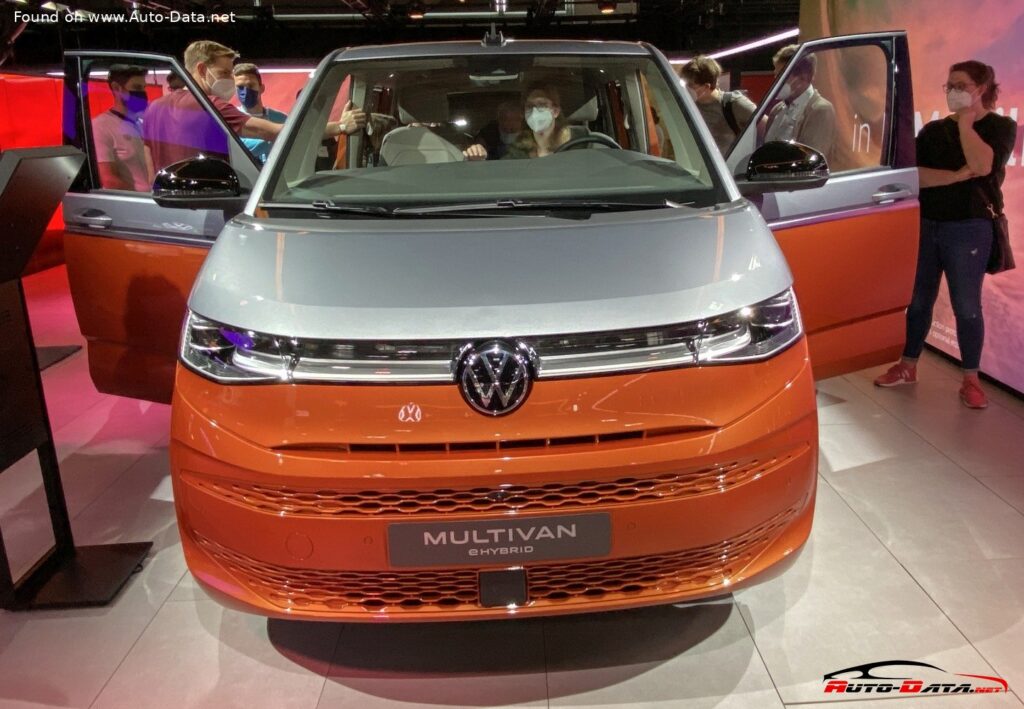
The Volkswagen Multivan (T7) represents the latest evolution in Volkswagen’s storied lineage of versatile people movers, tracing its roots back to the iconic Type 2 “Bus.” Launched in November 2021, the T7 generation marked a significant departure from its commercial van siblings, the Transporter and Caravelle, by moving to Volkswagen Group’s MQB platform. This strategic shift positioned the Multivan as a more car-like, passenger-focused Multi-Purpose Vehicle (MPV), prioritizing comfort, technology, and driving dynamics over sheer cargo-hauling capability. The specific variant under review, the Volkswagen Multivan (T7) 1.5 TSI (136 Hp) DSG, embodies this philosophy, offering a blend of efficient powertrain, adaptable interior, and contemporary features designed for families and businesses in its primary European and select global markets. It stands as a testament to Volkswagen’s commitment to innovation in a segment that demands both practicality and refinement.
Engine & Performance: The 1.5 TSI Powertrain in the Volkswagen Multivan (T7)
Under the hood of the Volkswagen Multivan (T7) 1.5 TSI (136 Hp) DSG lies a modern and efficient powertrain designed for balanced performance and fuel economy. This model is equipped with Volkswagen’s EA211 evo 1.5-liter (1498 cm3 or 91.41 cubic inches) turbocharged, intercooled, direct-injection gasoline engine. This inline four-cylinder unit, configured with a DOHC valvetrain and four valves per cylinder, delivers 136 horsepower (Hp) at a broad range of 5000-6000 rpm. Its power-per-liter output is an efficient 90.8 Hp/l, showcasing modern engine design.
Torque delivery is equally impressive for a vehicle of this segment, with 220 Newton-meters (Nm), or 162.26 lb.-ft., available from a low 1750 rpm and sustained up to 3500 rpm. This wide torque band is crucial for a larger vehicle like the Multivan, ensuring smooth acceleration and ample pulling power, whether navigating city streets or cruising on the highway with a full complement of passengers and luggage. The engine’s high compression ratio of 12.5:1 further aids in its efficiency.
Power is channeled to the front wheels via an advanced 7-speed automatic DSG (Direct Shift Gearbox) transmission. This dual-clutch unit is renowned for its rapid and seamless gear changes, contributing to both driving comfort and fuel efficiency. Performance figures for the Multivan (T7) 1.5 TSI are pragmatic rather than exhilarating, reflecting its role as a family hauler. It accelerates from 0 to 60 mph in 12.8 seconds (0-100 km/h in 13.5 seconds) and reaches a maximum speed of 113.09 mph (182 km/h). These figures are perfectly adequate for daily driving and long-distance travel, prioritizing smoothness and economy.
Fuel efficiency is a strong suit, with combined (NEDC) consumption rated at 6.6-6.7 liters per 100 kilometers, translating to an impressive 35.6-35.1 US miles per gallon (mpg). Urban driving sees figures of 7.8-8 liters per 100 kilometers (30.2-29.4 US mpg), while extra-urban consumption drops to 5.9-6 liters per 100 kilometers (39.9-39.2 US mpg). The engine also adheres to stringent Euro 6d-ISC-FCM emission standards, with CO2 emissions ranging from 150-153 g/km, thanks in part to features like the Start & Stop System and a particulate filter.
Design & Features: Adaptability and Comfort
The Volkswagen Multivan (T7) breaks from the traditional boxy design often associated with vans, adopting a more dynamic and contemporary aesthetic that aligns with modern passenger cars. It retains the functional minivan body type with five doors, but its sleeker lines and more defined character creases give it a sophisticated presence. Measuring 195.79 inches (4973 mm) in length, 76.42 inches (1941 mm) in width (88.66 inches or 2252 mm including mirrors), and 75.08 inches (1907 mm) in height, the T7 offers substantial interior volume while maintaining a manageable footprint for urban environments. Its generous 122.99-inch (3124 mm) wheelbase is key to maximizing passenger space and ride comfort.
The interior of the Multivan (T7) is where its true versatility shines. It offers a flexible 5-7 seat configuration, allowing owners to adapt the cabin layout to their specific needs, whether for family trips, business transport, or carrying larger items. The innovative rail system for seats allows for easy removal, sliding, and re-positioning, transforming the interior from a spacious passenger carrier to a voluminous cargo hauler. With all seats in place, the trunk space offers a minimum of 60.03 cubic feet (1700 liters), expanding to an enormous 116.54 cubic feet (3300 liters) with seats removed or folded – a testament to its MPV credentials.
Modern conveniences and safety features are integral to the T7 experience. While specific infotainment and advanced driver-assistance systems (ADAS) are not detailed in the provided data, a 2021 Volkswagen model built on the MQB platform would undoubtedly include a comprehensive suite. Expect features like a central touchscreen infotainment system with smartphone integration, digital instrument cluster, and a host of driver aids such as cruise control, parking assist, and multiple airbags. The vehicle is equipped with ventilated disc brakes at the front and disc brakes at the rear, supported by an Anti-lock Braking System (ABS) for assured stopping power. Electric power steering, a rack and pinion system, ensures light and precise handling, crucial for a vehicle of its size.
The exterior design incorporates modern lighting signatures and a distinct front fascia, distancing it from its commercial brethren. Wheel options range from 16-inch to 18-inch alloys, allowing for personalization and contributing to the vehicle’s stance. With a ground clearance of 5.98 inches (152 mm) and practical approach/departure angles, the Multivan is well-suited for varied road conditions, even if it’s not an off-road vehicle. Its 15.85 US gallon (60-liter) fuel tank provides a decent cruising range, making it a capable long-distance companion.
Legacy & Market Impact
The Volkswagen Multivan (T7) carries a significant legacy, evolving from a lineage that began over seven decades ago with the iconic Volkswagen Type 2. While earlier generations of the Multivan (T1 through T6) shared their underpinnings with the Transporter commercial van, the T7 marks a pivotal shift. By adopting the MQB passenger car platform, Volkswagen sought to elevate the Multivan’s appeal beyond its utilitarian roots, positioning it as a premium, refined, and technologically advanced MPV. This strategic move allowed the T7 to offer car-like driving dynamics, enhanced comfort, and state-of-the-art safety and infotainment features that were previously constrained by its commercial vehicle origins.
In its primary markets, particularly Europe, the Multivan (T7) is a formidable contender in the premium MPV segment. Its key competitors include the Mercedes-Benz V-Class, which also blends luxury with practicality, and to some extent, the Ford Tourneo Custom, which offers a robust, versatile package. While the T7 offers a more car-like driving experience than some of its direct rivals, its core strength remains its incredible interior flexibility. The modular seating system, allowing for easy removal and repositioning of individual seats, provides unparalleled adaptability for families, shuttle services, and active lifestyle enthusiasts who need to transport both people and diverse cargo.
The 1.5 TSI (136 Hp) DSG variant, while not the most powerful in the Multivan lineup, plays a crucial role in offering an efficient and accessible entry point to the range. Its focus on fuel economy, low emissions, and smooth automatic transmission makes it an attractive option for urban families and businesses conscious of running costs and environmental impact. The Multivan’s reputation for robust German engineering, combined with its modern design and practical features, ensures its continued appeal.
Globally, the Multivan’s market impact is concentrated in regions where large, versatile MPVs are favored over SUVs for family and business transport. In the United States, however, the Multivan (T7) is not offered as a direct passenger vehicle. Volkswagen’s strategy for the North American market leans heavily on SUVs like the Atlas and the upcoming all-electric ID. Buzz, which serves as a spiritual successor to the original Type 2 “Bus” but with a distinctly modern, electric twist. This regional differentiation highlights the varying consumer preferences and regulatory landscapes that automotive manufacturers navigate.
| Category | Specification |
|---|---|
| Brand | Volkswagen |
| Model | Multivan (T7) |
| Engine Type | 1.5 TSI (136 Hp) DSG |
| Start of Production | November, 2021 |
| Body Type | Minivan |
| Seats | 5-7 |
| Doors | 5 |
| Fuel Type | Petrol (Gasoline) |
| Engine Layout | Front, Transverse |
| Engine Model/Code | EA211 evo |
| Engine Displacement | 1498 cm3 (91.41 cu. in.) |
| Number of Cylinders | 4, Inline |
| Power | 136 Hp @ 5000-6000 rpm |
| Power per liter | 90.8 Hp/l |
| Torque | 220 Nm (162.26 lb.-ft.) @ 1750-3500 rpm |
| Compression Ratio | 12.5:1 |
| Fuel Injection System | Direct injection |
| Engine Aspiration | Turbocharger, Intercooler |
| Valvetrain | DOHC |
| Engine Oil Capacity | 4.3 l (4.54 US qt) |
| Acceleration 0-60 mph | 12.8 sec |
| Maximum Speed | 182 km/h (113.09 mph) |
| Fuel Economy (Combined NEDC) | 6.6-6.7 l/100 km (35.6-35.1 US mpg) |
| CO2 Emissions (NEDC) | 150-153 g/km |
| Emission Standard | Euro 6d-ISC-FCM |
| Kerb Weight | 1941-2014 kg (4279.17 – 4440.11 lbs.) |
| Max. Weight | 2600 kg (5732.02 lbs.) |
| Max Load | 586-659 kg (1291.91 – 1452.85 lbs.) |
| Trunk Space (Min/Max) | 1700-3300 l (60.03 – 116.54 cu. ft.) |
| Fuel Tank Capacity | 60 l (15.85 US gal) |
| Length | 4973 mm (195.79 in.) |
| Width | 1941 mm (76.42 in.) |
| Height | 1907 mm (75.08 in.) |
| Wheelbase | 3124 mm (122.99 in.) |
| Ground Clearance | 152 mm (5.98 in.) |
| Minimum Turning Circle | 12.1 m (39.7 ft.) |
| Drive Wheel | Front wheel drive |
| Gearbox Type | 7 gears, automatic transmission DSG |
| Front Brakes | Ventilated discs |
| Rear Brakes | Disc |
| Assisting Systems | ABS (Anti-lock braking system) |
| Power Steering | Electric Steering |
| Tire Sizes | 215/65 R16; 235/55 R17; 235/50 R18 |
| Permitted Trailer Load with Brakes (12%) | 1600 kg (3527.4 lbs.) |
| Permitted Trailer Load without Brakes | 750 kg (1653.47 lbs.) |