
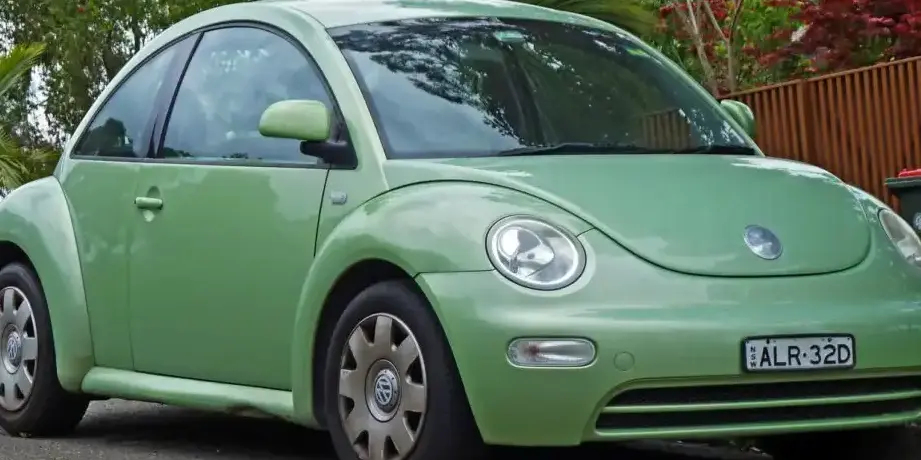
The Volkswagen New Beetle 1.4i 16V, produced between 2001 and 2005, represented the entry point into the New Beetle (9C) range for many European and Asian markets. While the New Beetle aimed for retro styling reminiscent of the original Type 1 “Bug,” it was built on a modern platform – the Volkswagen Golf Mk4’s 1HX0/A3 chassis. This 1.4-liter variant was positioned as an affordable and economical option, targeting buyers who prioritized style and fuel efficiency over outright performance. It served as a stepping stone to the more powerful 1.8 and 2.0-liter engines available in the lineup.
Technical Specifications
| Brand | Volkswagen |
| Model | Beetle |
| Generation | NEW Beetle (9C) |
| Type (Engine) | 1.4i 16V (75 Hp) |
| Start of production | August, 2001 |
| End of production | 2005 |
| Powertrain Architecture | Internal Combustion engine |
| Body type | Hatchback |
| Seats | 4 |
| Doors | 3 |
| Fuel consumption (urban) | 9.5 l/100 km (24.8 US mpg, 29.7 UK mpg, 10.5 km/l) |
| Fuel consumption (extra urban) | 5.8 l/100 km (40.6 US mpg, 48.7 UK mpg, 17.2 km/l) |
| Fuel consumption (combined) | 7 l/100 km (33.6 US mpg, 40.4 UK mpg, 14.3 km/l) |
| Fuel Type | Petrol (Gasoline) |
| Acceleration 0 – 100 km/h | 14.6 sec |
| Acceleration 0 – 62 mph | 14.6 sec |
| Acceleration 0 – 60 mph | 13.9 sec |
| Maximum speed | 161 km/h (100.04 mph) |
| Weight-to-power ratio | 15.5 kg/Hp, 64.7 Hp/tonne |
| Weight-to-torque ratio | 9.2 kg/Nm, 108.6 Nm/tonne |
| Power | 75 Hp @ 5000 rpm |
| Power per litre | 54 Hp/l |
| Torque | 126 Nm @ 3800 rpm (92.93 lb.-ft. @ 3800 rpm) |
| Engine layout | Front, Transverse |
| Engine Model/Code | BCA |
| Engine displacement | 1390 cm3 (84.82 cu. in.) |
| Number of cylinders | 4 |
| Engine configuration | Inline |
| Compression ratio | 10:1 |
| Number of valves per cylinder | 4 |
| Fuel injection system | Multi-port manifold injection |
| Engine aspiration | Naturally aspirated engine |
| Valvetrain | OHC |
| Engine oil capacity | 3.5 l (3.7 US qt | 3.08 UK qt) |
| Coolant capacity | 6 l (6.34 US qt | 5.28 UK qt) |
| Kerb Weight | 1160 kg (2557.36 lbs.) |
| Max. weight | 1620 kg (3571.49 lbs.) |
| Max load | 460 kg (1014.13 lbs.) |
| Trunk (boot) space – minimum | 209 l (7.38 cu. ft.) |
| Trunk (boot) space – maximum | 769 l (27.16 cu. ft.) |
| Fuel tank capacity | 55 l (14.53 US gal | 12.1 UK gal) |
| Length | 4081 mm (160.67 in.) |
| Width | 1724 mm (67.87 in.) |
| Height | 1498 mm (58.98 in.) |
| Wheelbase | 2508 mm (98.74 in.) |
| Front track | 1508 mm (59.37 in.) |
| Rear track | 1494 mm (58.82 in.) |
| Minimum turning circle | 10.9 m (35.76 ft.) |
| Drivetrain Architecture | Front wheel drive |
| Number of gears | 5 gears, manual transmission |
| Front suspension | Coil spring |
| Rear suspension | Coil spring |
| Front brakes | Ventilated discs |
| Rear brakes | Disc |
| Assisting systems | ABS (Anti-lock braking system) |
| Steering type | Steering rack and pinion |
| Power steering | Hydraulic Steering |
| Tires size | 195/65 R15 |
| Wheel rims size | 15 |
Powertrain & Engine Architecture
The heart of the New Beetle 1.4i 16V is the BCA engine code, a 1.4-liter inline-four cylinder petrol engine. This engine is a member of Volkswagen’s EA827 family, known for its relatively simple design and focus on fuel economy. It features a single overhead camshaft (OHC) operating four valves per cylinder, contributing to improved breathing compared to older two-valve designs. Fuel delivery is managed by a multi-port fuel injection system, providing precise fuel metering for efficient combustion. The engine produces 75 horsepower at 5000 rpm and 126 Nm (93 lb-ft) of torque at 3800 rpm. The engine’s relatively low compression ratio of 10:1 was a compromise between performance and the ability to run on various fuel grades. The 5-speed manual transmission was the standard offering, designed to maximize the engine’s efficiency and provide adequate acceleration.
Driving Characteristics
The 1.4-liter New Beetle, paired with the 5-speed manual gearbox, offered a driving experience focused on practicality and ease of use. Acceleration was modest, taking around 14.6 seconds to reach 100 km/h (62 mph). The engine felt somewhat strained when pushed hard, particularly when fully loaded or tackling inclines. The gear ratios were tuned for fuel efficiency, meaning the engine often needed to be revved to extract the best performance. Compared to the 1.8-liter and 2.0-liter versions, the 1.4 felt noticeably slower and less refined. However, its lighter weight and less stressed engine contributed to a comfortable ride quality, especially in urban environments. The steering was light and precise, making it easy to maneuver in tight spaces.
Equipment & Trim Levels
The base-level 1.4i 16V New Beetle typically came equipped with a modest array of standard features. Interior upholstery was usually cloth, with a simple dashboard layout. Standard equipment included power steering, ABS brakes, front airbags, and central locking. Optional extras included air conditioning, alloy wheels, a CD player, and electric windows. Higher trim levels, often denoted by additional packages, added features like upgraded upholstery, chrome trim, and more sophisticated audio systems. The overall interior design aimed for a retro aesthetic, with circular air vents and a curved dashboard reminiscent of the original Beetle.
Chassis & Braking
The New Beetle 1.4i 16V utilized a MacPherson strut front suspension and a twist-beam rear suspension. This setup provided a good balance between ride comfort and handling. The front brakes were ventilated discs, offering adequate stopping power, while the rear brakes were solid discs. The chassis was reinforced compared to the Golf Mk4 to enhance rigidity and improve handling characteristics. The relatively light weight of the 1.4-liter model contributed to its nimble handling, although it didn’t offer the same level of dynamic performance as the more powerful versions.
Market Reception & Comparison
The New Beetle 1.4i 16V was generally well-received as an affordable and stylish entry point into the New Beetle range. Critics praised its retro design and comfortable ride, but noted its lack of outright performance. Compared to the 1.8-liter and 2.0-liter models, the 1.4 offered significantly lower running costs, making it an attractive option for budget-conscious buyers. Fuel economy was a key selling point, with combined fuel consumption figures around 7 liters per 100 kilometers (33.6 US mpg). However, the slower acceleration and limited power were often cited as drawbacks. The 1.8-liter engine, while more expensive, offered a substantial performance upgrade and was often considered a more well-rounded choice.
Legacy
The Volkswagen New Beetle 1.4i 16V has proven to be a relatively reliable vehicle, with the BCA engine generally considered durable. Common issues include occasional oil leaks and wear on suspension components. On the used car market, these models are often sought after by buyers looking for a stylish and affordable classic. Their lower price point and relatively simple mechanicals make them an attractive option for first-time car owners or those seeking a retro-inspired vehicle. While not the most powerful or dynamic New Beetle variant, the 1.4i 16V remains a popular choice for those who appreciate its unique styling and economical running costs.
